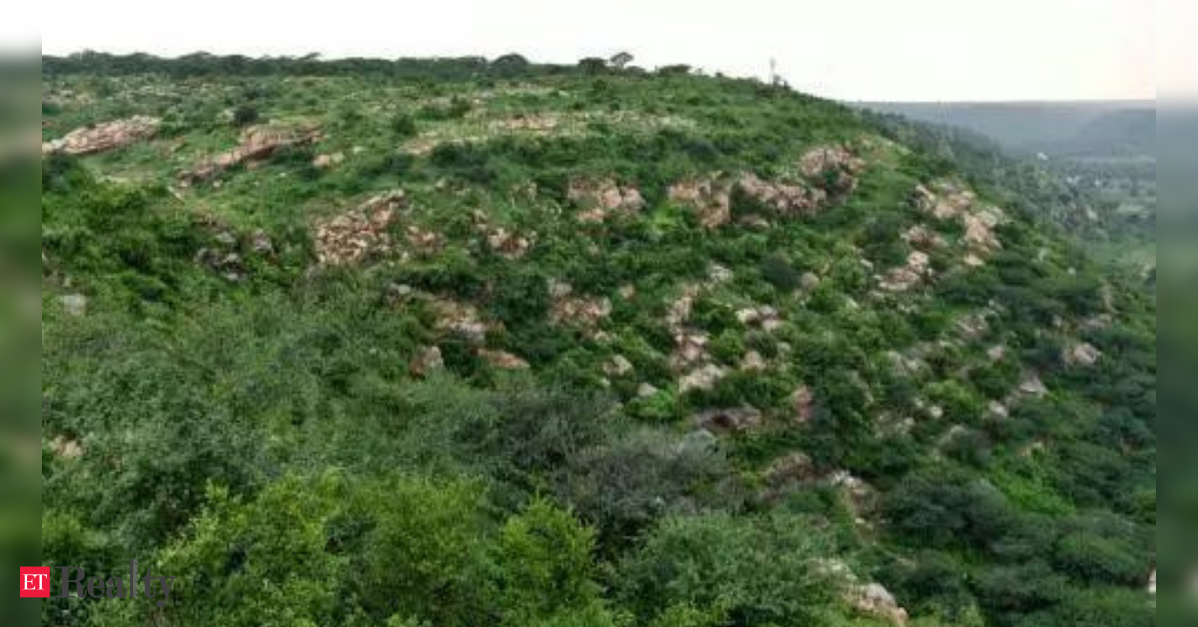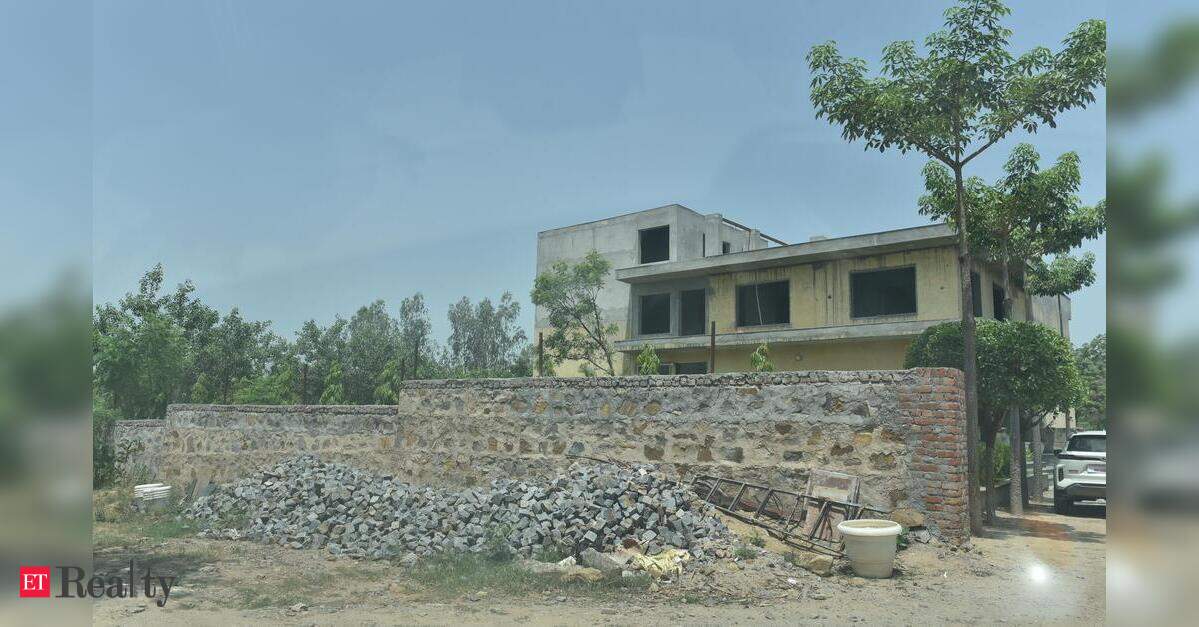
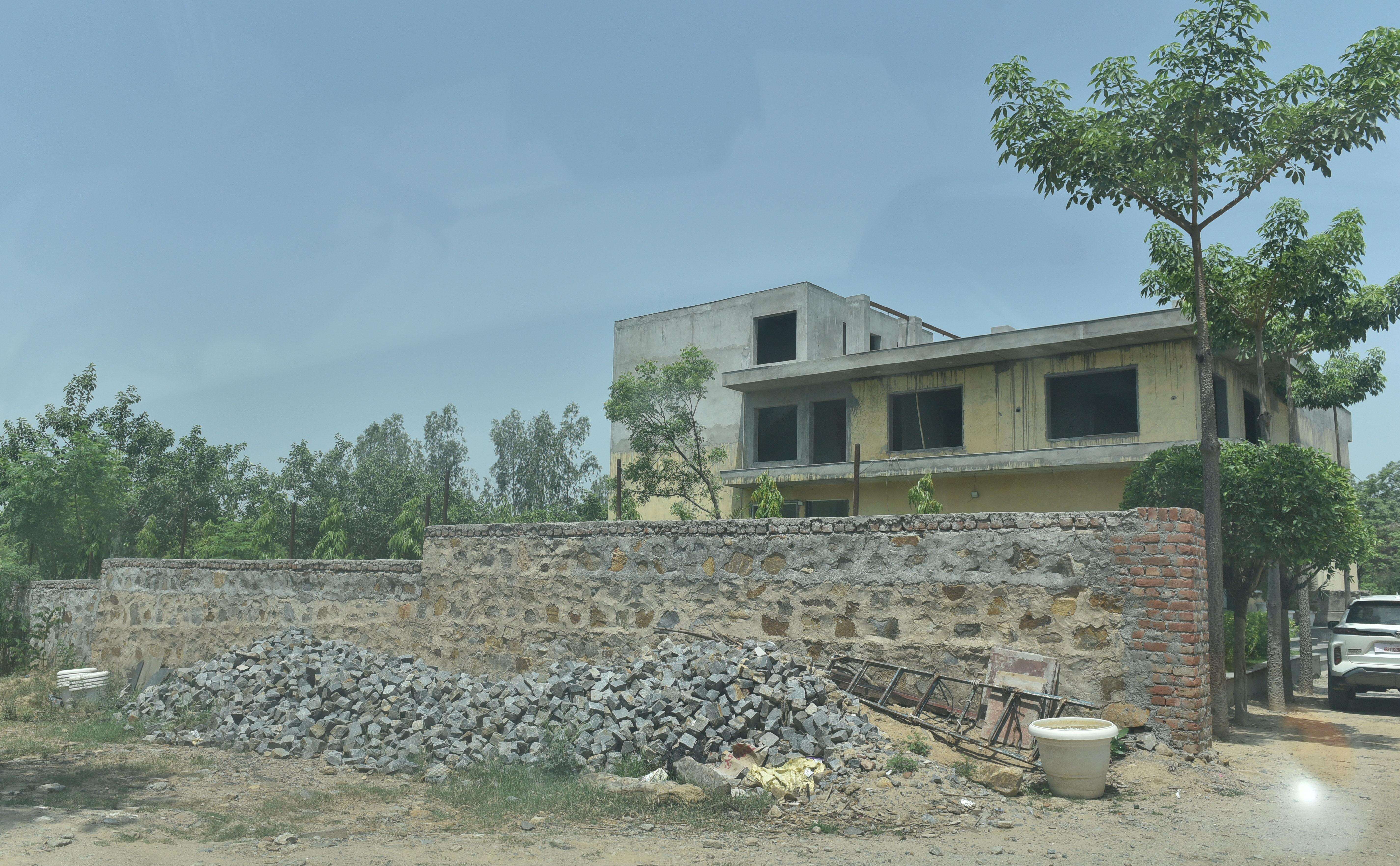
GURUGRAM: New construction activities have emerged in the protected forest area of Anangpur village. Observations during a site visit revealed recently erected structures, extensive boundary walls, and indications of ongoing development within a region governed by the Punjab Land Preservation Act (PLPA), which has been the focal point of numerous legal disputes regarding encroachments in the Aravalis.
During an inspection, TOI discovered a substantial multi-story building nearing completion, along with newly plastered compound walls surrounding significant land parcels and signs of ongoing masonry work. The land records confirm that these constructions are within a PLPA-designated area.
This new development occurs despite multiple Supreme Court interventions and findings from various agencies that have highlighted extensive encroachments in these protected lands.
Following a 2022 court directive, the Haryana government conducted a survey that identified 6,793 illegal structures—including banquet halls and residential complexes—on protected land across four villages in Faridabad. The majority were located in Anangpur (5,948), with the remainder in Ankhir, Lakkarpur, and Mewla Maharajpur.
The scale of illegal construction came to light last year when the Supreme Court-appointed Central Empowered Committee (CEC) reported that at least 5,800 homes had been built on 168 acres of forest land in Anangpur. The committee was tasked with reviewing compliance after the apex court expressed concerns over the slow implementation of its orders.
The importance of these new constructions lies not in the buildings themselves but in the legal standing of the land. The areas affected fall under PLPA sections 4 and 5, which restrict non-forest activities. Courts have consistently classified land designated under these rules as equivalent to “forest,” thus falling under a legal framework designed to protect ecologically fragile areas.
Environmental experts have expressed concerns that these new structures indicate ongoing pressure on the Aravalli ecosystem, despite years of judicial monitoring.
“The issue extends beyond isolated buildings. Each new boundary wall further fragments the landscape and indicates the transformation of open ecological areas into private property,” stated ecologist Sunil Harsana.
Despite legal safeguards and a prohibition on stone mining, the Aravalis in Faridabad and Gurgaon remain susceptible to encroachment. Court-led panels and environmental organizations have repeatedly documented instances of illegal roads and access paths cutting through forested regions, facilitating mining, construction debris dumping, and further land grabs.
Forest corridors in Anangpur, Mangar, Kot, and Mewla Maharajpur are particularly susceptible, situated at the intersection of rapidly growing urban developments and the remaining Aravali forests. Their closeness to highways, village roads, and residential zones has rendered them easy targets for unauthorized construction.
Experts caution that the cumulative effects extend beyond mere loss of greenery. The Aravali ridge is essential for groundwater recharge in the NCR, serves as a natural barrier against desertification, and acts as a wildlife corridor connecting different forest patches. Construction and land enclosure can disrupt drainage systems, block wildlife movement, and contribute to ecological decline.
Officials have stated they will investigate the situation. “We will assess the conditions and take the necessary actions,” affirmed the divisional forest officer (Faridabad) Jhalkar Uyake to TOI.