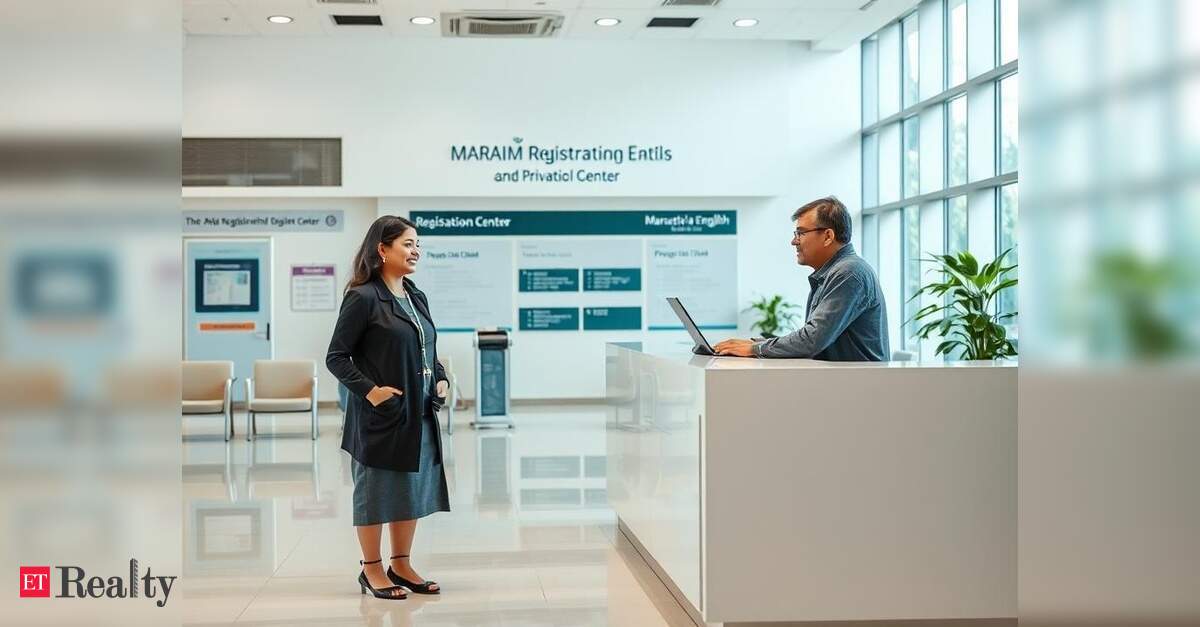

PUNE: Property buyers and sellers in Maharashtra are set to benefit from quicker registrations and enhanced services as the state registration department gears up to introduce 60 privately operated registration centers starting this July.
Inspired by the “passport seva kendra” model, these centers aim to simplify the registration process, albeit at an added cost to citizens. They will work alongside the state’s existing 517 government-operated registration offices.
The initiative was first revealed last year by the revenue department and will be carried out in three phases. The initial phase will introduce five centers in high-traffic districts like Mumbai, Pune, Thane, and Nagpur.
“The private entity selected is well-equipped to handle these facilities,” stated Abhay Mohite, deputy inspector general (IT). “While the firm will provide the infrastructure and staff, actual registrations will be managed by state employees, ensuring one sub-registrar and one clerk per center.”
Though the centers promise a more pleasant registration experience, this convenience comes at a processing fee of up to Rs 5,217 per document. Officials defended the charge, emphasizing the improved amenities, which include snacks, beverages, and on-site printing of Index 2 and summary statements.
The second phase will see an additional 25 centers launched in suburban Mumbai, Pune, Thane, Nashik, Nagpur, and Chhatrapati Sambhajinagar within nine months. The final 30 centers will be established in various other districts during the third phase.
This initiative stems from a directive by revenue minister Chandrashekhar Bawankule last September, aimed at enhancing the registration experience. While the private agency will supply support staff and manage operations, the state retains full regulatory oversight.
However, the plan has faced strong backlash from community groups. Activists have highlighted that the state already has over 500 registration offices, many of which are in poor condition. Critics argue that the Rs 10 crore allocated to upgrade 100 government offices should have been focused on improving existing services rather than creating a premium option.
“Many sub-registrar offices lack basic facilities like drinking water, adequate seating, and functional toilets,” remarked activist Shrinivas Joshi. “The government should address these fundamental issues first. Charging more for essential services is unjustifiable when the current infrastructure is substandard.”
Manisha Mohite, a Pune resident who recently registered a property, described the current offices as “cramped and unusable.” She believes that enhancing existing facilities should take precedence over engaging private firms.
Sachin Shinghavi from the Association of Service Providers (Maharashtra) stated that while the corporate approach might benefit those who can afford the extra charges, the department must not overlook the needs of the general public.
“The department may prefer a corporate model, but it must simultaneously invest in existing offices since most people will continue to depend on them,” Shinghavi emphasized.