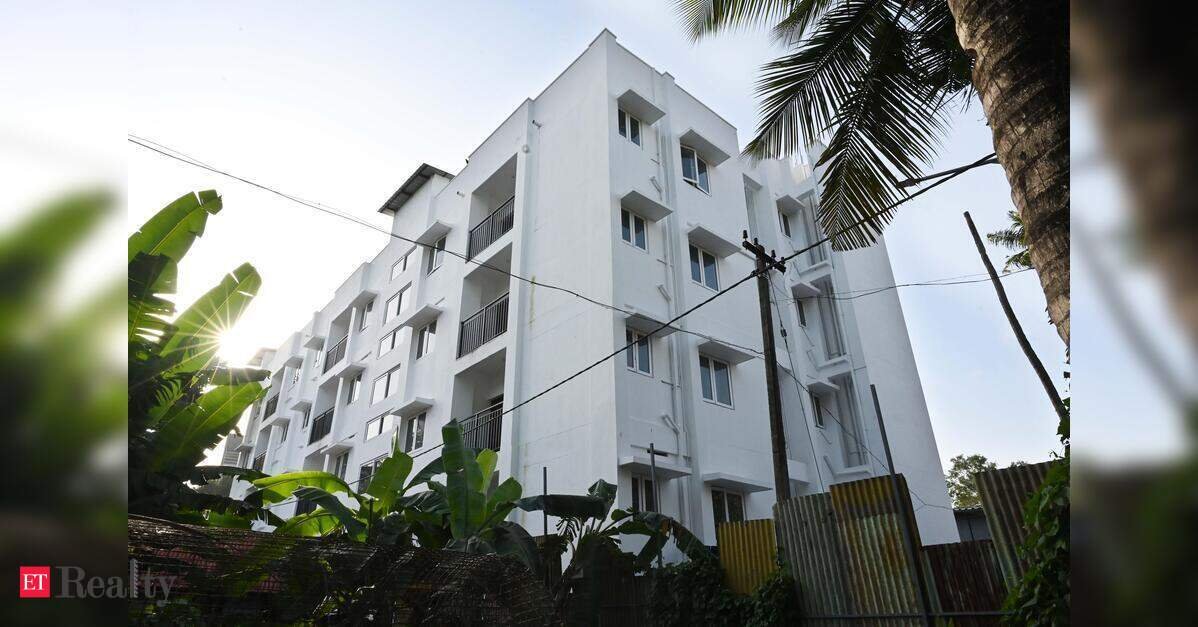
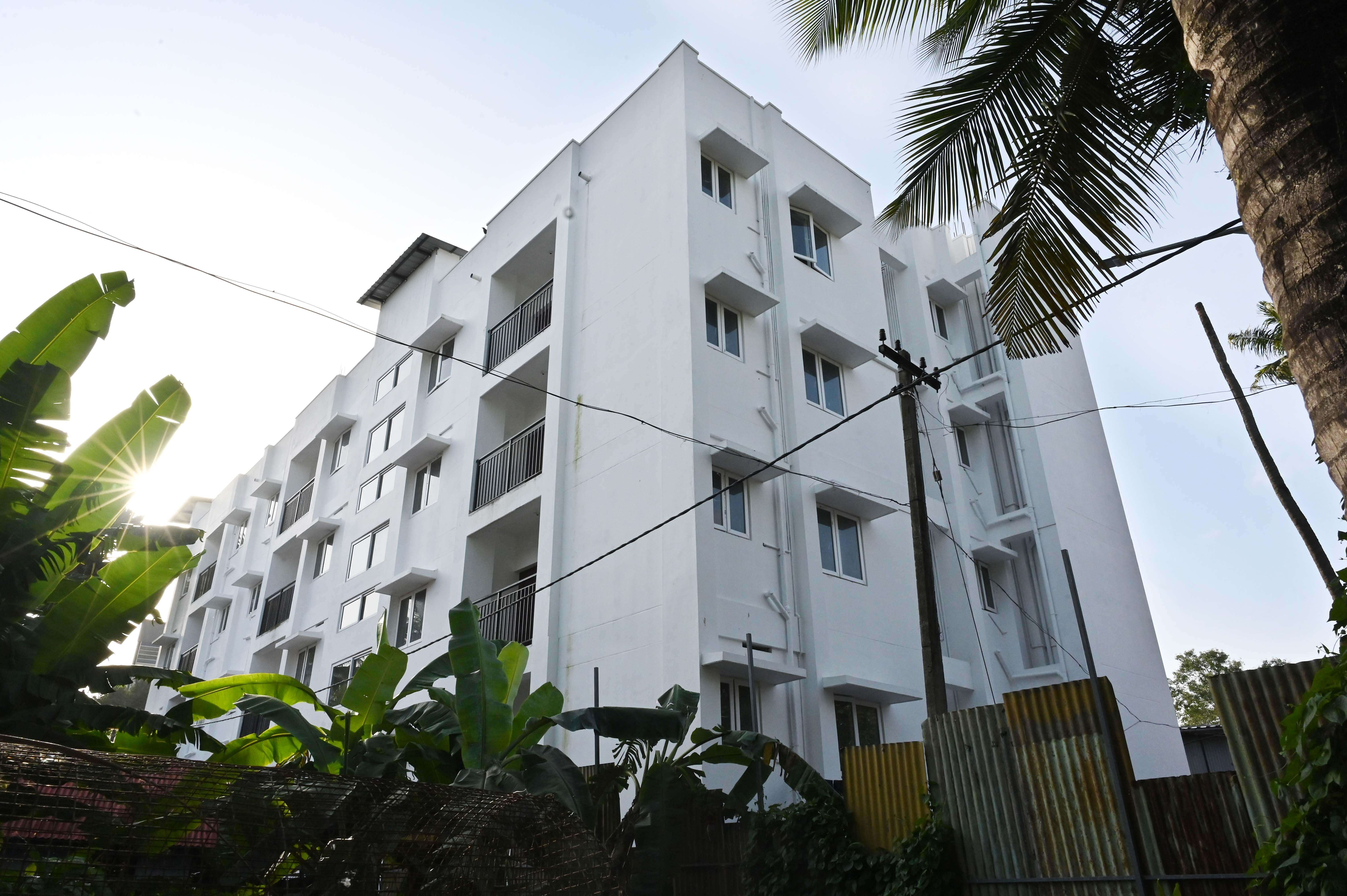
THIRUVANANTHAPURAM: The first phase of the Rajaji Nagar rehabilitation housing project is nearing completion, with a new apartment block ready for occupancy pending only a water supply connection from KWA. The power connection from KSEB has already been established, allowing the city corporation to commence the allotment process. Officials anticipate that the first group of families will move into the new flats by the second week of August.
Implemented by Smart City Thiruvananthapuram Ltd (SCTL) under the Smart Cities Mission, this project represents a significant advancement in the redevelopment of Rajaji Nagar, one of the oldest and most densely populated areas in the state capital.
The first phase includes a four-storey residential block, constructed at a cost of approximately Rs 9 crore, featuring 32 two-bedroom apartments of about 600 sq ft each. Designed with future expansion in mind, the building can support an additional two floors, enabling it to accommodate up to 48 families.
“Other than the KWA connection, all major work has been finalized. We have initiated the allotment process and expect the first families to relocate to the new apartments in the second week of August. This marks the first visible outcome of the redevelopment initiative,” stated a senior corporation official to TOI.
Officials noted that many beneficiaries have been residing in temporary accommodations after vacating their previous homes to facilitate construction. Once the building is officially handed over, the corporation will begin relocating these families before moving on to subsequent phases of redevelopment.
Situated across 12.6 acres in the Thampanoor ward, Rajaji Nagar houses around 2,000 residents in approximately 1,100 aging units that are structurally unsound and lack essential civic amenities. The integrated redevelopment plan aims to introduce 248 modern housing units, improved internal roads, stormwater drainage systems, parking facilities, community spaces, and recreational areas, transforming the colony into a well-planned residential neighborhood. The initial survey also identified around 967 dwelling units, along with commercial establishments within the area.
However, the project has faced numerous challenges over the years, including bid-related issues, disputes over the beneficiary list, and resistance from some residents concerning temporary relocation. Authorities have since adopted a phased rehabilitation model to allow construction to proceed while minimizing disruption.
With the first apartment block nearing completion, civic authorities hope that successful occupancy will instill confidence in residents and expedite the forthcoming phases of this long-awaited urban renewal project.