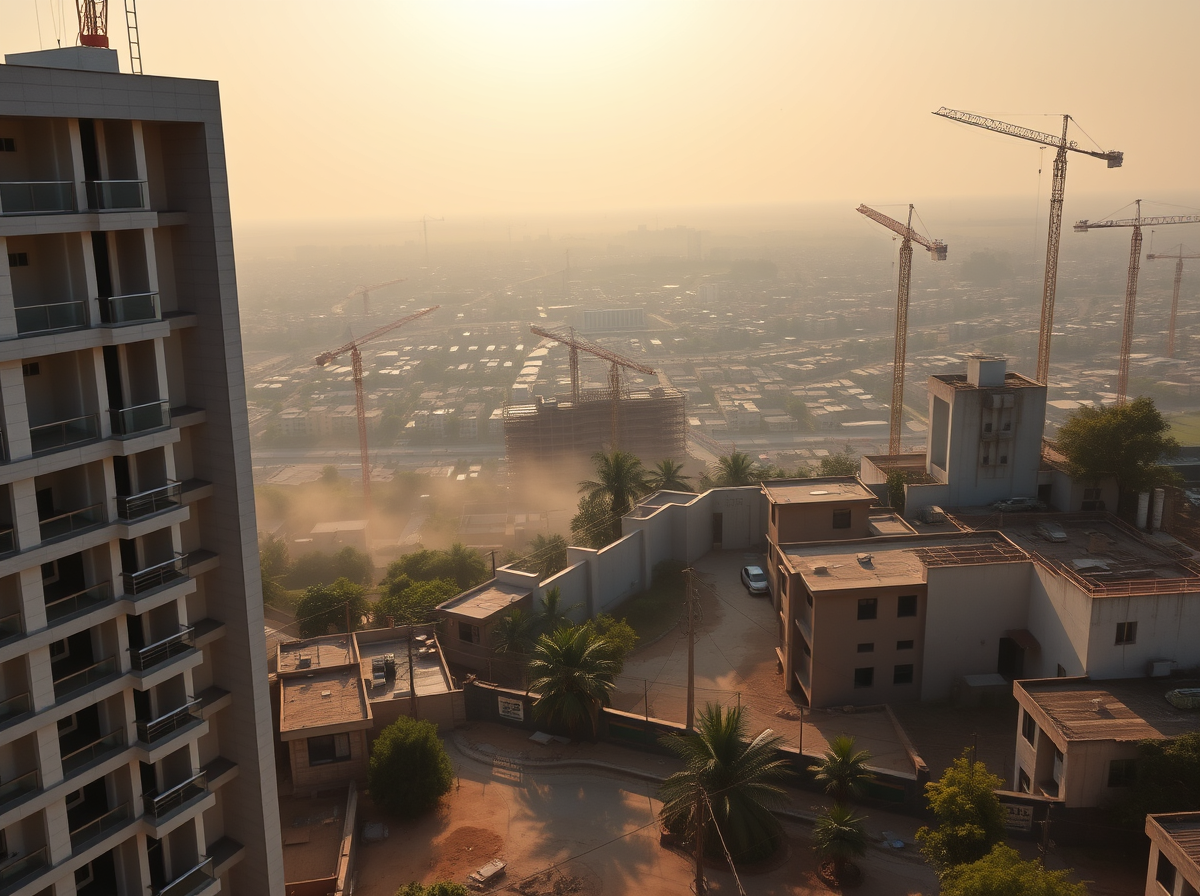
NASHIK: The city is poised for a significant redevelopment initiative, with thousands of aging housing societies and apartment complexes set to be reconstructed over the next three to five years to meet the growing demand for modern residences, improved amenities, and safer buildings.
This trend is already apparent in the applications received by Nashik Municipal Corporation (NMC)’s town planning department, with redevelopment projects now accounting for approximately 20-25% of all building plan proposals submitted for approval. To prepare for expected increases in residential density, NMC is simultaneously planning infrastructure upgrades to cater to the city’s needs over the next thirty years.
According to NMC data, about 25,000 properties in Nashik are over 60 years old, while another 28,971 fall between the ages of 40 and 60. Additionally, over 100,000 properties are in the 15 to 40-year age range, making them suitable candidates for redevelopment in the coming decade.
Uday Ghuge, vice-president of Credai Nashik, shared with TOI that the city hosts more than 6,000 housing societies and apartment complexes located on nine-meter-wide roads, many of which are three to four decades old. “The redevelopment of these properties is crucial. However, the floor space index (FSI) available in Nashik is lower than that in cities like Pune and Thane. If the government increases the FSI, it would significantly boost redevelopment activities in Nashik,” he stated.
The state urban development department is set to convene a meeting in Mumbai next week to discuss redevelopment-related matters in Nashik. Developers are hopeful that the government will consider incentives akin to those provided in Pune and Thane, including increased FSI and other concessions to enhance project viability.
Developers noted that redevelopment prospects have notably improved since the introduction of the Unified Development Control and Promotion Regulations (UDCPR) in December 2020. Prior to the UDCPR, Nashik properties had a base FSI of 1, with an additional 0.40 FSI available via transferable development rights (TDR).
Under the current regulations, properties on nine-meter-wide roads can achieve an FSI of up to 3.2 through a combination of base, premium, and TDR components, while projects on broader roads can utilize an FSI of up to 4.8. Developers have stated that the increased permissible FSI has greatly enhanced the redevelopment potential of older structures.
Officials reported that nearly 2,000 structures annually—primarily old houses, bungalows, and small residential buildings—have been redeveloped over the last five years. Most of these buildings were between 30 and 40 years old and required reconstruction due to structural wear, evolving lifestyle requirements, and the demand for modern amenities.
Nilesh Chavan, a project management consultant and former president of the Nashik chapter of the Indian Institute of Architects (IIA), affirmed that the UDCPR has been pivotal in transforming the city’s real estate landscape. “The streamlined regulations under UDCPR have simplified the approval process and encouraged investments in new projects and redevelopment. Presently, roughly 20% to 25% of building plans approved by the town planning department are redevelopment proposals,” Chavan explained.
While redevelopment is increasing residential density across various parts of the city, civic officials have asserted that infrastructure enhancements are being undertaken concurrently to address future demand. An NMC official stated that the civic body is bolstering water supply and sewage systems while planning for the city’s needs over the next 20 years. “Currently, Nashik’s water demand is around 600 MLD, with a treatment capacity of approximately 650 MLD. To accommodate anticipated population growth, we are enhancing water treatment capacity by an additional 300 MLD,” the official noted.
The civic body is constructing two new water treatment plants and upgrading pump machinery at dams and existing facilities to boost supply capacity. Officials have indicated that these projects are expected to sufficiently meet the city’s water requirements for the next 15 to 20 years.