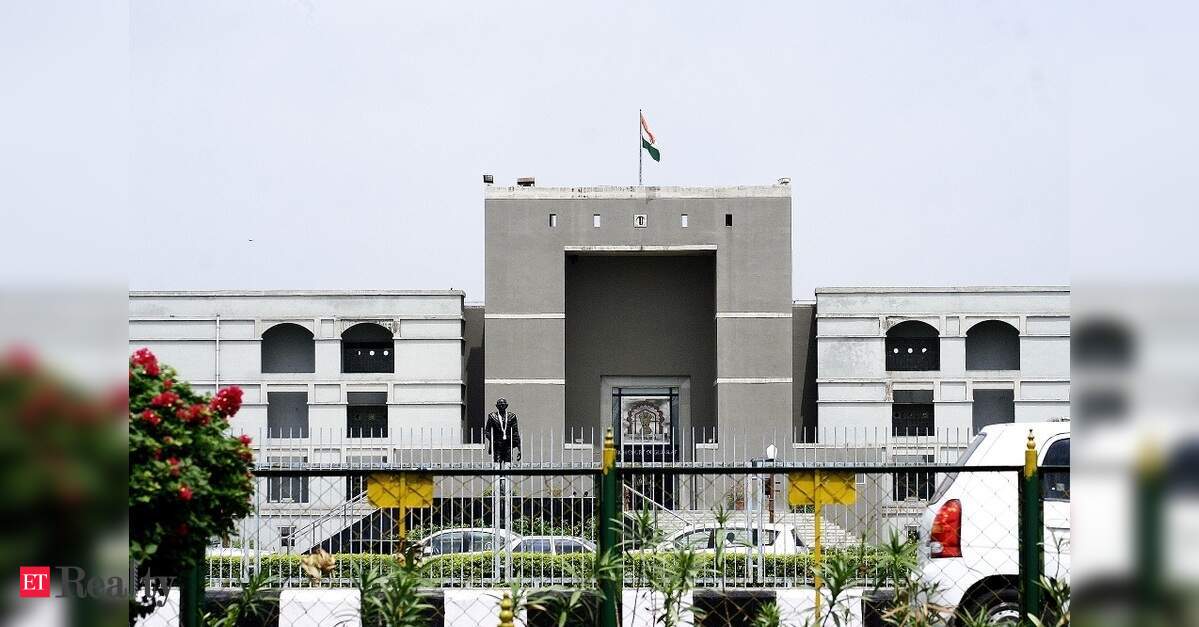
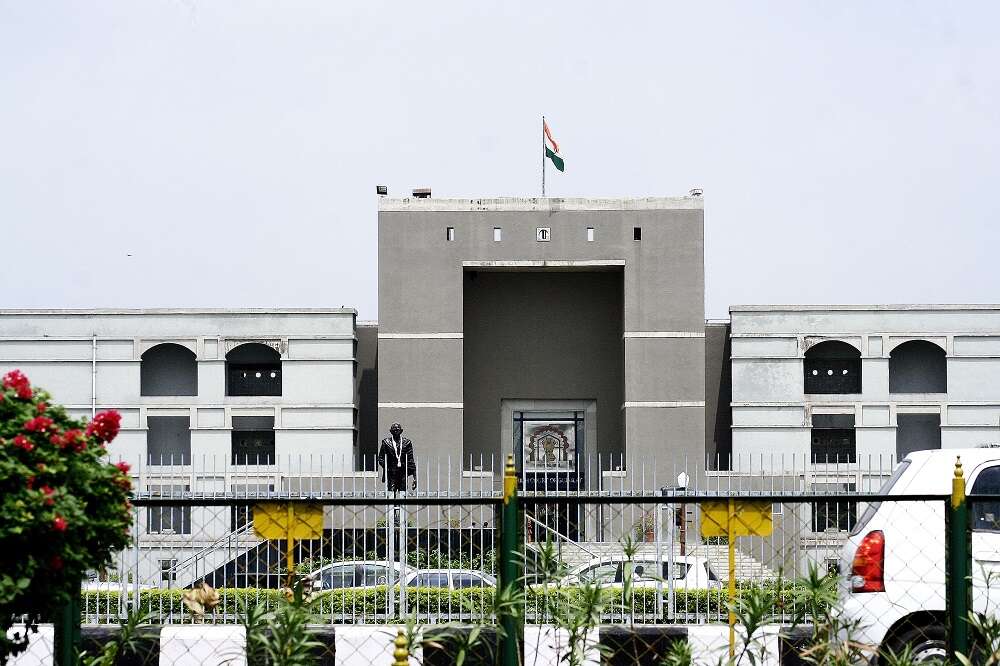
AHMEDABAD: The Gujarat High Court has ruled that once an authority regularizes unauthorized construction by accepting the impact fee or denies such a request, it cannot review or revoke its decision. The court annulled an order by the Ahmedabad Municipal Corporation (AMC) that cancelled a prior regularization of unauthorized construction at the Swastik Complex, a commercial building located in Maninagar. The court found that the authority lacked the jurisdiction to revoke a regularization order under Section 8(4) of the Gujarat Regularisation of Unauthorised Development Act, 2011 (GRUDA).
The petition was brought by Unnati Shah and others in response to AMC’s 2018 order, which cancelled its 2015 decision allowing the regularization of unauthorized construction in the parking area and issued a demolition notice.
According to case details, the builder applied to regularize portions measuring 83.16 sq m on the ground floor and 24.95 sq m in a designated parking area. AMC approved the regularization in 2015 after collecting the impact fee under GRUDA. The builder subsequently sold the shops and cellar to the petitioners in 2016.
The AMC nullified its earlier regularization order following complaints regarding illegal construction on the property, claiming that the construction had occurred after the cut-off date of March 28, 2011. The petitioners contended that this violated the principle of natural justice.
The court examined whether Section 8(4) of GRUDA granted authority to cancel a decision made under Section 6(3).
Justice Niral Mehta remarked, “Once the designated authority has issued an order, whether granting regularization under Section 6(3) or denying it under Section 6(4), the Act does not permit any power of review or revision for that authority. The only legal remedy provided under the Act is the right to appeal available to an applicant whose application for regularization has been denied under Section 6(4).”
The High Court stated, “This court cannot identify any authority under the Act that allows the designated authority to collect new evidence or reassess the materials previously reviewed while issuing the regularization.”
It concluded, “The actions of the respondent authorities in cancelling or revoking the regularization order are entirely beyond jurisdiction and hence legally unsustainable.”