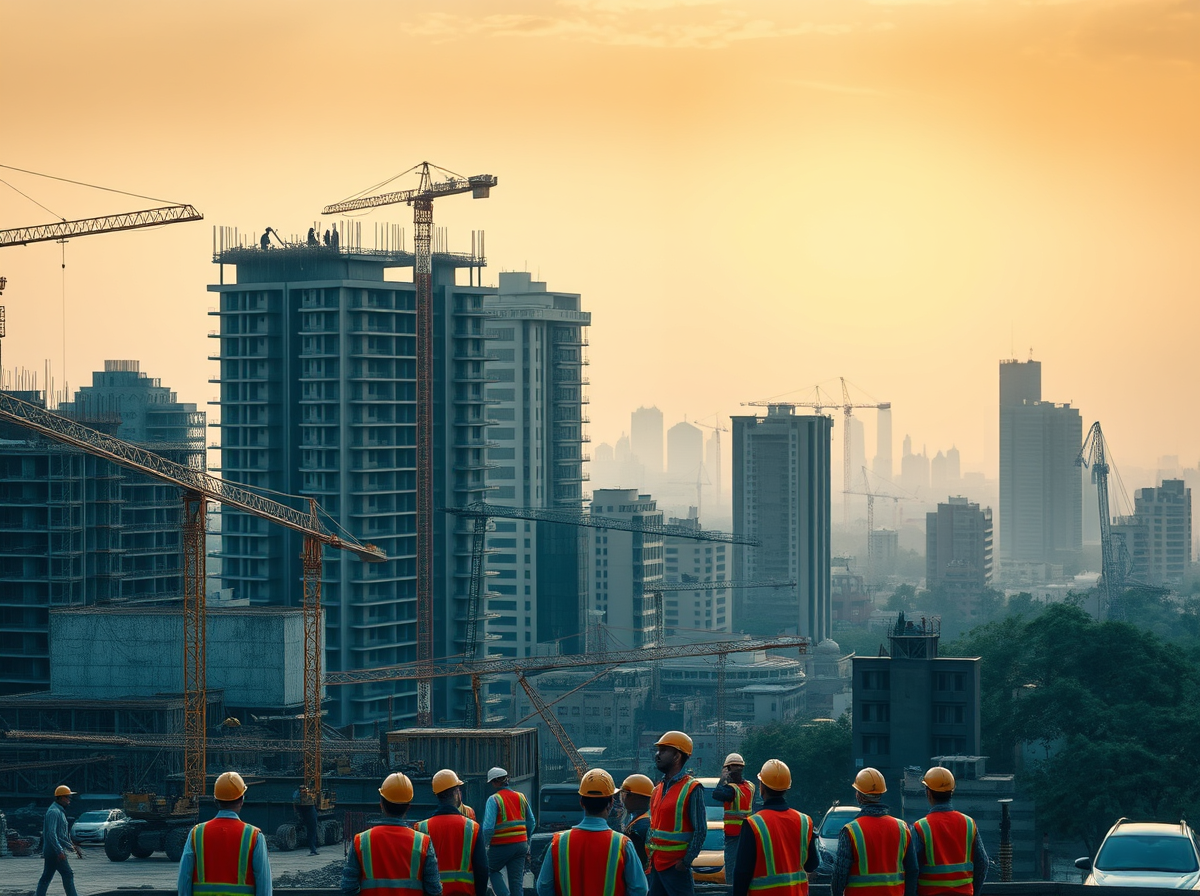
MUMBAI: Major corporate groups in India are increasingly focusing on urban regeneration, indicating a transformative shift in the real estate sector where redevelopment is becoming as valuable as traditional land acquisitions.
In recent months, firms linked to Reliance Industries, Adani Group, JSW Group, Shapoorji Pallonji Group, and Lodha Developers have been aggressively pursuing significant redevelopment opportunities across Mumbai, including aging housing colonies and extensive urban renewal schemes.
Recently, Vedanta Group diversified into real estate, expanding its portfolio beyond metals and mining.
“The increase of large corporates entering the Indian real estate sector indicates a transition from a fragmented, promoter-led market to a more structured, governance-focused industry. Factors such as RERA, GST, improved compliance, digitization, and heightened homebuyer expectations have fostered trust and transparency, turning scale and discipline into competitive advantages,” stated Niranjan Hiranandani, Chairman of NAREDCO.
This trend highlights a changing landscape in India’s most densely populated cities. As large greenfield sites become scarce and costly, developers are increasingly leveraging redevelopment as a strategic way to establish their project pipelines within urban areas.
“Large-scale redevelopment is becoming the preferred strategy for well-funded corporate groups, offering access to prime urban areas where acquiring significant greenfield land is no longer practical. These projects require substantial capital and execution capacity, but they also generate long-term development opportunities in established micro-markets with comparatively lower market risks,” remarked Shishir Baijal, CMD of Knight Frank India.
The most notable activity is in Mumbai, where redevelopment projects encompassing over 200 acres have attracted bids from some of India’s largest firms. Recently, Adani Properties became the front-runner for MHADA’s 34.33-acre Adarsh Nagar project in Worli and the 98.27-acre Bandra Reclamation redevelopment scheme, while a JSW Group-led consortium won the 73.89-acre SVP Nagar project in Andheri West.
According to Hiranandani, the main constraint in markets like the MMR is not capital or intent, but land, approvals, and effective execution. This consolidation trend is a natural progression, as smaller developers increasingly collaborate to meet compliance, capital, and customer delivery demands. Improved governance and structured execution will lead to better quality and more reliable outcomes.
A consortium led by Reliance Industries’ subsidiary, Reliance 4IR Realty Development, recently won the bid for the 101.36-acre Juhu Galli slum cluster redevelopment project in Andheri West, competing with entities linked to JSW Group and Shapoorji Pallonji Group.
The rising interest in redevelopment projects is mirrored by the Adani Group’s advancements in this area, including the Dharavi redevelopment project and the significant 142-acre Motilal Nagar project in Goregaon West, one of MHADA’s largest undertakings.
Redevelopment grants access to sizeable contiguous land parcels in prime urban sites, providing well-funded corporate groups an edge in navigating complex approvals, rehabilitation requirements, and lengthy execution timelines, experts noted.
Redevelopment requires considerable capital, regulatory knowledge, and sustained execution, which benefits large corporate entities with strong financial backing.
The financial attractiveness is also increasing. Redevelopment enables developers to access premium micro-markets without bearing upfront market prices for land. Often, these projects are situated within established residential and commercial districts featuring existing infrastructure and connectivity, thereby reducing market risk.
For cities like Mumbai, redevelopment has become an essential urban planning strategy. Much of the city’s housing stock is aging, and informal settlements are occupying strategically valuable land. State agencies, such as MHADA and the Slum Rehabilitation Authority, have stepped up efforts to unlock these areas through cluster redevelopment initiatives.
The growing involvement of major corporate groups indicates that redevelopment is no longer seen as a niche real estate activity. Instead, it is emerging as a crucial opportunity for growth in urban property markets, with competition increasingly focused on who can control and drive the transformation of some of the nation’s largest regeneration projects.