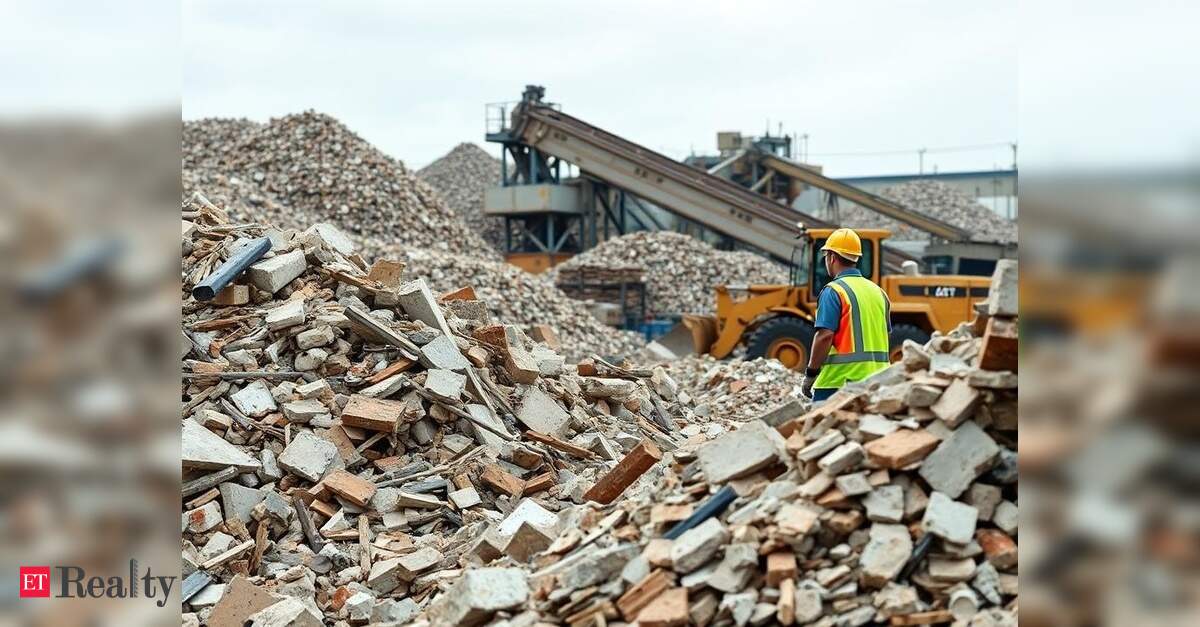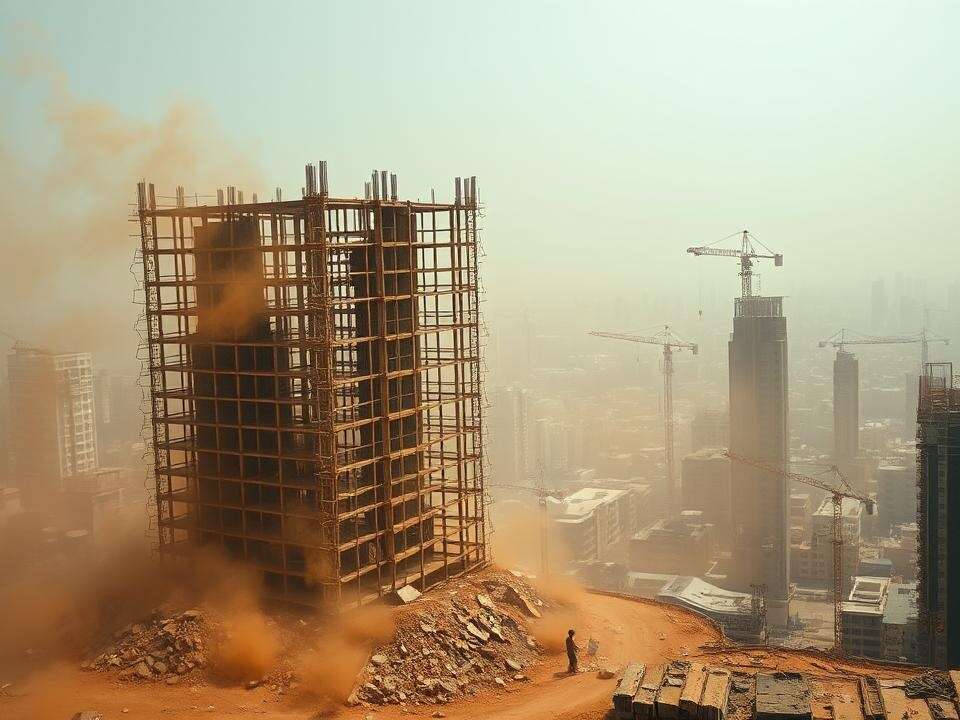
GURUGRAM: Construction sites in the area have become dust bowls, severely affecting air quality. Residents struggle to breathe as pollution levels surge, prompting the implementation of stage 4 restrictions under the Graded Response Action Plan (GRAP) across Delhi-NCR.
Many key areas in the city remain enveloped in a permanent haze due to continuous construction activities day and night.
Despite the ban, numerous sites are flouting basic guidelines set by the Union Ministry of Environment, such as using green sheets to cover areas, watering down dust, and properly covering vehicles carrying construction and demolition (C&D) waste. Most construction work continues unabated throughout the city, with only a few major sites adhering to these rules.
A recent visit by TOI to major construction locations, including Sector 23, Sector 18, Sushant Lok 1, Iffco Chowk, MG Road, Sector 28, Sector 27, and DLF Phase 1, painted a grim picture. Each site was coated with a fine layer of dust, affecting buildings, trees, vehicles, and even the workers, none of whom were seen wearing dust masks.
On Sunday, the AQI peaked at 291 (poor), with recordings of AQI at NISE Gwal Pahari reaching a severe 400, and Teri Gram at 337, all remaining in the ‘very poor’ to ‘severe’ range. Vikas Sadan measured an AQI of 293, while Sector 51 showed a comparatively better figure of 134, landing in the ‘moderate’ category.
Sushil Yadav, a Sushant Lok 1 resident, expressed frustration: “Our entire lane is perpetually coated in dust, regardless of the season. There’s no concern for residents’ health; the civic bodies don’t monitor construction activities to enforce GRAP orders.”
The GRAP 4 requires stringent vigilance from civic authorities, with zero tolerance for visible emissions. Measures should include impounding visibly polluting vehicles and imposing hefty fines. Regulations for dust control at construction sites must be enforced, with non-compliant operations shut down.
The Haryana State Pollution Control Board (HSPCB) should regularly evaluate compliance with dust mitigation at C&D sites. Despite clear norms, many visited sites were transporting construction materials in uncovered trucks, and their wheels weren’t cleaned, spreading dust onto public roads. C&D waste was seen dumped by roadways, and stone grinding was happening openly.
An HSPCB officer in Gurgaon stated, “We have acted against larger sites exceeding 20,000 sq meters in size. Smaller sites fall under the jurisdiction of MCG, which has been instructed to sprinkle water on roads to control dust.”