
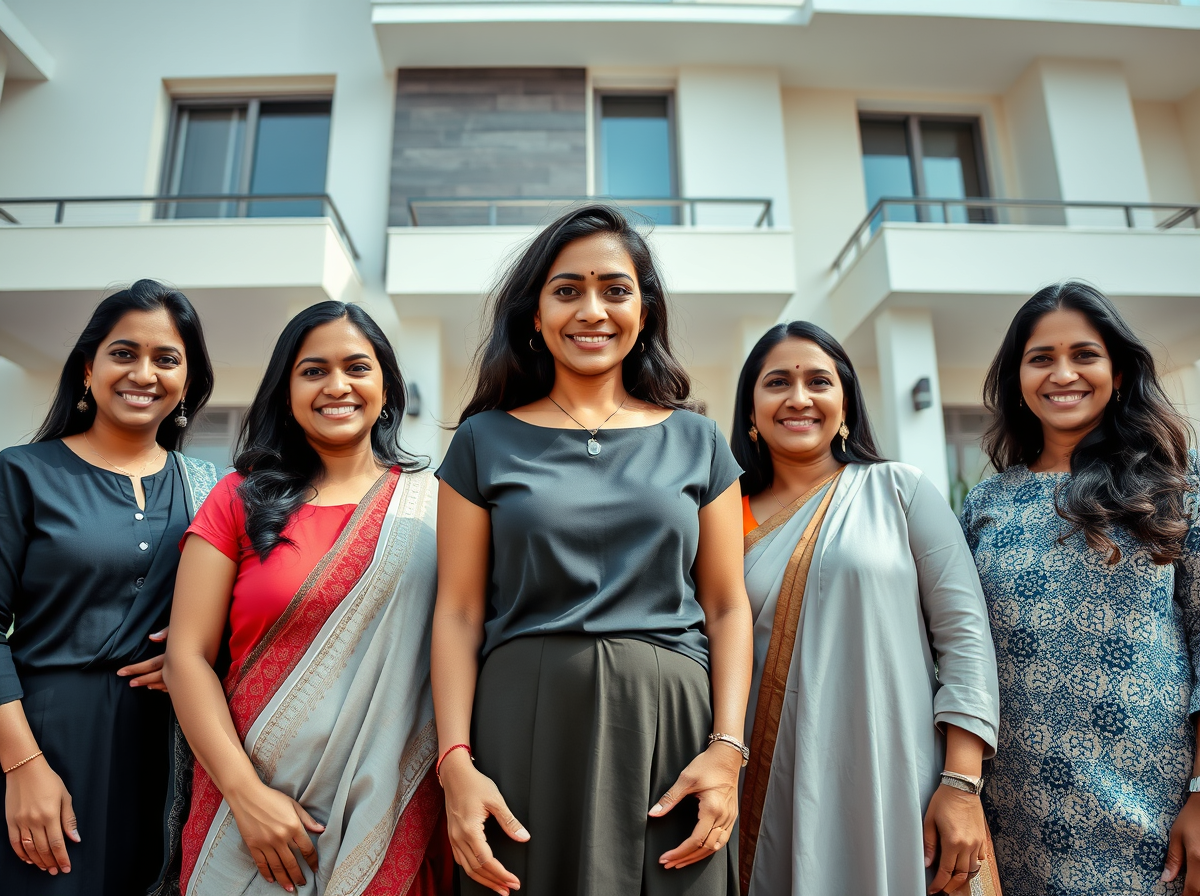
BENGALURU: The percentage of women owning houses and land in Karnataka has nearly doubled over the past five years, indicating a shift in family decision-making and attitudes towards wealth and security. This trend follows a rise in women’s investments in property, either independently or collectively.
According to the National Family Health Survey-6 (NFHS) conducted in 2023-24, approximately 29.5% of households in Karnataka have at least one female member who owns a house and/or land, either independently or jointly. This marks a significant increase from 16.2% in the previous NFHS-5 (2019–21). Notably, female/joint ownership in rural areas stands higher at 36.9%, compared to urban households at 20.2%.
Anila A, 35, who purchased a home on Hosa Road in the tech corridor last year, expressed that her decision was about achieving financial independence. “I never considered buying a house previously. Since marriage isn’t in my immediate plans, I wanted a sense of security. A friend’s home purchase inspired me. Owning a property has boosted my confidence knowing that I have a place of my own,” she shared.
Many women homeowners highlighted that property ownership serves as a financial safety net and enhances independence in unpredictable situations. Some families register properties under women’s names to prevent legal disputes, while others do so to ensure a more equitable distribution of wealth and acknowledge women’s financial contributions.
For Rahul Pandya of Shantinagar, registering a property in his wife’s name was about fairness and financial planning. Following his own property purchases, he wanted her to have an autonomous asset. “The process was easier due to her higher salary and repayment ability, which banks consider,” he noted.
Experts argue that definitions of urban and rural must evolve. Kala Seetharam Sridhar, an urban economist and professor at ISEC, stated: “Our definition of urban is outdated. If the 2011 Census had adopted a broader definition, over 50% of India would fall under urban classification, possibly explaining the increase in rural population.”
In some cases, traditional beliefs still shape decisions. Several homeowners mentioned a common belief that properties bought in a woman’s name attract prosperity and good fortune. Real estate professionals assert that these trends signal changing household dynamics rather than merely an uptick in female buyers.
Bhaskar T Nagendrappa, president of the Confederation of Real Estate Developers’ Associations of India, Karnataka chapter, remarked: “Government initiatives have spurred women’s involvement in property ownership, especially in rural areas. In cities like Bengaluru, the prevalence of dual-income households has normalized joint ownership. Women are now seen as equal stakeholders in home purchases, which improves loan eligibility and offers financial security. Younger couples increasingly believe that both partners should share ownership as they contribute financially.”
Sunil Pareek, executive director at Assetz, a real estate firm, noted: “In the last 3-4 years, 50-60% of our new bookings have included a woman as a co-applicant. In some instances, both applicants are women. This trend is fueled by stamp duty concessions, enhanced loan eligibility via joint ownership, greater awareness of financial security and inheritance rights, rising female workforce participation, and a more transparent real estate sector. Today, women are active participants in home-buying and finance decisions, marking a shift from informal influence to formal ownership.”