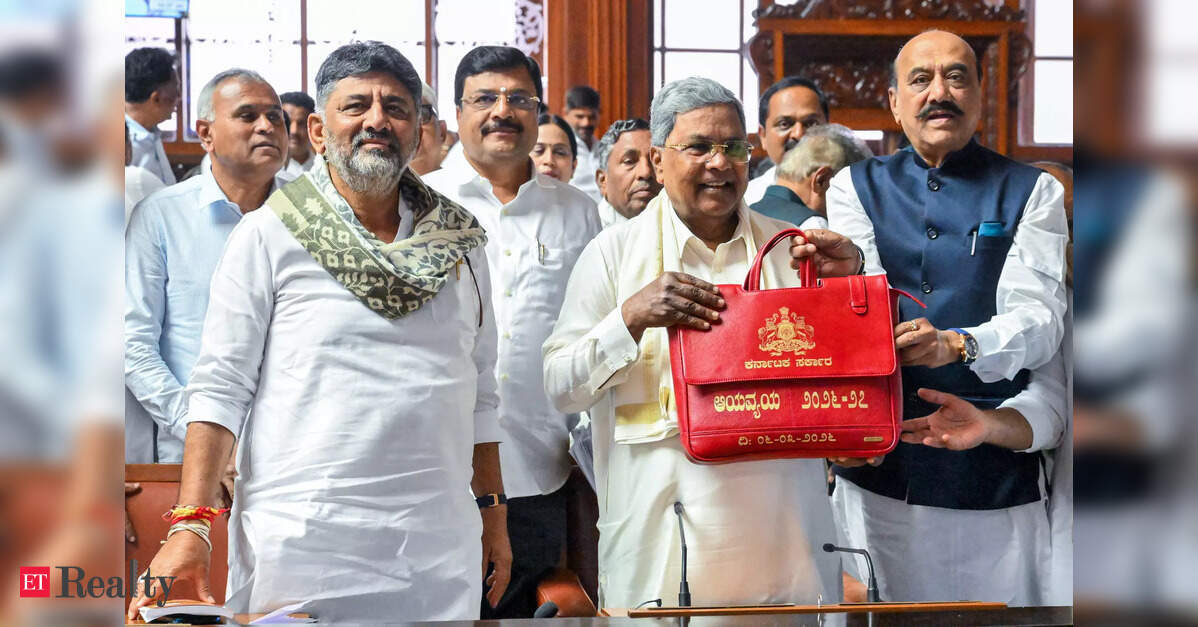
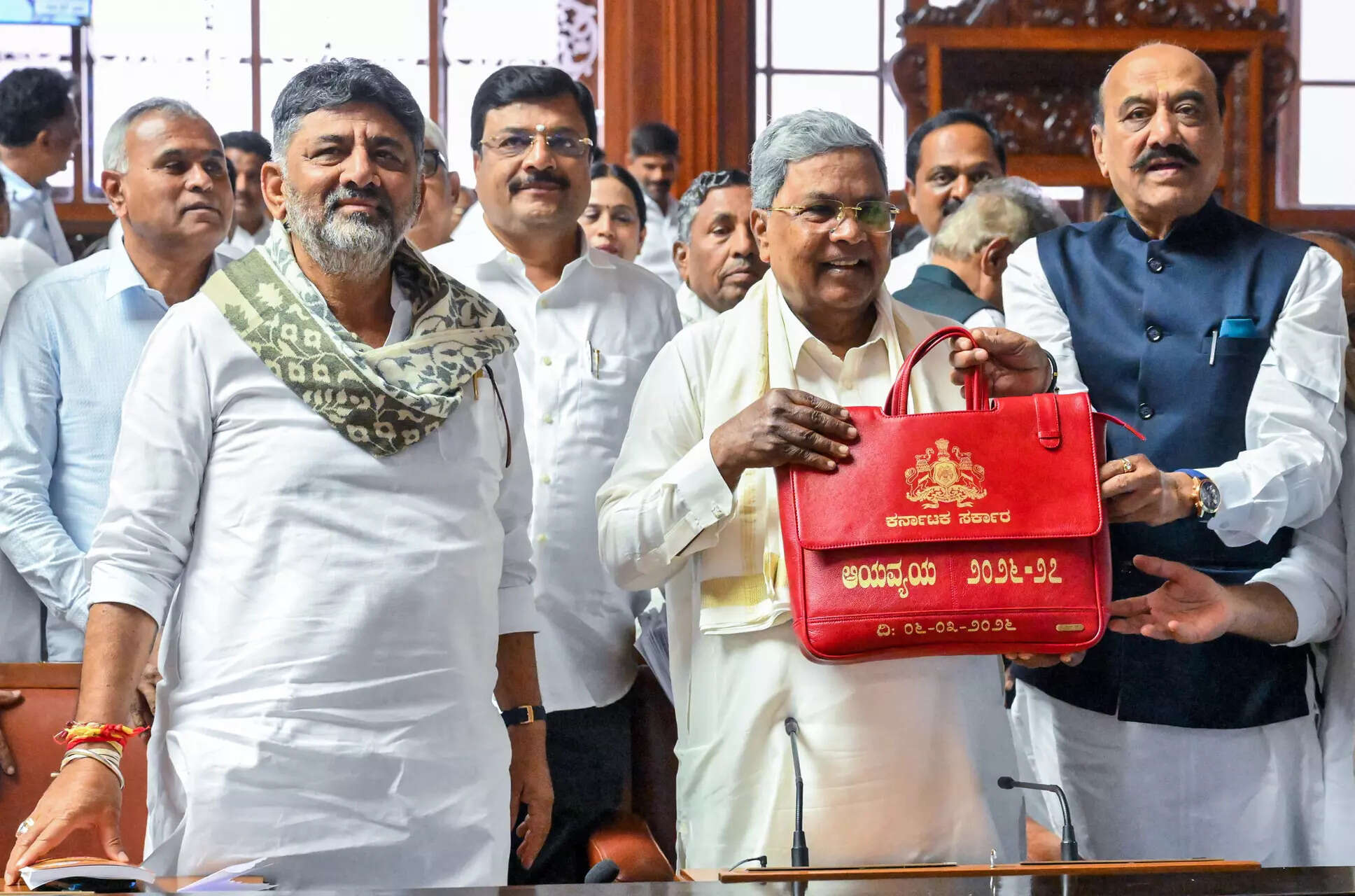
BENGALURU: In a historic 17th budget presented in the Assembly on Friday, Karnataka Chief Minister Siddaramaiah proposed a social media ban for children under 16. The budget also includes plans for school modernization, completion of water projects such as the Mekedatu reservoir, which has faced opposition from Tamil Nadu, and a major infrastructure initiative for Bengaluru.
With a total budget outlay of Rs 4,48,004 crore, he emphasized a development strategy that harmonizes welfare programs with infrastructure investments for long-term economic change, giving rise to a unique Karnataka-specific economic framework dubbed the “11G model.”
Key announcements in the budget encompass filling 56,432 vacant positions across various departments, launching the “Vasudhamruta” program to advocate sustainable farming, establishing 800 new Karnataka Public Schools, developing 40 degree colleges, implementing the Rohith Vemula Act to combat caste-based discrimination in education, and holding student union elections in colleges and universities.
Moreover, 40 new residential schools will be set up, alongside a Rs 5,000 crore action plan for Kalyana Karnataka development, and a Rs 7,000 crore allocation for Bengaluru’s infrastructure development.
For the fiscal year 2026-27, the revenue deficit is projected at Rs 22,957 crore, while the fiscal deficit is set at Rs 97,449 crore, equivalent to 2.95 percent of GSDP. Total liabilities by year’s end are expected to reach Rs 8,24,389 crore, or 24.94 percent of GSDP, with gross borrowings estimated at Rs 1.32 lakh crore.
“Both the fiscal deficit and total liabilities remain within the guidelines established by the Karnataka Fiscal Responsibility Act, underscoring our commitment to responsible fiscal management,” Siddaramaiah stated.
In response, the opposition BJP organized a “Khaali Chambu” (empty vessel) protest, claiming the budget offers little to the populace. Leader of Opposition R Ashoka criticized the budget as “bland” and lacking new initiatives.
Siddaramaiah admonished the BJP-led NDA government at the Center for neglecting Karnataka’s rights, emphasizing that adherence to federal governance principles is necessary. His administration aims for balanced growth that includes welfare programs and infrastructural investments, urging the Union government to be more attentive to state needs.
He reaffirmed commitment to the Mekedatu balancing reservoir project on the Cauvery River and reiterated the social media ban for children below 16, saying they can have mobile phones but cannot access social media.
A detailed plan for the implementation of this ban is underway.
“Our state is pivotal in national development, contributing significantly to tax revenue,” he remarked. The budget also incorporates five guarantee schemes, focusing on capital investment, job creation, and addressing regional inequalities.
Proposals include an IT Park in Mangaluru, promoting Mysuru as Karnataka’s second IT hub, and establishing a Robotics and AI Innovation Zone in Bengaluru. Additionally, free insulin pens will be provided for children with Type-1 diabetes up to age 18.
Siddaramaiah compared state governance to caring for a cow that produces abundant milk, illustrating the need for responsiveness from the central government. “The cow must be cared for to prevent harm to the entire herd,” he noted.
Regarding the “11G model,” he explained it encompasses components such as a guarantee economy for welfare and gender equality, public education for universal access, comprehensive healthcare, agricultural and rural development, and a people-centric governance model.
The model also integrates initiatives for labor welfare, geographical equality to minimize disparities, global trade promotion, a tourism-driven economy, and a green economy that supports renewable energy.
“These economic principles guide our efforts in steering Karnataka towards sustainable development,” Siddaramaiah concluded, asserting that the finance department’s budget documents detail how this framework defines India’s unique developmental approach.
He accused the central government of unfair treatment towards Karnataka, citing the detrimental impacts of rate restructuring which led to decreased GST collections by Rs 10,000 crore this fiscal year and projected a further Rs 15,000 crore reduction next year.
Despite the challenges posed by the central tax policies, Siddaramaiah emphasized Karnataka’s robust fiscal performance and revenue generation capabilities.