NEW DELHI: As of market close on August 18, 2025, India’s listed real estate investment trusts (REITs) have achieved a combined market capitalization of approximately ₹1.5 lakh crore. Quarterly distributions rose 13.7% year-on-year to ₹1,559 crore in Q1 FY26, reaching over 2.7 lakh unitholders.
Since their inception, the four operational REITs have distributed more than ₹24,300 crore to unitholders up to Q1 FY26. As of Q4 FY25, the domestic REIT industry’s assets under management (AUM) were valued at ₹2.25 lakh crore, with a portfolio exceeding 175 million sq ft of Grade A office and retail space.
REITs offer tax-efficient, pass-through vehicles and are mandated by regulations to distribute at least 90% of net distributable cash flows on a semi-annual basis. Investment units range between ₹100 and ₹500, providing a low entry point along with the potential for capital appreciation.
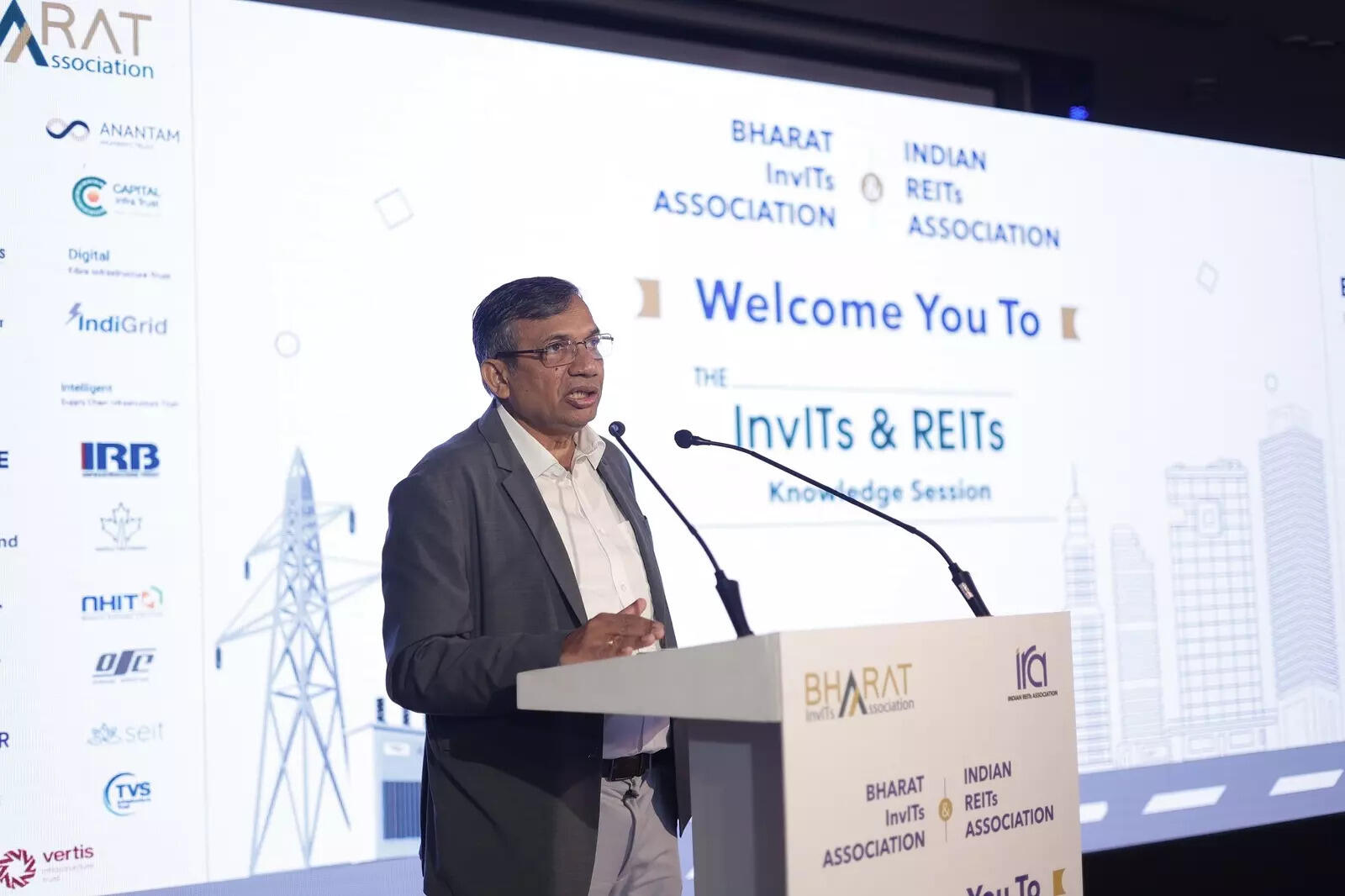
Alok Aggarwal, Managing Director & CEO of Brookfield India Real Estate Trust and Chairman of the Indian REITs Association (IRA), remarked, “Since their inception, the first four REITs have distributed over ₹24,300 crore to unitholders, and current listings have a combined market capitalization of ~₹1.5 lakh crore. Regulations ensure that REITs distribute at least 90% of their net distributable cash flows biannually, providing a steady income stream.”
Policy Reforms Enhance Market Accessibility
Multiple supportive measures from the government and SEBI have improved market accessibility for retail investors, including reducing the minimum investment ticket size. Other supportive measures include SEZ reforms and lowered minimum subscription thresholds.
Aggarwal expressed optimism for an equity-product classification for REITs to facilitate passive investments, as well as an increase in mutual fund exposure limits from 10% to 20%.
Manageable Impact of Global Uncertainties
Although global uncertainties have caused some firms to pause expansion, Aggarwal emphasized that the slowdown in IT services is being offset by global capability centres (GCCs/GICs) and domestic enterprises, buoyed by India’s growth of 6.5–7%. The annual industry leasing rate has reached approximately 90 million sq ft, with large institutional landlords seeing occupancy rates near 90%.
Balanced Supply-Demand Dynamics
Addressing concerns about supply constraints in Grade A properties, Aggarwal expressed confidence in the market’s adaptability, stating, “Supply will be driven by demand. Indian developers have both the capability and acumen to create supply and upgrade properties per tenant needs.” He noted that well-designed Grade A buildings do not become obsolete within 10–15 years, although they may require upgrades like MEP/lifts over time.
Future Growth Outlook
India currently has five listed REITs, with expectations for additional listings—potentially one a year depending on portfolios and market conditions. Typically, each REIT manages 30-50 million sq ft of space, with the sector needing sufficient Grade A office space annually to support two to three REIT expansions.
As the sector evolves, diversification across various sectors and cities will characterize the next growth phase, establishing REITs as a mainstream asset class and a vital link between physical real estate and financial markets.
Significant Share in Commercial Stock
REITs now form a notable portion (approximately 15–20%) of institutional-grade commercial real estate in India, with a portfolio encompassing about 128 million sq ft of the total 700 million sq ft of Grade A commercial stock.