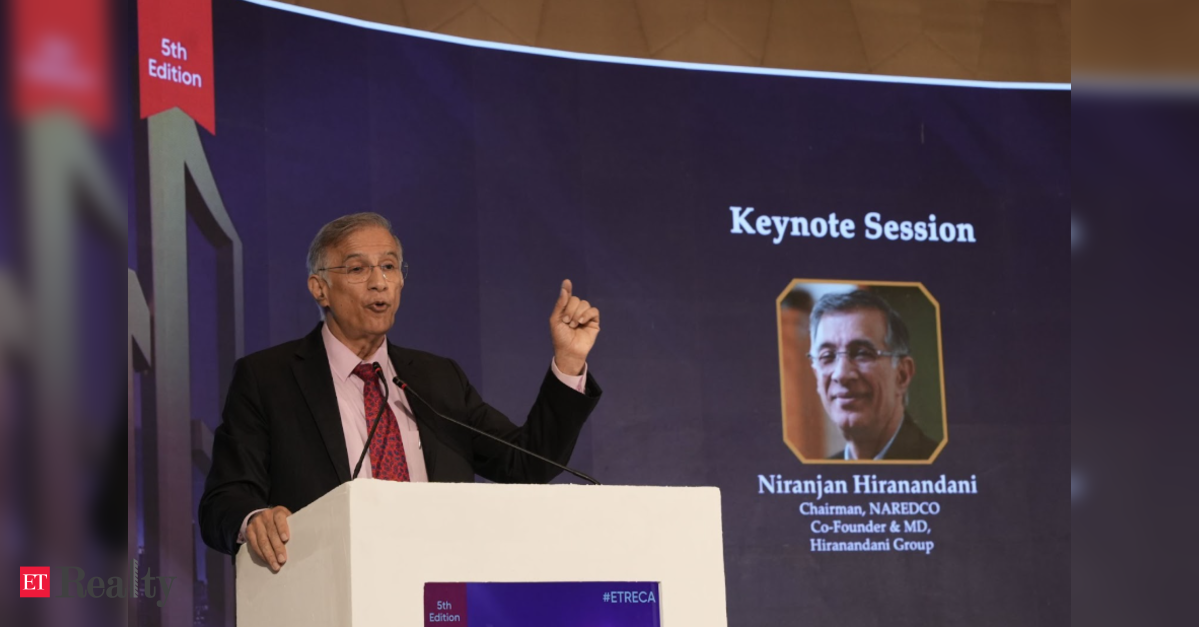
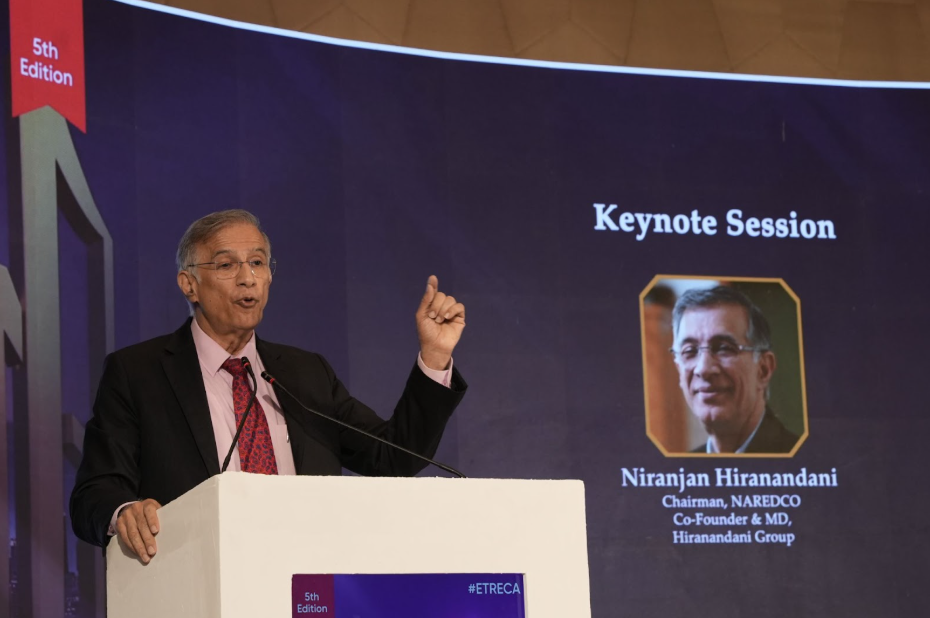
During the keynote address at the RealtyDailyNews Realty Real Estate Conclave 2026, Niranjan Hiranandani, Chairman of NAREDCO and Co-Founder & MD of Hiranandani Group, presented an optimistic and balanced perspective on India’s real estate sector. He framed the industry within the context of India’s broader economic growth, emphasizing continuous GDP growth, accelerated infrastructure development, and increased credit availability as key drivers for future development.
“Commercial lending is achieving annual growth rates of nearly 15%,” Hiranandani remarked, connecting the increase in credit accessibility to both homebuyers and developers. With India’s economy expanding over 7% and becoming one of the fastest-growing major economies, he stated that the real estate sector stands to gain structurally. However, he warned that overall growth conceals underlying disparities. “In the last 24 months, transactions in the affordable housing sector have declined by almost 20%,” he pointed out, labeling this a “significant figure” that necessitates policy and market adjustments.
While the mid-income, premium, and luxury segments have offset this downturn, Hiranandani underscored that inclusive growth relies on revitalizing the affordable housing sector. He acknowledged the PMAY (Pradhan Mantri Awas Yojana) as a stabilizing influence, particularly with interest subsidies of 1.5–2%, but stressed that a cohesive ecosystem alignment is crucial for sustaining momentum in this segment.
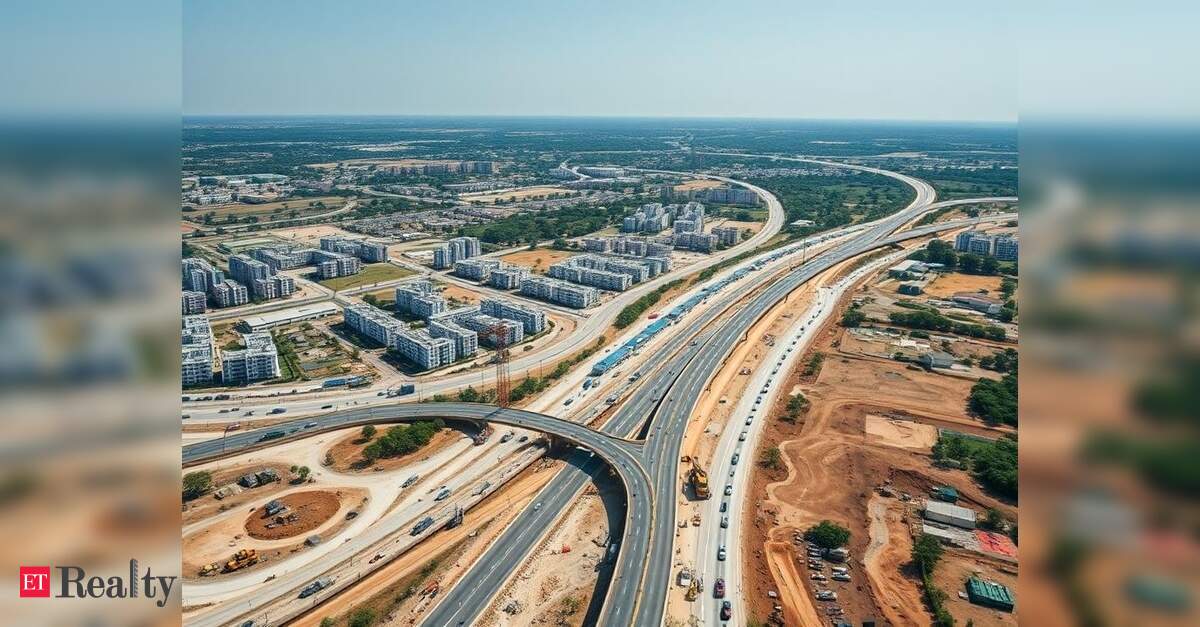
He elaborated that infrastructure continues to be the strongest growth multiplier. Referencing Mumbai’s transformation—with metro expansions, coastal roads, and the upcoming Navi Mumbai International Airport—he highlighted a structural rebalancing in growth corridors. Concurrently, large-scale redevelopment and slum rehabilitation projects are actively reshaping urban supply. “Cranes are visible throughout the city,” he noted, indicating ongoing construction activities across major metropolitan areas.
Hiranandani also remarked on changing consumer preferences. Post-pandemic, homebuyers are increasingly valuing experiential living in integrated townships and mixed-use ecosystems that blend residential, retail, hospitality, and social infrastructure. For instance, a recently launched branded residential segment was entirely sold within two days—highlighting a strong demand for unique offerings. “Today, buyers are prepared to invest more for enhanced quality of life,” he noted, mentioning that senior living, co-living, and branded residences are emerging as promising growth areas.
Despite the optimism, he identified a significant risk: a shortage of skilled labor. Currently, India is facing a deficit of nearly two million skilled construction workers, a gap expected to expand notably by 2030. “In the past, capital was the challenge. Now, with available capital, the shortfall of skilled labor is the larger issue,” he emphasized, calling for expedited training initiatives to bolster infrastructure and housing development.
In summary, Hiranandani presented real estate as a fundamental component of India’s growth story. With synchronized infrastructure efforts, credit accessibility, and a rising demand perspective, the sector is poised for ongoing expansion over the next three to five years. However, he suggested that striking a balance in affordability and ensuring a ready workforce will be critical to maintaining broad-based and sustainable growth.