BATHINDA: Several pro-environment organizations and activists have voiced strong objections to the proposed Punjab Unified Building Rules, 2025, likening them to a land-pooling policy. They contend that the draft favors builders over the general public by granting developers extensive powers.
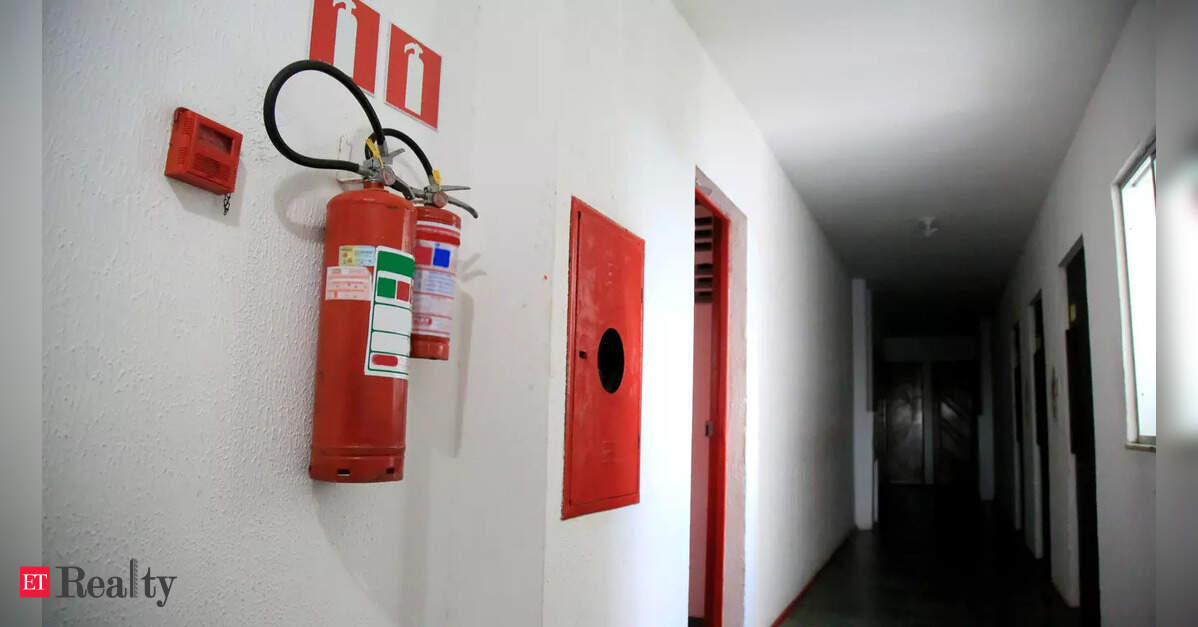
These organizations argue that Punjab’s residents are opposed to congested, unsafe, and unlivable urban areas. They express concerns that provisions for unlimited floor area ratio (FAR), increased population densities, habitable basements, commercializing residential spaces, relaxed fire safety standards, and loss of green areas will lead to concrete jungles. They believe that the proposed rules prioritize developer profits at the expense of public welfare.
Members of the Public Action Committee (PAC)—including Jaskirat Singh, Kapil Arora, Kuldeep Singh Khara, and Amandeep Singh Bains—have formally addressed the director of Town and Country Planning, Punjab, and the principal secretary of the housing and urban development department. They have submitted detailed objections and proposals, urging a rollback on certain clauses and advocating for new regulations centered on livability, green spaces, infrastructure, environmental sustainability, and inclusive public engagement.
The PAC states that a FAR of 2.5, especially with unlimited FAR and no height limits, will lead to overcrowding and infrastructure strain, compromising safety. They recommend capping FAR at existing levels and eliminating provisions for unlimited FAR. They also oppose the proposed density increase to 900 persons per hectare, arguing it would exacerbate crowding, traffic congestion, pollution, and overall livability. Instead, they propose revising density guidelines based on capacity studies of essential services.
Concerns were also raised about allowing basements for habitation, which the PAC argues poses safety risks in flood-prone areas and increases fire hazards. They advocate for restricting basements to parking and utility functions only. Additionally, the draft permits up to 50% of residential units to be utilized for commercial purposes, which the PAC believes will lead to neighborhood disturbances and congestion. They recommend limiting commercial use to 10% and only in designated mixed-use areas.
The PAC criticized the public consultation process, highlighting that the housing department had provided only a 30-day period for feedback on the draft rules. They argue this is inadequate and demand an extension of 30 additional days, along with the establishment of an official email for submissions. Furthermore, they noted that the draft was published solely in English, excluding many residents from meaningful participation.
If their concerns go unaddressed, the PAC has indicated they will pursue legal action.
Social activist Jasinder Sekhon from Sangrur emphasized that her review of the draft revealed a consolidation of previous laws into a single framework that lacks transparency and public consultation. She also pointed out the absence of an Environment Impact Assessment (EIA) or Social Impact Assessment (SIA), and criticized the lack of future-oriented studies for infrastructure planning. She described the overall approach as regressive and short-sighted, undermining effective urban planning.
Referencing Article 21 of the Constitution, which guarantees citizens’ rights to life—including access to essential resources and a healthy environment—Sekhon stressed the necessity for any significant urban policy to honor these rights. She argued that the draft rules do not align with EIA requirements mandated by Indian law for such extensive projects.
Members of Patiala Our Pride, a civic organization committed to enhancing community life, including GS Sidhu (IRS, former chairman IT Settlement Commission), AS Gill (ex-DG CRPF), and Air Marshal (Retd) KS Gill, have also raised concerns with the chief minister and relevant authorities. They object to the planned construction on roads of 40 ft and 60 ft width, arguing that it disregards population density, traffic flow, parking availability, sewer capacity, loss of green spaces, and the ecological impacts of such developments.