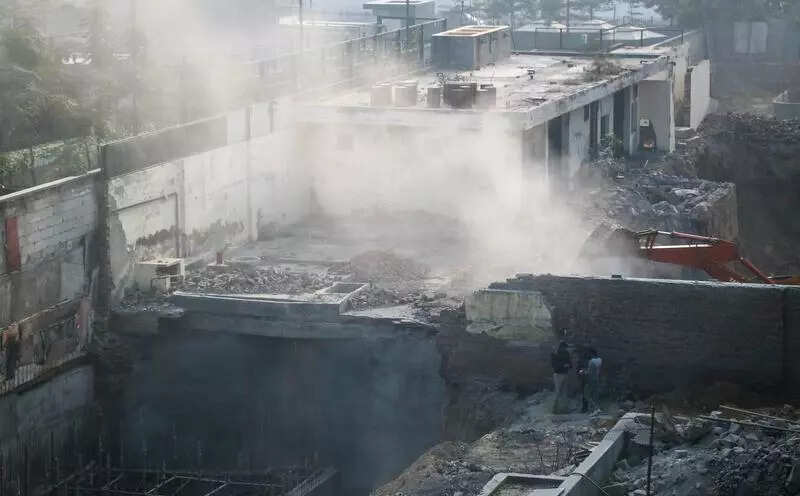
GURUGRAM: Construction dust is a major contributor to pollution, yet only about 15% of large construction projects in the area adhere to mandatory air quality monitoring regulations. According to data from Haryana’s dust-control portal, just 461 construction sites measuring 500 square meters or more have registered, while approximately 3,000 are estimated to be operational. This suggests that nearly 85% are not in compliance with official monitoring protocols.
Registration on this portal is required under guidelines set by the Commission for Air Quality Management (CAQM). These guidelines also mandate that projects install PM2.5 and PM10 sensors connected to a live dashboard for real-time pollution monitoring. This system allows regulators to monitor dust control efforts remotely across the NCR region.
Officials have increased enforcement against non-compliant projects. “Notices have been sent to all large units. We will suspend operations for those that do not comply. Inspections are being carried out at sites that haven’t registered on the portal,” stated Akansha Tanwar, regional officer of HSPCB, calling on project developers to complete their registrations as soon as possible.
Warning of strict measures, she added, “We will halt construction at these sites, impose fines, and take legal action in environmental courts. They play a role in exacerbating pollution.” Haryana introduced the monitoring portal in January 2024 to facilitate real-time tracking of air quality at construction sites, featuring a live dashboard showcasing ambient conditions specific to each project, as outlined in CAQM directives issued on October 1, 2021.
These directives require all construction projects on plots of 500 square meters or larger to register and install PM2.5 and PM10 sensors linked to the portal. Additionally, project developers must implement video surveillance with remote oversight to ensure constant monitoring of dust-control measures.
Despite the established framework for over three years, the low registration rates highlight a persistent compliance issue, especially as Gurgaon continues to experience poor air quality and pollution spikes attributed to construction activities.
When asked about ensuring compliance and registration, an HSPCB official noted, “The board has requested local agencies to provide building plan data so we can cross-check with environmental clearance documents and identify unregistered sites.”
Civic bodies have also received a checklist to enforce compliance with dust control measures throughout NCR, to be implemented online. The specified dust control strategies include the use of anti-smog guns, water pills, water cannons, hoses, fire hydrants, and sprinklers.