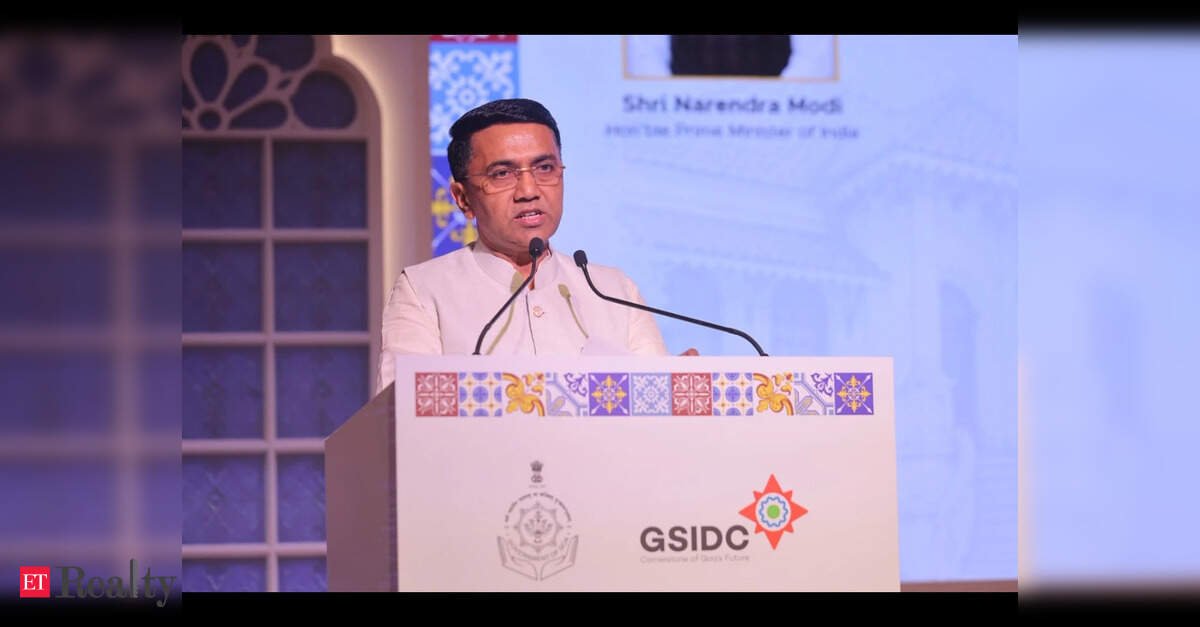
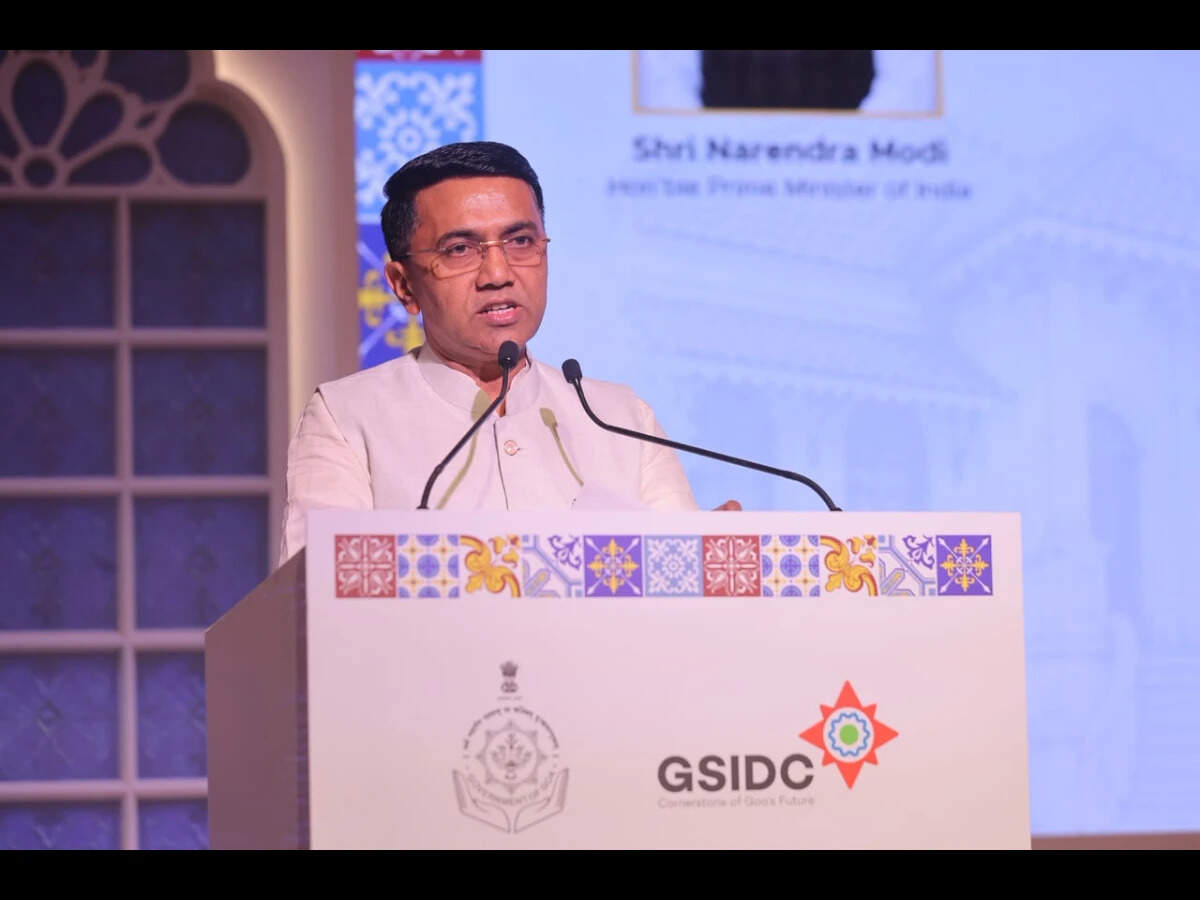
NEW DELHI: Pramod Sawant, the Chief Minister of Goa, emphasized the need for future infrastructure development to harmonize modern demands with the preservation of Goan architectural heritage, sustainability, and the safeguarding of ecologically sensitive areas.
In an exclusive discussion with Ankit Sharma, Sawant noted that Goa’s architectural legacy has been shaped over centuries and highlighted the state’s commitment to developing climate-friendly infrastructure that retains its distinct character.
“We are utilizing materials sourced locally, from our own Goan land. This is something we are actively promoting in Goa,” he explained.
Sawant affirms that the state government is dedicated to maintaining Goan cultural identity in all government buildings and public infrastructure initiatives.
“Every governmental structure and project we undertake is committed to preserving Goan cultural identity 100%,” he stated.
Regarding private development, he acknowledged that while the government cannot dictate a singular architectural aesthetic for private projects, it is actively fostering dialogue and awareness about Goan architecture through various platforms.
“Integrating Goan architecture will infuse modern private developments with the essence of Goan culture,” he said.
When asked about areas that must remain untouched or undeveloped, Sawant assured that Goa will continue to protect green zones, archaeological sites, eco-sensitive regions, coastal regulation zones, mangroves, and wildlife sanctuaries.
“These regions deserve to be preserved indefinitely, and we are committed to that mission,” he emphasized.
Concerning the transparency of development and non-development zones through mapping, Sawant indicated that the government is working on such initiatives.
The Chief Minister highlighted that Goa has already introduced a Goan heritage policy aimed at safeguarding the state’s villages and heritage sites.
“With the launch of the Goan heritage policy, we will ensure the preservation of Goan villages and cultural heritage,” he remarked.
As a tourism-driven state, Sawant asserted that Goa will continue to attract real estate and infrastructure development, but it must align with the preservation of its cultural and environmental identity.
Speaking later at the National Conference on Goan Architecture & Sustainability in New Delhi, he stressed that architecture is not just about building structures, but about fostering culture, communities, and civilization.
He advocated that India’s development strategy should embody the motto “Vikas bhi, Virasat bhi”, where progress enhances heritage rather than detracts from it.
He remarked on Goa’s history of employing climate-responsive architectural practices using local materials like laterite stone, lime plaster, and Mangalore-tile roofs, as well as design elements that enable natural ventilation and maximize daylight.
“These designs were scientific responses to our environment, not merely aesthetic choices,” he said during his address.
These features have historically facilitated drainage during heavy monsoons, temperature regulation, energy conservation, and the effective use of natural light.
Sawant announced that the state government has embraced a comprehensive approach to heritage conservation through the Goan heritage policy, incorporating documentation, GIS-based heritage mapping, digital inventories, and scientific conservation efforts.
He added that Goa plans to promote green building principles in future public projects, such as schools, hospitals, government offices, and tourism facilities.
Emphasizing a commitment to integrating passive cooling, rainwater harvesting, energy-efficient systems, renewable energy solutions, universal accessibility, and comprehensive building management systems, Sawant noted the importance of drawing inspiration from Goa’s architectural traditions.
“Technology should complement tradition, utilizing tools like artificial intelligence, digital twins, building information modeling, laser scanning, drone documentation, GIS mapping, and climate simulations to support heritage preservation accurately.”