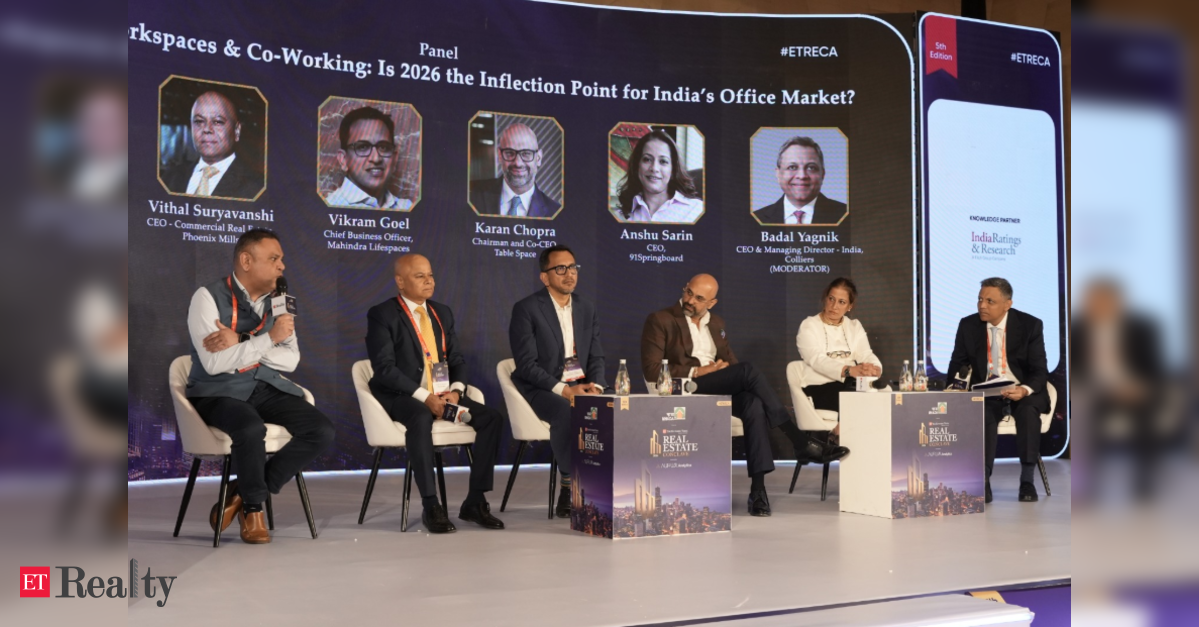
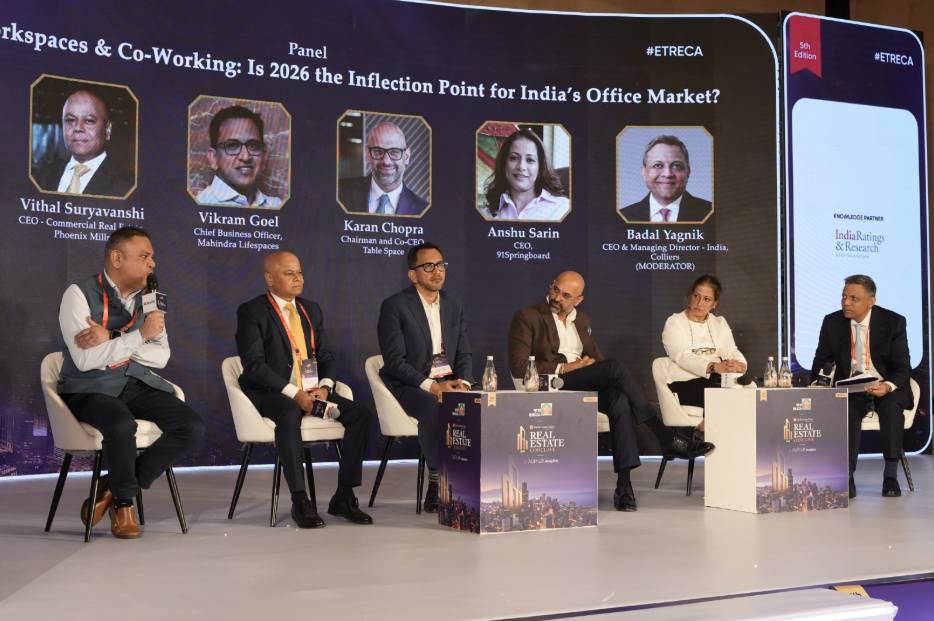
According to leaders at Panel 3 — *“GCCs, Flex Workspaces & Co-working: Is 2026 the Inflection Point for India’s Office Market?”* — at the RealtyDailyNews Realty Real Estate Conclave 2026, India’s office market may be undergoing a structural reset rather than a temporary improvement.
The session, moderated by Badal Yagnik, CEO & Managing Director – India, Colliers, featured industry leaders, including Amit Ramani of Awfis Space Solutions, Vithal Suryavanshi from The Phoenix Mills, Vikram Goel of Mahindra Lifespaces, Karan Chopra of Table Space, and Anshu Sarin of 91Springboard.
A key takeaway was the increasing strategic significance of Global Capability Centres (GCCs). Once considered cost-effective back offices, GCCs are now innovative hubs focused on R&D, product engineering, and global initiatives.
One panelist highlighted that nearly half of annual office absorption in some markets is driven by GCCs, stating, “These are not back offices; they are front offices for the world.” With over 2,000 GCCs currently in operation and projected revenue growth, India’s value-chain positioning is deepening.
Flex and managed workspaces are now seen as essential rather than optional in leasing strategies. Companies are increasingly adopting a mix of traditional leases with managed and flex options for greater agility. Drawing a comparison to hospitality, a speaker noted, “Hotels and flex are siblings — it’s about integrating hospitality, technology, and experience.”
The trend towards fully managed, capital-expenditure-light models is encouraging landlords and operators to form partnerships instead of standard leasing agreements, especially as companies aim for scalability without long-term commitments.
The panel also emphasized the emergence of integrated ecosystems. Large business districts that combine Grade A offices with residential, retail, and social infrastructure are becoming preferred locations for GCCs. Vikram Goel pointed out that global tenants are now assessing not just office spaces but also the overall urban ecosystem, which includes air quality, commute times, educational access, and lifestyle amenities.
In Tier-2 markets, the sentiment remains cautiously optimistic. While cost advantages and talent availability are prompting early GCC expansions beyond major metros, speakers reiterated that infrastructure readiness, policy stability, and workforce depth will determine which cities thrive. A panelist mentioned that supply in Tier-2 cities is currently outpaced by demand, although it might take time for large developers to scale significantly.
The consensus was optimistic: GCC growth is robust, flex spaces have become mainstream, and integrated business districts are reshaping the competitive landscape. If the current leasing trend continues, 2026 may represent a pivotal moment where India’s office market shifts from volume-driven growth to a focus on experience and ecosystem development.