BENGALURU: Flexible workspaces are increasingly recognized not just as temporary solutions for startups but as essential elements of enterprise real estate strategies, driven by GCC expansion, hybrid work models, and the demand for operational agility, industry leaders stated on Tuesday.
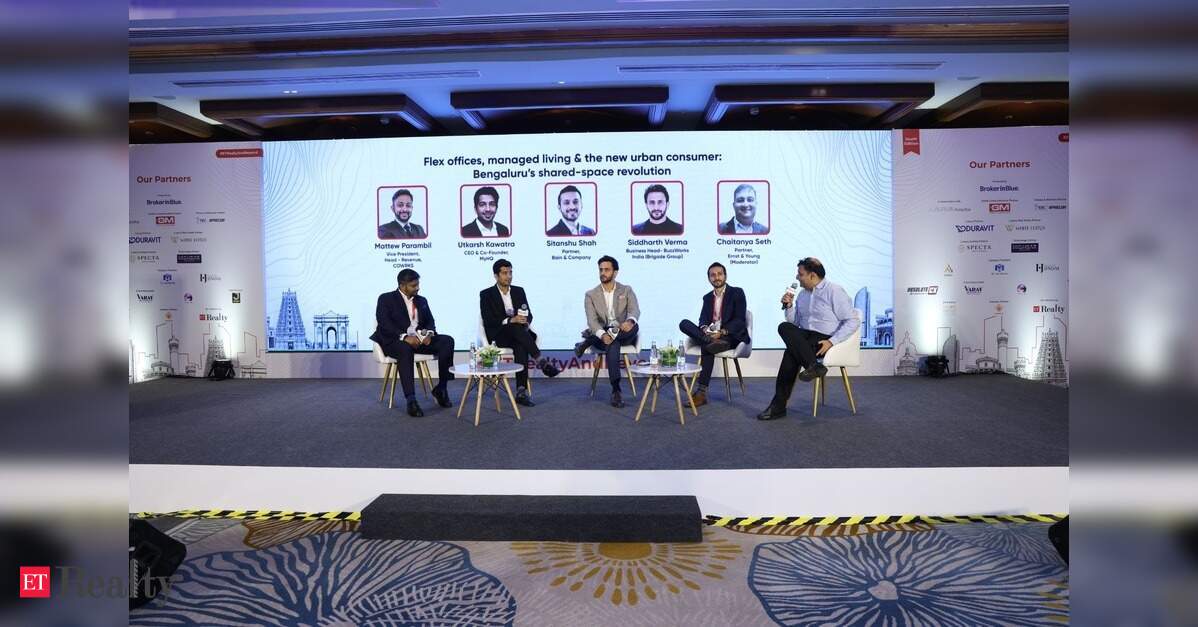
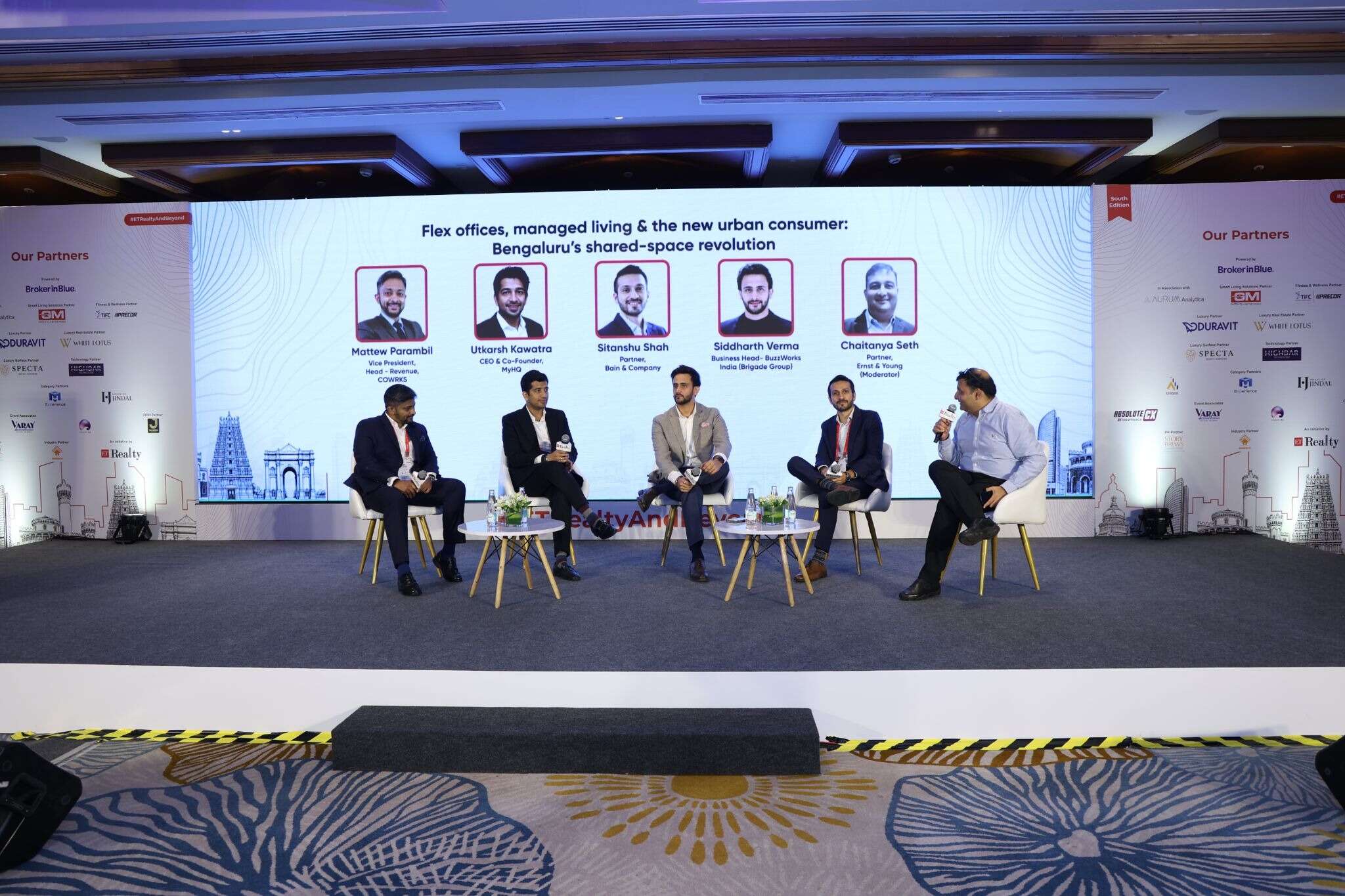
This insight emerged during a panel discussion at the RealtyDailyNews Realty & Beyond Summit in Bengaluru, where experts analyzed the transformative impact of flexible offices and managed spaces on the future of commercial real estate.
The panel included prominent figures such as Mattew Parambil, Vice President & Head – Revenue at COWRKS; Utkarsh Kawatra, CEO & Co-Founder at MyHQ; Sitanshu Shah, Partner at Bain & Company; and Siddharth Verma, Business Head at BuzzWorks India (Brigade Group), with moderation by Chaitanya Seth, Partner at Ernst & Young.
Parambil pointed out that the flexible workspace industry has experienced a substantial shift over the past decade. Initially appealing to startups and entrepreneurs, it has now evolved into a robust offering suitable for large corporations and GCCs.
“Companies now view flexible and managed offices as integral to their real estate strategies,” he noted, mentioning that organizations are assessing which roles should stay in traditional offices and which could transition to managed spaces.
According to Parambil, GCCs have become a significant driving force in this sector, accounting for approximately 50% of their recent space uptake and over 90% of his company’s growth.
Siddharth Verma elaborated that managed office solutions have grown beyond merely providing physical spaces; they now serve as extensions of a company’s operational framework.
“We’ve transitioned from just offering space to becoming part of HR strategy,” he explained, highlighting that organizations are increasingly outsourcing workplace management to focus on core activities while operators handle infrastructure, employee experiences, and services.
Verma also discussed the benefits of integrated commercial ecosystems where offices, hospitality, retail, residential, and healthcare assets coexist on the same campus, stating that the future lies in this managed office model.
Utkarsh Kawatra emphasized the diversification within the flexible workspace sector, noting that operators are now catering to various customer segments with specialized services. He mentioned a growing demand for virtual offices, training centers, and workspace solutions in Tier-II cities.
“Operators in Tier-II cities are earning significantly higher margins than many in Tier-I,” Kawatra observed, underscoring the increasing importance of smaller cities in the flexible workspace narrative.
He asserted that the future of the industry hinges on hospitality-driven service delivery, stating, “Those who excel in hospitality will lead the market.”
From a consultancy standpoint, Sitanshu Shah noted that evolving customer expectations compel enterprises to seek turnkey solutions that alleviate the internal management of real estate.
“Companies want to avoid the headaches associated with real estate ownership,” Shah stated, adding that there’s a growing demand for higher standards in safety, technology integration, sustainability, and operational efficiency.
Shah claimed that operators who can deliver speed, scale, and quality of service will rise to the top of the market.
“The marketplace has matured from a simplistic new product line to a solution that demands high-quality delivery,” he said.
The panelists noted that the significance of execution speed is growing. Enterprises now expect design approvals and office setups to happen in shorter timelines, making effective procurement, technology integration, and project management critical differentiators.
They collectively agreed that the next growth phase will be primarily propelled by GCC expansion, technological advancements, and a wider acceptance of flexible workspace models. However, they cautioned that profitability and operational discipline will be vital as the market evolves.
Shah remarked that the industry is transitioning toward a focus on sustainable business models rather than just top-line growth. “The emphasis is shifting from revenue to profitability,” he indicated, hinting at an upcoming maturity cycle in the sector.
Looking forward, the panelists anticipate robust growth for the flex office industry over the next five years, driven by India’s GCC-led commercial real estate expansion and the rising adoption of managed workspace solutions.
The consensus was clear: flexible offices are moving beyond being a niche segment in commercial real estate; they are becoming a fundamental part of how companies plan, occupy, and expand their workspaces in India.