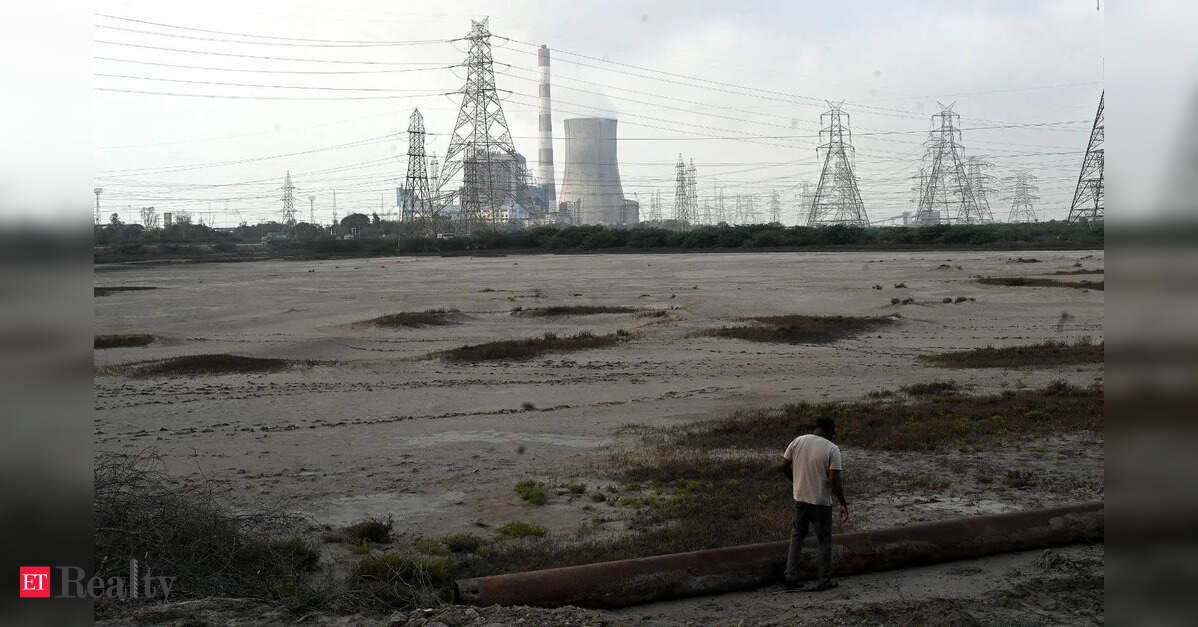
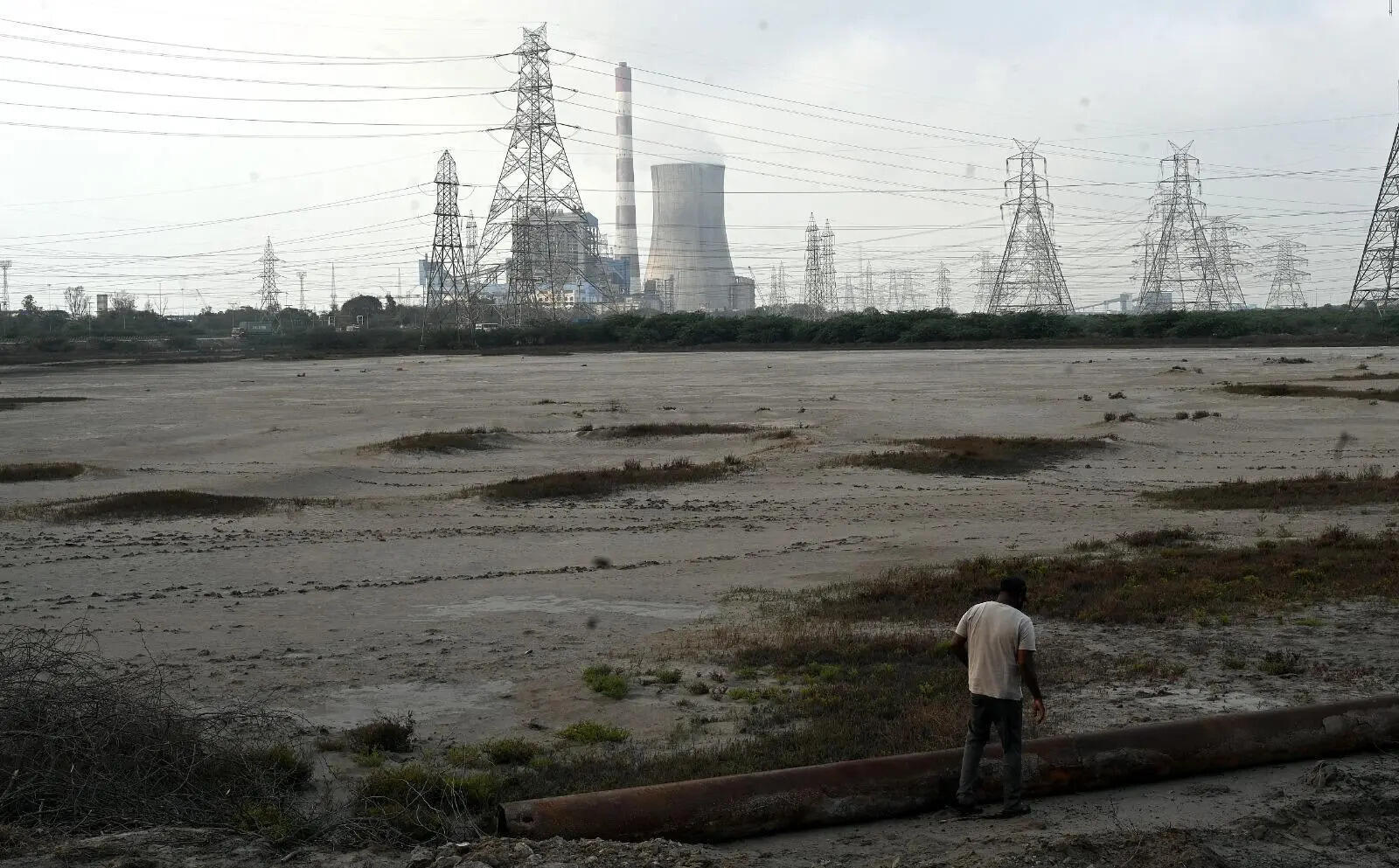
CHENNAI: In the fishing village of Nettukuppam at Ennore, around 150 homes have been facing a persistent issue affecting both health and daily life—dust, wheezing, and wet terraces marked by blackish-grey deposits. The cause? Just a kilometer away, large amounts of fly ash mixed with river sand remain uncleared along the floodplains of the Kosasthalaiyar River, near the North Chennai Thermal Power Station, despite a National Green Tribunal order mandating their removal four years ago.
The fly ash particles—residues from burning coal in thermal plants—are leftovers from the 2017 leak in Tangedco’s fly ash slurry pipelines that dumped thousands of tonnes of toxic ash into Ennore creek and the Kosasthalaiyar.
“Residents living within a 4-5 km radius of the fly ash site have become accustomed to the problems it brings. Children often exhibit wheezing symptoms at night,” stated Aravindan, a Nettukuppam resident.
Although the NGT had ordered the removal of fly ash from the creek, riverbed, and flood plains, as well as repairs to leaking pipelines, a visit by TOI to Ennore and surrounding areas revealed that Tangedco is falling behind.
Along a 1.5 km stretch of the flood plains along the Ennore pipeline road, ash-mixed river sand is spread across vast areas. Hot water leaks from at least two spots along the pipeline, and several sections show signs of rust. Locals mentioned that desilting of the Kosasthalaiyar remains incomplete in various sections, particularly near Athipattu panchayat. “Fly ash near the Buckingham Canal also needs to be cleaned up. During low tide, fishermen can see ash lying on the riverbed,” remarked Srinivasan, a resident-activist.
Tiruvallur collector M. Prathap, who initiated a ₹28 crore project for the river’s desilting last year, mentioned, “About 80% of the first phase is finished. Since it’s an ongoing project, we need further approvals to commence the second phase.”
The thermal plant produces 2,000 tonnes of fly ash daily. While dry ash is kept in silos on the plant premises, wet ash (mixed with water) is disposed of in an ash dyke (pond) at Seppakkam via four pipelines. The ash is then retrieved by the cement and construction industries, while the water is filtered and returned to the plant through two recovery pipelines.
Tangedco officials reported that post-court order, 12.39 lakh tonnes of ash have been removed in stages, coordinated with the water resources department through tenders. “All ash pipelines have been replaced, but we missed some deadlines. The recovery pipelines (for water) are old, yet their leaks have been fixed. Only specific areas of fly ash remain to be removed, and tenders for that will be issued soon. A few are currently on hold due to the recent elections,” an official explained.
E. Saravanakumar, member-secretary of the Tamil Nadu Pollution Control Board, stated that the Manali-Ennore Restoration and Rejuvenation Council, formed in 2024, monitors pollution levels. “The joint chief engineer carries out regular inspections. There have been no fly ash leaks since the 2017 incident,” he added. However, a TNPCB engineer acknowledged that while water pipelines occasionally leak, all fly ash pipelines have been replaced and reinforced with cement holdings.
Environmentalists assert that a comprehensive overhaul of the area is essential. “At the ash dyke, ash seeps into the ground—lacking adequate lining—and then into nearby canals,” noted Durga Moorthy, a volunteer with Save Ennore Creek Campaign.
The state government conducted a study with the Indian Institute of Technology Madras to enhance the ash pond and curb pollution, but progress has been slow. “The study is complete. Efforts to strengthen it will commence shortly,” said Govinda Rao, managing director of the Tamil Nadu Power Generation Corporation Limited.
For fishermen, this situation has turned into a matter of survival. “There was a time when crabs and prawns thrived here. Now, even the fish has been poisoned,” lamented Devan, a fishing resident.