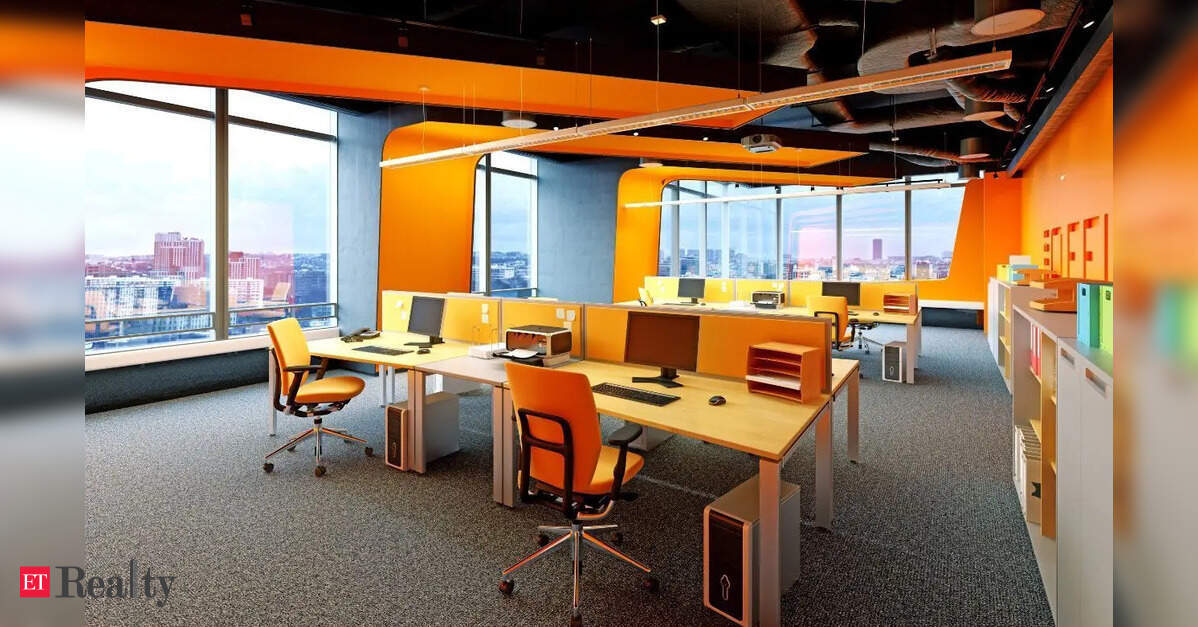
NEW DELHI: India’s flexible workspace sector is projected to see a capacity increase of 16-18% in FY27 and FY28, reaching 140-145 million sq ft, as reported by Crisil Ratings.
This segment has experienced significant growth over the past three financial years (FY24-FY26), fueled by rising demand from small to mid-sized global capability centers (GCCs), domestic companies, and startups.
The market share of flexible workspace operators in net absorption rose from 14-15% in FY24 to around 20% in FY26, with expectations to hit 25% in the next two fiscal years.
The report estimates that operators will add 15-20 million sq ft of new supply across various geographies and micro-markets, including tier II cities, with a planned capital expenditure of ₹4,000-4,500 crore during this time. A large portion of this upcoming inventory has already secured tenant commitments in the current fiscal year.
Demand is primarily driven by sectors including IT/ITeS, banking, financial services and insurance (BFSI), consulting, and manufacturing. Notably, the top ten clients contribute 15-30% of revenues for major operators, demonstrating tenant diversification.
Occupancy rates have increased by about 300 basis points over the three years leading up to December 2025, reaching around 84%, and are expected to remain stable in the medium term. Operating profitability is also expected to remain resilient, with EBITDA margins projected at 15-17%.
However, the sector faces challenges related to the difference between long-term lease agreements with landlords and shorter-term contracts with tenants, especially during periods of rapid expansion. Stable renewal rates between 70-80% and diversification across locations and tenant types should help mitigate some of these risks.
Financially, despite the notable capital expenditures, leverage is projected to remain stable, with internal accruals funding most of the expansion. The net debt-to-EBITDA ratio is anticipated to remain around one time for the next two fiscal periods.
The report also cautions that any slowdown in leasing by GCCs linked to global uncertainties or shifts in hiring trends, particularly regarding automation and artificial intelligence, could negatively impact demand for office spaces in the near term.