
NEW DELHI: Shriram Properties aims for pre-sales between ₹3,750 and ₹4,000 crore in FY27. This strategy includes new launches across Bengaluru, Chennai, Pune, and Kolkata, as the developer seeks to solidify its hold in current markets before expanding further. For FY26, the internal pre-sales target was set at ₹2,750 crore, and the company anticipates support for growth from delayed launches from the previous year.
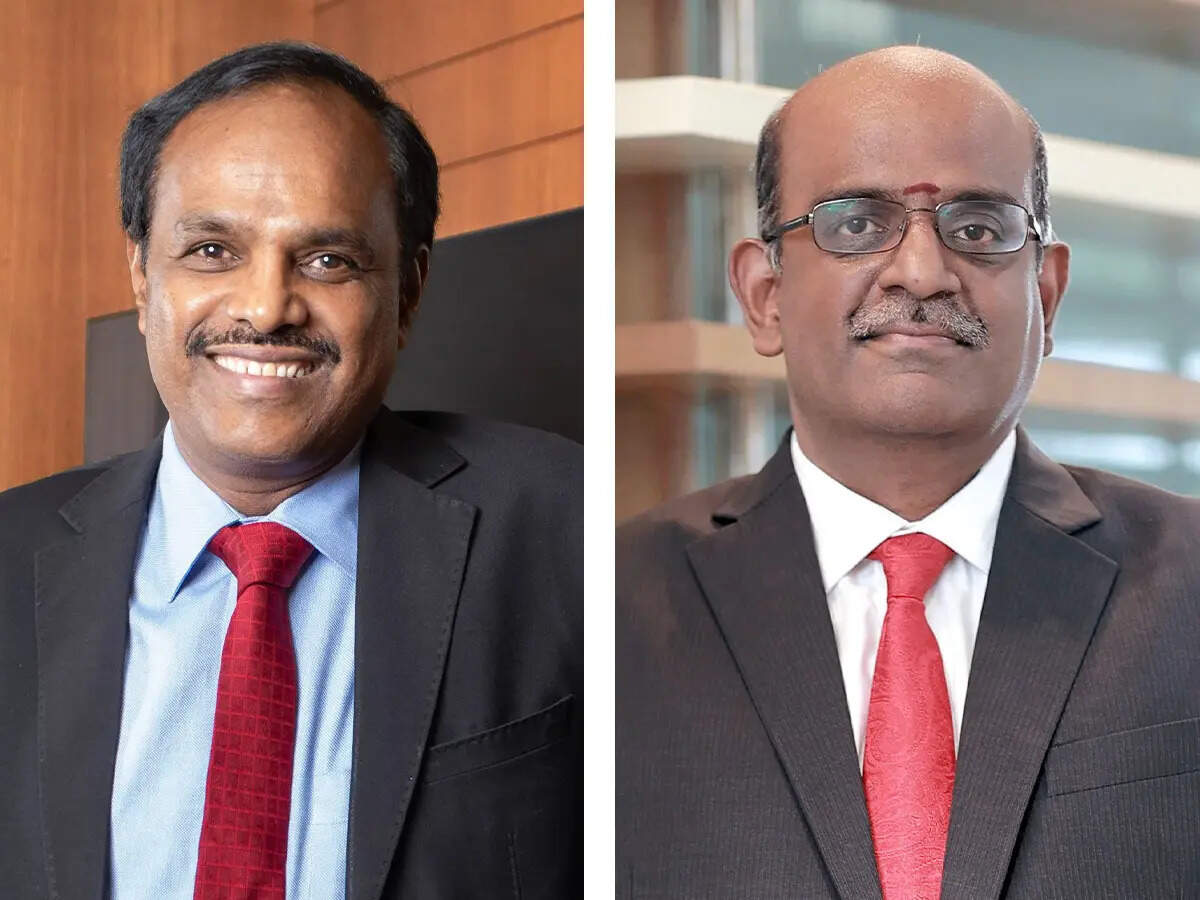
The company is intensifying its focus in Pune, adding around three million sq ft of new projects since its initial launch in the city. Murali Malayappan, Chairman & Managing Director, along with Gopalakrishnan J, Executive Director & Group CEO of Shriram Properties, shared insights in an exclusive conversation with Ankit Sharma from ETRealty. Throughout the discussion, they emphasized plans to prioritize mid-market and mid-premium housing. They are also considering opportunities in Mumbai, commercial office spaces, data center-linked real estate, and rental housing for future growth. Here are some edited highlights:
How was FY26 for Shriram Properties, and what are your expectations for FY27?
FY26 was mixed; it began on a hopeful note but was tempered by global uncertainties. Nonetheless, we believe demand in India will remain robust for the next four to five years.
We are optimistic for FY27. India’s macroeconomic indicators look promising, inflation is stable, urbanization is ongoing, and white-collar employment is on the rise. We expect FY27 to be a strong year.
What are your pre-sales targets for FY27?
We expect pre-sales to reach at least ₹3,750-4,000 crore in FY27. Our FY26 internal target was about ₹2,750 crore, but due to some delayed launches, we anticipate that many will occur in Q4 and Q1. Overall, we are on track for our broader FY28 goals, although there may be slight timing shifts based on launch schedules.
Do you foresee the West Asia crisis affecting housing demand from NRIs?
There might be short-term impacts, particularly for those working in the Middle East who could delay purchasing decisions. However, there is another angle to consider; substantial Indian investment has flowed into Middle Eastern real estate over the past few years, and some of that capital may return to India.
Investors familiar with real estate will recognize it as a sound asset class. Should sentiment in the Middle East wane over the next couple of years, India could gain from this capital flight back into domestic real estate.
Could AI advancements and slower IT hiring hinder residential demand in Bengaluru?
We don’t expect a major structural impact. Office absorption metrics do not indicate a significant drop in demand. Chennai saw strong office absorption last year, Bengaluru maintained stable to increased demand, and both Mumbai and Pune also experienced growth. Hyderabad saw a slight slowdown, but broad office demand remains healthy.
AI may introduce some short-term uncertainty, yet India could benefit if global firms transition more tasks to cost-efficient service hubs. India has already established itself in the services sector, and if AI alters cost structures, it might still lead to more work being directed here.

Shriram Properties reports a 30.41% rise in net profit to ₹100.81 crore in FY26
The company saw a significant net profit surge of 30.41% in FY26, totaling ₹100.81 crore. Total income soared by 39.40% to reach ₹1,356.93 crore. Shriram Properties recorded substantial sales bookings of ₹2,354 crore and successfully delivered 3,465 homes while expanding its project pipeline.
How do you see GCC demand affecting residential markets?
GCC employment and commercial leasing continue to grow. Roles may be shifting; lower-end IT jobs are increasingly replaced by higher-value IT-enabled services, but this doesn’t imply an overall reduction in employment.
Newly added commercial spaces create a multiplier effect on residential demand. Historically, Bengaluru and Chennai have mirrored this relationship.
Will the company expand into data centers or commercial real estate?
We aim to be opportunistic regarding commercial office spaces and data center-related developments. While we will not run data centers, we can develop the necessary infrastructure and lease it to third-party operators if it aligns with our strategic interests.
Having previously developed office properties, we possess relevant experience. However, we do not plan to enter the hotel or shopping mall sectors in the immediate future.
Will the share of commercial real estate in your portfolio increase?
The share may see a slight rise compared to FY25. Our entry into Pune has added some commercial spaces since many residential projects in that area incorporate ground-floor commercial components. We are also undertaking commercial projects in Kolkata.
However, our primary focus remains on residential projects, with commercial developments being pursued based on opportunities.

Brigade to focus on mid-segment housing in FY27: Pavitra Shankar, managing director
Brigade Enterprises continues to launch projects from its existing pipeline in FY27 despite delays in approvals, global uncertainties, and cautions regarding the technology sector’s hiring patterns. The developer aims to increase its focus on mid-segment housing while also acquiring land in Bengaluru, Chennai, and Hyderabad.
How successful was your first project in Pune?
The response has been exceptional. We launched our project in Undri, which garnered a positive reception even in a slower micro-market, boosting our confidence.
We have now added around three million sq ft of projects in Pune, in addition to the first project of approximately 1.2 to 1.3 million sq ft. These new projects are set to launch in the coming months.
What potential does Pune hold for your company?
Pune could emerge as a significant market for us, potentially contributing 20-25% of our regional business in the near future. Over time, it may even surpass Chennai due to the market’s sheer size.
Pune absorbs around 95,000 residential units annually, while Chennai stands at approximately 30,000 units, and Bengaluru is around 90,000. This scale offers a substantial opportunity, especially in the mid-market segment.
How does Pune compare to Bengaluru?
Pune shares similarities with Bengaluru in terms of its customer demographic. The typical buyer is often from the IT sector, family-oriented, and looking for end-use housing, which reassured us in entering the market.
Land pricing comparisons can be complex due to different FSI and TDR structures; while the base FSI is lower in Pune, developers often purchase additional FSI and TDR. On an overall cost basis, Pune can be comparable to Bengaluru.
What are your plans for Kolkata after resolving previous issues with the state government?
We have resolved prior issues, and the government has been supportive. After handing over around 40 acres to the government and accounting for ongoing developments and approvals, we still have about 115 acres remaining.
Initially, we considered bulk land monetization but have found better value through actual development. Our villa offerings in this micro-market, priced between ₹1.3 crore and ₹1.85 crore, yield higher returns per acre compared to bulk land sales.
Does that mean you won’t pursue bulk land sales in Kolkata?
We will focus on monetization through development rather than bulk sales. While warehousing may yield about ₹3 crore per acre, villa developments can bring in around ₹8 crore per acre and can be completed within two years. If the micro-market is conducive to plotted developments and villas, it makes more sense to develop and sell ourselves.
Will your strategy remain asset-light, or will you move towards outright land purchases?
We will employ a mix of Joint Development Agreements and outright purchases. Previously more asset-light, our cash flows have improved, with approximately ₹480-500 crore in free cash flow generated over the past three years, and we anticipate around ₹400 crore this year.
This gives us the flexibility to pursue more aggressive outright purchase opportunities while maintaining joint development strategies across Bengaluru, Chennai, and Pune. Kolkata has a distinct situation as we already have land there.
Are landowners currently favoring outright sales over JDAs?
Yes, in many instances, especially influenced by market conditions. Some landowners now prefer outright sales over JDAs. We will utilize a combination of internal funding, project-level debt, and financial partnerships when necessary.
How do you plan to fund future growth?
Most expansion will be funded through internal accruals and project-level debt. We tend to avoid heavy borrowing for land purchases due to rising carrying costs associated with approval delays.
In specific situations, we might collaborate with financial partners or family offices at the project level to alleviate the capital burden.
Your current debt cost stands at approximately 11%. Do you see potential for a reduction?
For a residential-focused company, a borrowing cost of 10.5-11% is quite typical. Construction financing from banks typically doesn’t dip below 10.5%, while NBFC funding can range from 12.5-13%. We avoid borrowing at exceedingly high rates of 17-18%.
Unless a developer possesses a substantial parent balance sheet or derives low-cost rental income-backed debt, reducing costs further can be challenging.
Are you considering Mumbai for expansion?
Yes, we’ve been assessing Mumbai for about a year, but we’ll wait until we have a comprehensive understanding before making a move.
The Mumbai market has evolved in the past three to four years, with some major players retracting and landowner behavior becoming more organized. The current ease of conducting business is much improved compared to seven to eight years ago. Redevelopment remains a possible avenue, though we are still determining if it will be our sole focus.
Are you also looking at NCR, Hyderabad, or Ahmedabad?
Not for the immediate future. We would consider Hyderabad at the right time, but previously bridging the expectation gap with landowners posed a challenge. The market holds promise, yet we wish to avoid entering based on unrealistic assumptions.
For now, our concentration is on Bengaluru, Chennai, Pune, and Kolkata, while we assess Mumbai for potential further growth in markets where we can achieve scale and profit.
Many Bengaluru-based developers are aggressively expanding into other cities. Does this create pressure for you?
We don’t perceive competition in that manner. Each developer has its strategy and incentives. Our focus is to compete with ourselves and expand where we see sustainable opportunities.
If our core markets can still yield 25% growth in volume, we need not explore various new markets merely for the sake of national presence. We prefer gradual expansion after adequate groundwork.
Has the transition from BBMP to Greater Bengaluru Authority influenced approvals?
Yes, the shift to GBA and the introduction of e-khata caused delays in FY25 and FY26. Although these reforms promise long-term benefits, the short-term disruptions were significant.
We believe the negative impacts from these changes are now mostly resolved, and in the long run, a larger, more decentralized administrative framework is essential for a city the size of Bengaluru.
Are you planning to enter the luxury or ultra-luxury housing market?
Our ongoing focus is on mid-market and mid-premium housing, where we expect long-term demand to persist.
In Bengaluru, our main focus is on properties priced between ₹1.5 crore and ₹3.5 crore. In Pune, prices range from ₹1 crore to ₹2 crore, while in Chennai, we target between ₹70 lakh and ₹2 crore. If we enter Mumbai, we will likely consider properties under ₹10 crore.
Do you see potential in rental housing or branded residences?
Rental housing is a segment we could evaluate further, and branded residences may be part of a broader concept, though it is premature for detailed discussion. We’ll share specific plans when they materialize.