NEW DELHI: India is set to establish a dedicated bench within the National Company Law Tribunal (NCLT) that will focus on cross-border insolvency cases, aiming to expedite legal proceedings following the notification of new bankruptcy regulations, according to sources familiar with the development.
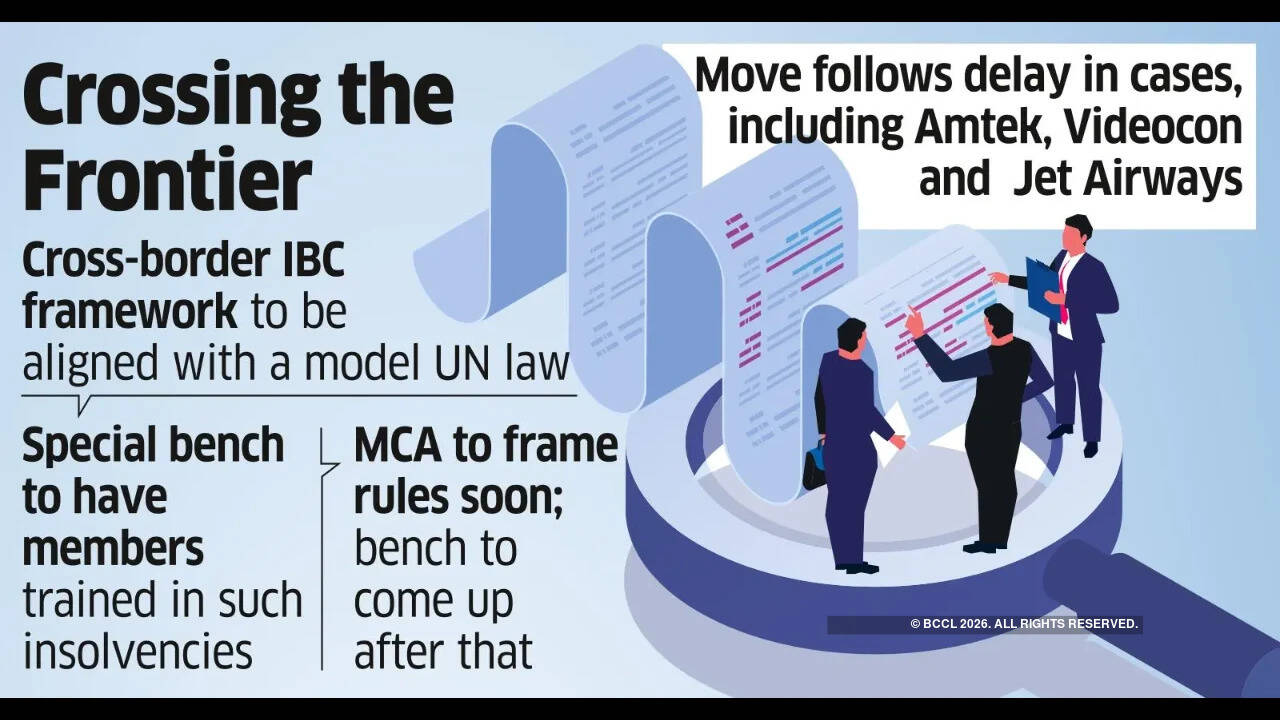
The cross-border framework, which received approval last month as part of amendments to the Insolvency and Bankruptcy Code (IBC), will draw from a UN model law but will be tailored to better fit India’s requirements.
This initiative is designed to simplify access for creditors to the foreign assets of distressed companies and facilitate India’s collaboration with international courts to incorporate these assets into insolvency processes.
Such a framework was deemed necessary after delays in resolving bankruptcy cases involving companies like Amtek Auto, Videocon Industries, Essar Steel, and Jet Airways, as complications arose surrounding asset locations and intricate cross-border protocols.
The corporate affairs ministry plans to initiate the drafting of rules pertaining to cross-border insolvency shortly. In line with the amended IBC, a draft of each rule will be presented before Parliament for review.
According to an insider, “A specialized bench is essential for timely insolvency proceedings.” They further emphasized the importance of keeping pace with foreign authorities managing insolvency cases effectively, highlighting that jurisdictions like Singapore are recognized for their expedient resolution processes.
The newly proposed NCLT bench will consist of members equipped with training in cross-border insolvency resolution.
Model UN Framework
The United Nations Commission on International Trade Law (UNCITRAL) framework for cross-border insolvency has been implemented by over 50 countries.
This framework promotes principles such as access to both domestic and international courts for resolution professionals, acknowledgment of foreign proceedings, judicial cooperation, and coordination of concurrent insolvency cases. Countries adopting the framework have the flexibility to develop their rules based on their specific needs.
“The dedicated bench will ensure a quicker resolution of cross-border insolvency matters, enhancing recovery prospects for creditors,” stated Yogendra Aldak, executive partner at Lakshmikumaran & Sridharan attorneys.
Previously, the IBC addressed cross-border insolvency through bilateral agreements and requests sent by the NCLT to overseas courts under Section 234, but this approach often led to delays and uncertainty.