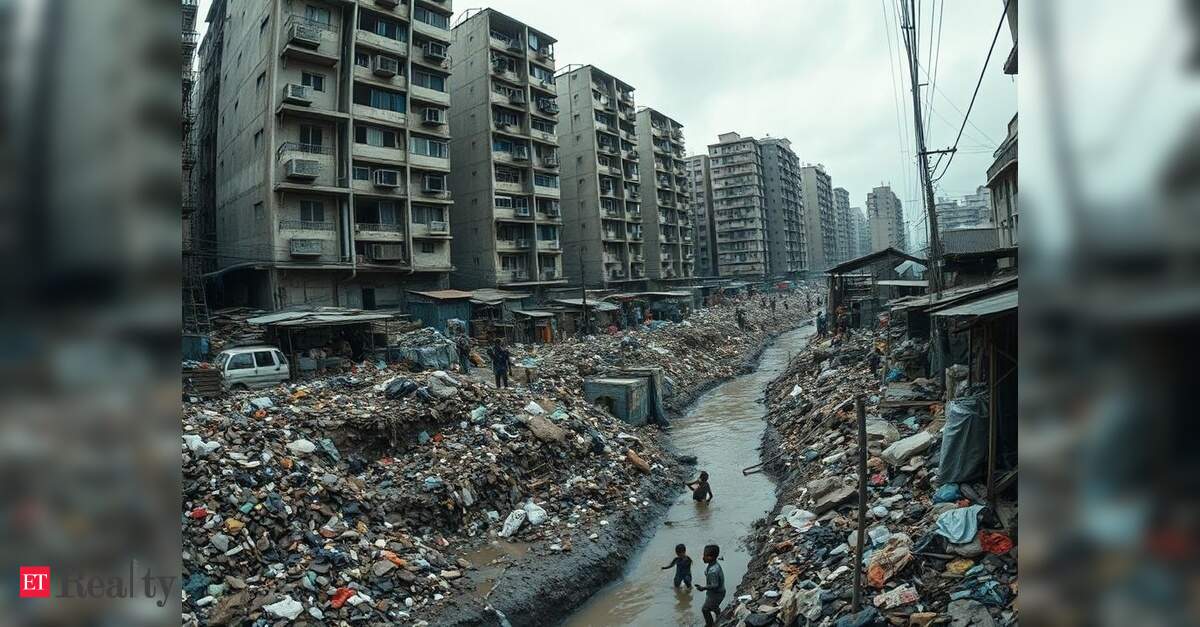
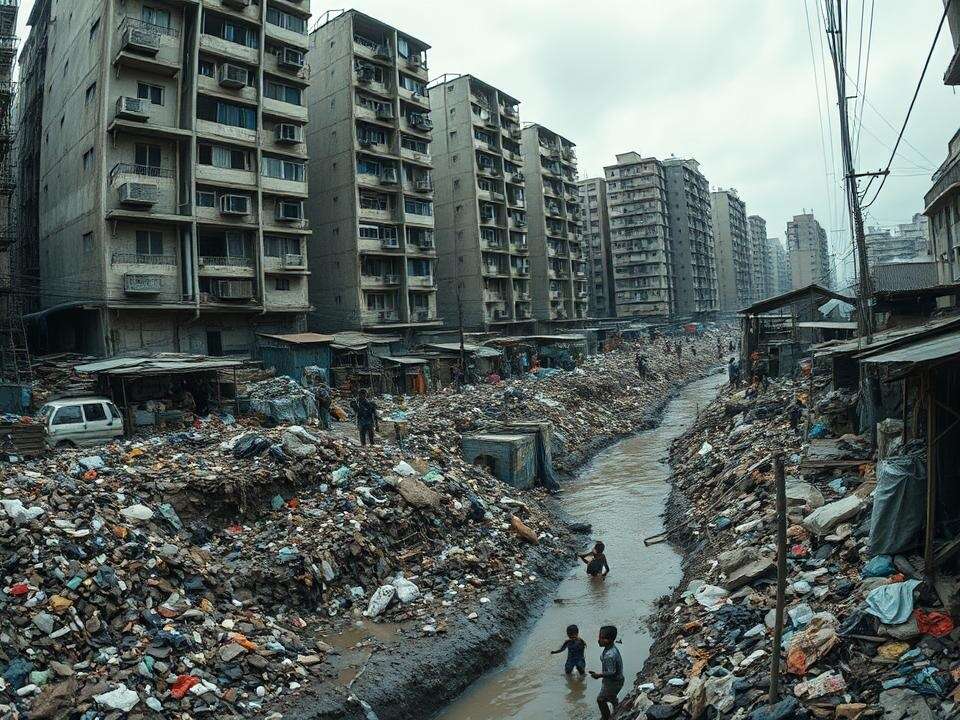
GURUGRAM: Nearly two-thirds of households in the city lack access to legal sewer connections. Municipal data uncovers a significant disparity: out of 550,000 households, only 180,000 have approved sewer systems, despite Gurgaon’s modern appearance with its glass towers and upscale developments.
Approximately 370,000 homes—or 66.6%—operate outside the official sanitation network, relying instead on septic tanks or informal disposal methods.
The situation in neighboring Faridabad is even more alarming. Of its 600,000 households, only 120,000 are connected to the official sewer system, leaving 480,000 homes (79.1%) without legal sewer access.
Other cities in Haryana also face significant issues. Sonipat has 52,548 households without legal sewer connections, Panipat has 53,044, and Karnal has 41,424 lacking legal access.
A senior MCG official told TOI, “The gap in legal sewer connections in the city is considerable, largely due to a complicated application process. We’re streamlining this system and will launch a portal this week to facilitate authorized sewer connections. Residents will only need a property ID and a government-issued ID to apply.”
“We’re also exploring incentives for plumbers who report illegal connections, which will help us enforce regulations and regularize the system,” he added.
Current records indicate that Gurgaon needs about 1,850 km of sewer infrastructure but has only 1,800 km, leaving a deficit of 50 km. The municipal corporation is working on estimates to fill this gap. In Faridabad, the requirement stands at 2,289 km, but only 1,875 km is currently in place, leading to a shortfall of 414 km. The corporation aims to complete the remaining network by December 2027.
“Faridabad is an industrial hub, where many residents have not legalised their sewer connections. There’s a fee for legalising these connections, which makes them hesitant. We’ve instructed our engineers to assist in regularizing these connections,” noted a senior MCF official, who wished to remain anonymous.
Residents express that while illegal sewer connections pose a major issue, the infrastructural challenges have developed over many years. “Density has increased; towers have risen; both authorized and unauthorized colonies have expanded, but sewage capacity and other infrastructure have barely improved,” said Kundan Lal Sharma, a former cabinet secretariat officer residing in Gurgaon. “Gurgaon’s rapid expansion has overwhelmed systems designed for a much smaller community. What began as a minor gap has turned into a structural crisis, straining drains, treatment plants, and aquifer resources.“