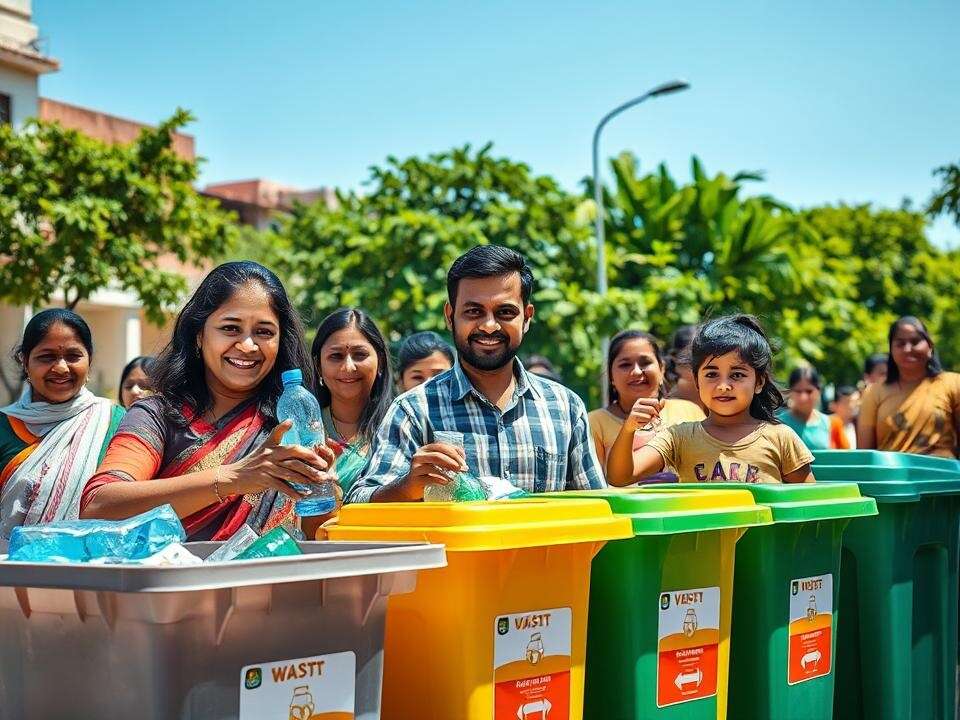
NEW DELHI: The Center has introduced new Solid Waste Management Rules mandating four-stream segregation of solid waste at its source, with clearly defined responsibilities for bulk waste generators.
The waste categories for segregation include: wet waste, dry waste, sanitary waste, and special care waste.
Union Environment Minister Bhupender Yadav announced that these rules will take effect from April 1.
Bulk waste generators are defined as entities with a floor area of 20,000 square meters or more, daily water consumption of 40,000 liters or more, or solid waste generation of 100 kilograms or more per day. This category includes central and state government departments, local bodies, public sector undertakings, institutions, commercial establishments, and residential societies.
Such entities must ensure that their waste is collected, transported, and processed in an environmentally sustainable manner as dictated by the rules. This is anticipated to alleviate pressure on urban local bodies and encourage decentralized waste management.
The new rules also allow local bodies to impose user fees on waste generators.
The revised regulations incorporate circular economy principles and Extended Producer Responsibility, emphasizing efficient waste segregation and management. An official statement noted, “The regulations include environmental compensation based on the ‘Polluter Pays’ principle for non-compliance, including operating without registration, false reporting, and improper waste management practices.”
The Central Pollution Control Board will develop the necessary guidelines, while State Pollution Control Boards and Pollution Control Committees will enforce the environmental compensation.