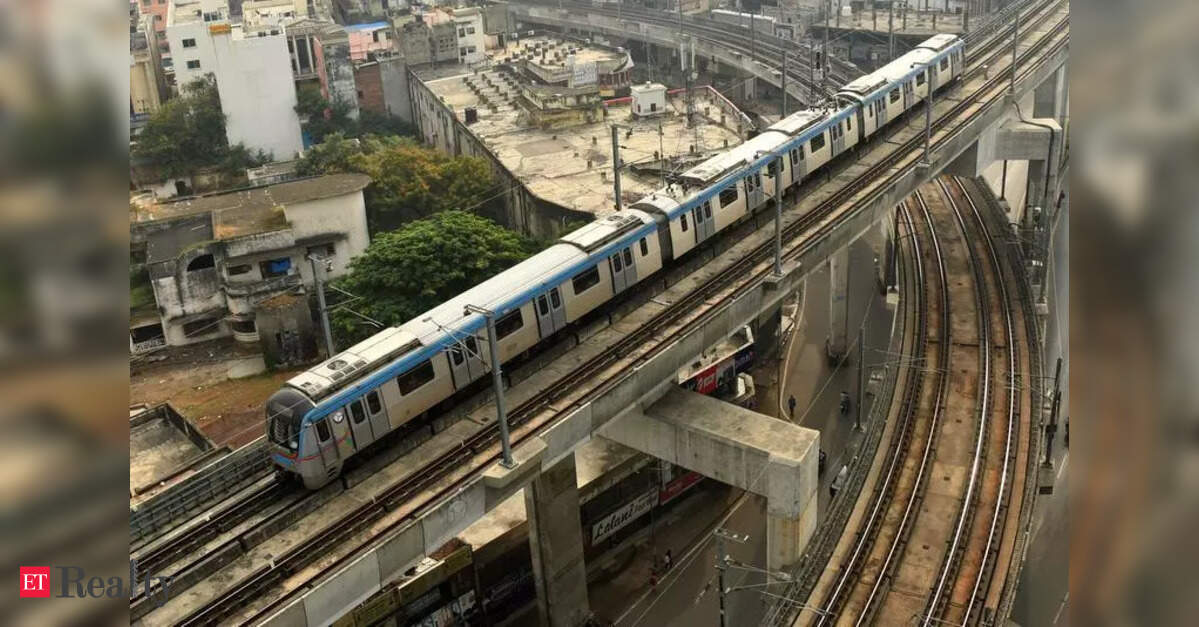
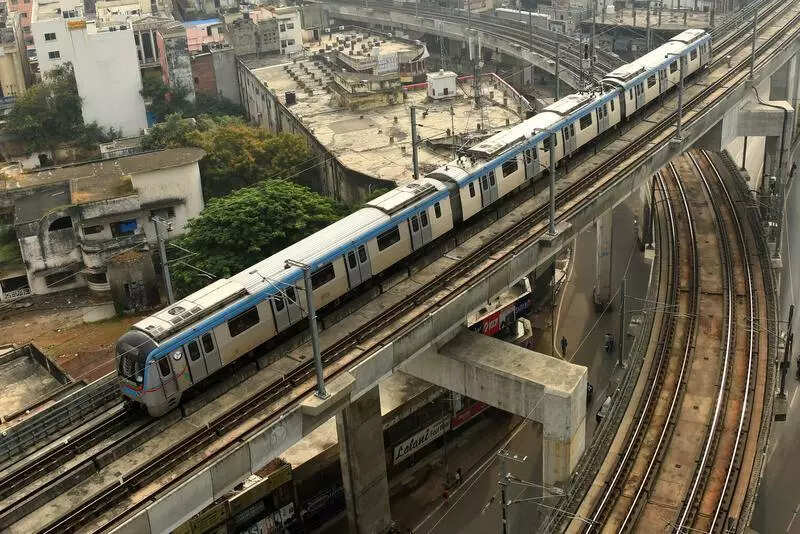
HYDERABAD: The Telangana government has initiated the intricate process of acquiring the 69-km Hyderabad Metro Rail network from Larsen & Toubro in a transaction worth ₹15,000 crore, marking a significant state government acquisition.
The state will officially take control of phase I of the metro from April. However, officials indicate that the transition hinges on three essential areas: financial restructuring, asset and liability transfer, and the maintenance of uninterrupted operations.
On Monday, the state cabinet approved the acquisition of a complete 100% equity stake in phase I from L&T. The project, estimated at ₹15,000 crore, includes a debt component of ₹13,000 crore and approximately ₹2,000 crore for L&T’s equity.
IDBI Capital Markets & Securities has been designated as the transaction adviser to perform financial and legal due diligence. Meanwhile, Delhi Metro Rail Corporation’s subsidiary, Delhi Metro International Limited, will assess technical aspects and operational integrity.
“The state government is in talks with the Indian Railway Finance Corporation, a navaratna company under Indian Railways, which is prepared to provide ₹13,000 crore. This funding will consist of both Japanese yen and Indian rupees. The annual interest rate is expected to be significantly lower than current loans (around 8%), with a repayment period of approximately 20 years,” stated HMR managing director Sarfaraz Ahmad during a conversation with TOI.
He added, “We plan to finance the debt using revenue generated from both fare and non-fare sources. A share purchase agreement addressing all transaction facets will be established between L&T and the Telangana government shortly.”
Committee Formed
To guide the acquisition, the government has established a committee comprising senior secretaries alongside a cabinet sub-committee focused on resource mobilization, which has already delivered its report.
A critical consideration following the acquisition will be the future of government land allocated to L&T as per the concession agreement. Out of the 269 acres transferred, roughly 149 acres were utilized for the metro network and depots. Of the remaining 120 acres, around 71 acres have not been monetized, while about 49 acres have been developed as transit-oriented projects, including shopping malls.
Upon completing the asset and liability transfer, all land, both developed and undeveloped, will revert to the state government. Officials revealed that valuations of these properties and related real estate will occur before determining future uses.
Ensuring a seamless travel experience for commuters is another key priority. Currently, Phase I operations are managed by Keolis, a Paris-based transport operator, which has overseen the system since its commercial launch in 2017. It is anticipated that the state will retain Keolis for operations and maintenance post-takeover.
Contract Extended
Sources indicate that the original five-year contract, which expired in November 2022, was extended first by three years until November 2025, and subsequently for one more year until November of this year.
“The state government is likely to prolong Keolis’ services for operations and maintenance for an additional year after November, considering its expertise in automation and communication-based train control. The operations achieved a commendable 90% passenger satisfaction and 99.5% punctuality,” HMR officials remarked.
Officials noted that maintaining service continuity while restructuring finances and assets is crucial for successfully concluding the takeover of one of India’s largest public-private partnership metro rail projects.