HYDERABAD: In a significant move that may reshape development on the outskirts of Hyderabad, realtors and builders in Telangana have urged the state government to allow farmhouse plotting under conservation land use, with clearly defined size and construction parameters. They argued that this would control unregulated growth, bring structure to existing grey areas, and generate consistent revenue for the government.
During a recent meeting with officials from the municipal administration department, representatives from builders’ associations such as NAREDCO, CREDAI, and TDA proposed permitting farmhouse plots with a minimum size of 10 guntas (around 12,000 square yards).
They suggested a maximum building coverage of 25%, a height limit of six meters (ground plus one floor), and approval only for plots adjacent to 30-foot wide roads. The associations believe that such regulations would promote planned development while enabling the state to collect building and development fees.
Unified Building Rules
Officials informed the associations that the government would thoroughly review the proposal, considering its advantages and disadvantages before making a decision. They indicated that the suggestions could be incorporated into the unified building rules that the municipal administration department is currently finalizing.
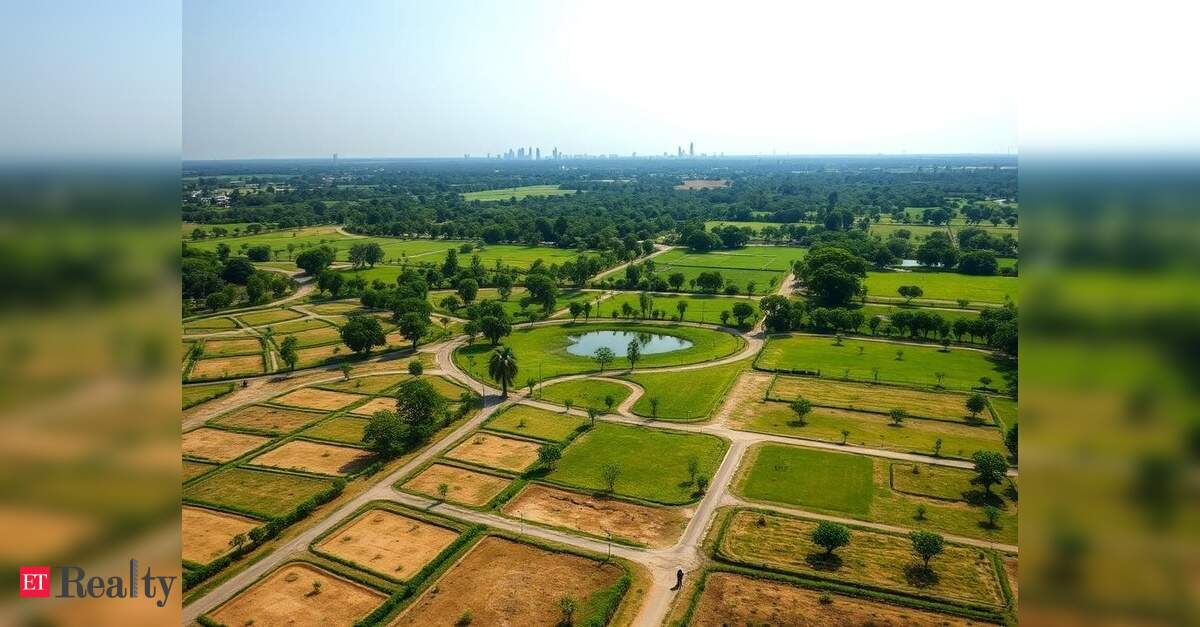
Currently, vast areas of land in conservation and bio-conservation zones—particularly GO 111 regions like Moinabad, Mokila, Shankarpally, Gandipet, and nearby areas—have experienced the emergence of illegal layouts.
Developers have established farmhouse plots ranging from 10 to 20 guntas, frequently offering to construct farmhouses or weekend homes. Many of these plots have been sold alongside plantations, with developers maintaining them for years through monthly maintenance fees.
Legally, these plots are still classified as agricultural land. According to existing building and layout regulations, construction is prohibited in conservation or bio-conservation zones, and even minor residential structures necessitate a formal change of land use.
Relaxation in GO 111 Areas
However, opinions vary within the real estate community. A builders’ association president strongly opposed any relaxation in GO 111 areas, arguing that allowing construction would defeat the purpose of bio-conservation zones. He highlighted that several illegal farmhouses and buildings have already been erected in these regions.
Separately, the state government agreed to accommodate another longstanding demand from developers: permitting clubhouses in plotted layouts. Developers noted that buyers increasingly expect such amenities. The associations proposed that clubhouses be optional and that partial occupancy certificates be issued for completed layouts, with the final occupancy certificate contingent on the construction of the clubhouse. Municipal administration officials agreed to this suggestion.
The government also committed to integrating no-objection certificates from departments such as fire and mining to streamline approvals. Additionally, officials assured developers that various fees—including impact fees, growth corridor fees, development fees, environmental fees, and seigniorage—would be rationalized and simplified under the new building rules.