IndustryLatest Stories

Sebi Reclassifies REITs as Equity to Enhance Market Participation

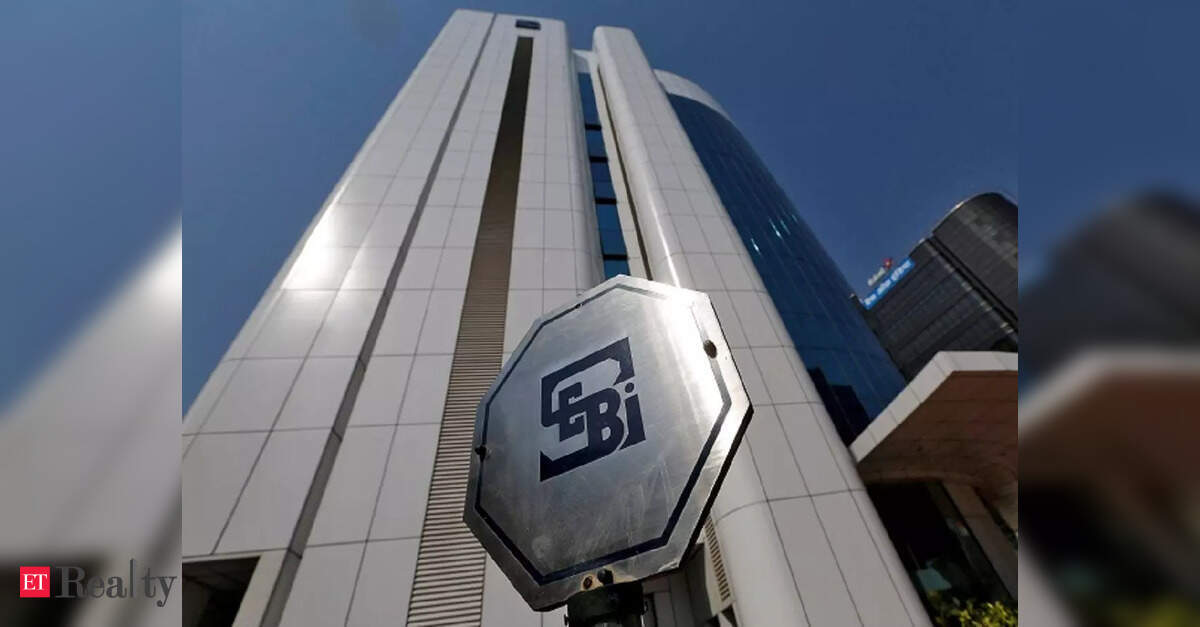
NEW DELHI: The market regulator, Sebi, announced on Friday that Real Estate Investment Trusts (REITs) will now be classified as equity-related instruments to encourage greater involvement from mutual funds and specialized investment funds (SIFs). Additionally, the classification of Infrastructure Investment Trusts (InvITs) will remain as hybrid instruments. Sebi stated in its circular, “Effective January 1, 2026, any investment by mutual funds and SIFs in REITs will be classified as an investment in equity-related instruments.” Investments in REITs from existing debt schemes and SIF strategies as of December 31, 2025, will be grandfathered. However, asset management companies (AMCs) are encouraged to…

IndustryLatest Stories

SEBI Reclassifies REITs as Equity, Expands Investor Access

NEW DELHI: To enhance participation in Real Estate Investment Trusts (REITs) and Infrastructure Investment Trusts (InvITs), the Securities and Exchange Board of India (SEBI) has approved amendments to the SEBI (Mutual Funds) Regulations, 1996, reclassifying REITs as “equity” while maintaining InvITs under the “hybrid” category for mutual fund and specialized investment fund investments. The decision, made during SEBI’s board meeting, is expected to facilitate greater mutual fund investment in REITs by including them in equity indices. The regulator noted that these changes followed public consultations in April 2025 and extensive discussions with industry stakeholders. This adjustment aligns domestic regulations with…

Latest StoriesRegulatory

Sebi Lowers Minimum Investment Threshold for InvITs

NEW DELHI: Markets regulator Sebi has introduced new rules to lower the minimum allotment lot in the primary market for privately placed Infrastructure Investment Trusts (InvITs) to ₹25 lakh, bringing it in line with the secondary market trading lot size. Previously, the minimum allotment lot for privately placed InvITs was either ₹1 crore or ₹25 crore, depending on the asset composition. Earlier reforms had already reduced the trading lot size in the secondary market to ₹25 lakh, regardless of the asset mix. As a result, this amendment standardizes the minimum allotment size in the primary market for all privately placed…

InfrastructureLatest Stories

India’s InvIT Market to Reach $258B by 2030: Knight Frank

NEW DELHI: India’s Infrastructure Investment Trusts (InvITs) are poised for significant growth, with asset management (AUM) expected to increase 3.5 times, reaching USD 258 billion by 2030, as revealed in a recent Knight Frank India study. Worldwide, there are over 1,000 listed Real Estate Investment Trusts (REITs) and InvITs with a combined market capitalization of USD 3 trillion. By FY25, India’s InvITs are projected to manage USD 73.3 billion in AUM, nearly 3.5 times that of the country’s REITs. Together, InvITs and REITs represented USD 93.9 billion in FY25, a significant rise from USD 42.1 billion in FY20. Currently, with…

IndustryLatest Stories

Sebi aims to expand strategic investor definition for REITs, InvITs

NEW DELHI: On Friday, Sebi suggested expanding the definition of ‘strategic investor’ in the REIT and InvIT regulations to include Qualified Institutional Buyers (QIBs) and specific categories of Foreign Portfolio Investors (FPIs) to attract more institutional investments. In a consultation paper, Sebi pointed out that the existing definition is overly restrictive, excluding significant institutional investors like pension funds, provident funds, and insurance funds. These entities are active in the REIT and InvIT sectors due to their preference for long-term, stable income-generating investments, but they are currently ineligible for classification as strategic investors. Sebi proposed that the definition be revised to…