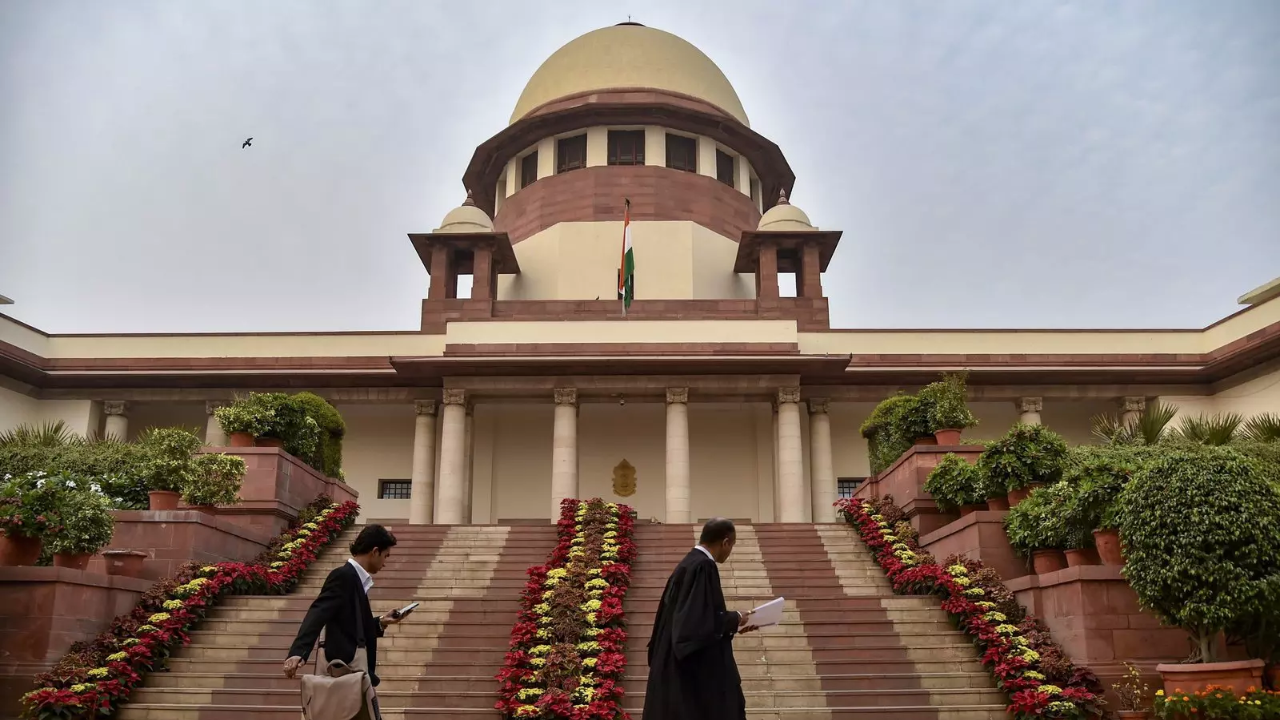
CHENNAI: The Supreme Court has affirmed a ruling by the Madras High Court that dismissed the Enforcement Directorate’s (ED) investigation into an alleged multi-crore sand mining scam in Tamil Nadu, including the seizure of various properties linked to miners and their associates as proceeds of crime.
A division bench consisting of Justice Dipankar Datta and Justice Augustine George Masih rejected the ED’s appeal against the high court’s decision from July 16, 2024.
According to the High Court’s division bench, the central issue was not whether illegal sand mining was occurring in Tamil Nadu, but whether the ED could act under the Prevention of Money Laundering Act (PMLA) without a scheduled offence being investigated by another agency, and without a determination of proceeds of crime.
Furthermore, the exact proceeds of crime had not been established. The Supreme Court highlighted the necessity for identifying proceeds of crime in Vijay Madhanlal Choudhary’s case.
The court specified, “For the ED to assume jurisdiction under the PMLA, it must first demonstrate that a scheduled offence has occurred and is either reported to the police or under inquiry before a competent authority. Additionally, the term ‘proceeds of crime’ must be strictly interpreted; assets deemed as ‘proceeds of crime’ should be directly or indirectly obtained from criminal activities related to a scheduled offence.”
Furthermore, possession of unaccounted assets or illegal funds cannot be classified as proceeds of crime unless they are connected to a scheduled offence.
In a detailed 66-page order, the division bench comprising Justice M S Ramesh and Justice Sunder Mohan acknowledged that while they agreed with the ED’s stance that the court should typically refrain from interfering in investigations, they could not set a precedent that leaves citizens vulnerable to the discretion of investigative officers. “Given that the ED’s actions under the PMLA lacked a solid foundation, we are unpersuaded by the ED’s argument that the court should refrain from intervening when alternative remedies exist,” the bench stated.