

NEW DELHI: The new Registration Bill from the Centre empowers states to create regulations enabling registrars to thoroughly verify land rights records prior to registration. This initiative aims to combat fraud in land transactions and minimize litigation, as noted by Manoj Joshi, the land resources secretary, in an interview with RealtyDailyNews.
Currently, registrars are not mandated to conduct such verification. This new measure is anticipated to provide greater assurance to retail buyers and investors, who mostly depend on their own research for land purchases.
The bill also introduces a fully paperless registration process where possible, which could be expanded in the future, thereby enhancing business ease and transparency in recordkeeping.
Joshi mentioned that the land resources department will soon share a Cabinet note regarding the new registration bill, which is set to replace the 117-year-old Registration Act of 1908.
In the first half of 2025, land acquisitions in the eight major cities and numerous tier-II and tier-III cities reached an all-time high, with over 2,898 acres transacted across 76 deals. This surpasses the total of 2,515 acres from 133 deals in all of 2024, as reported by Anarock Property Consultants.
Land transactions in these regions amounted to ₹30,885 crore in the first half of 2025, exceeding the total value for the entire year of 2024.
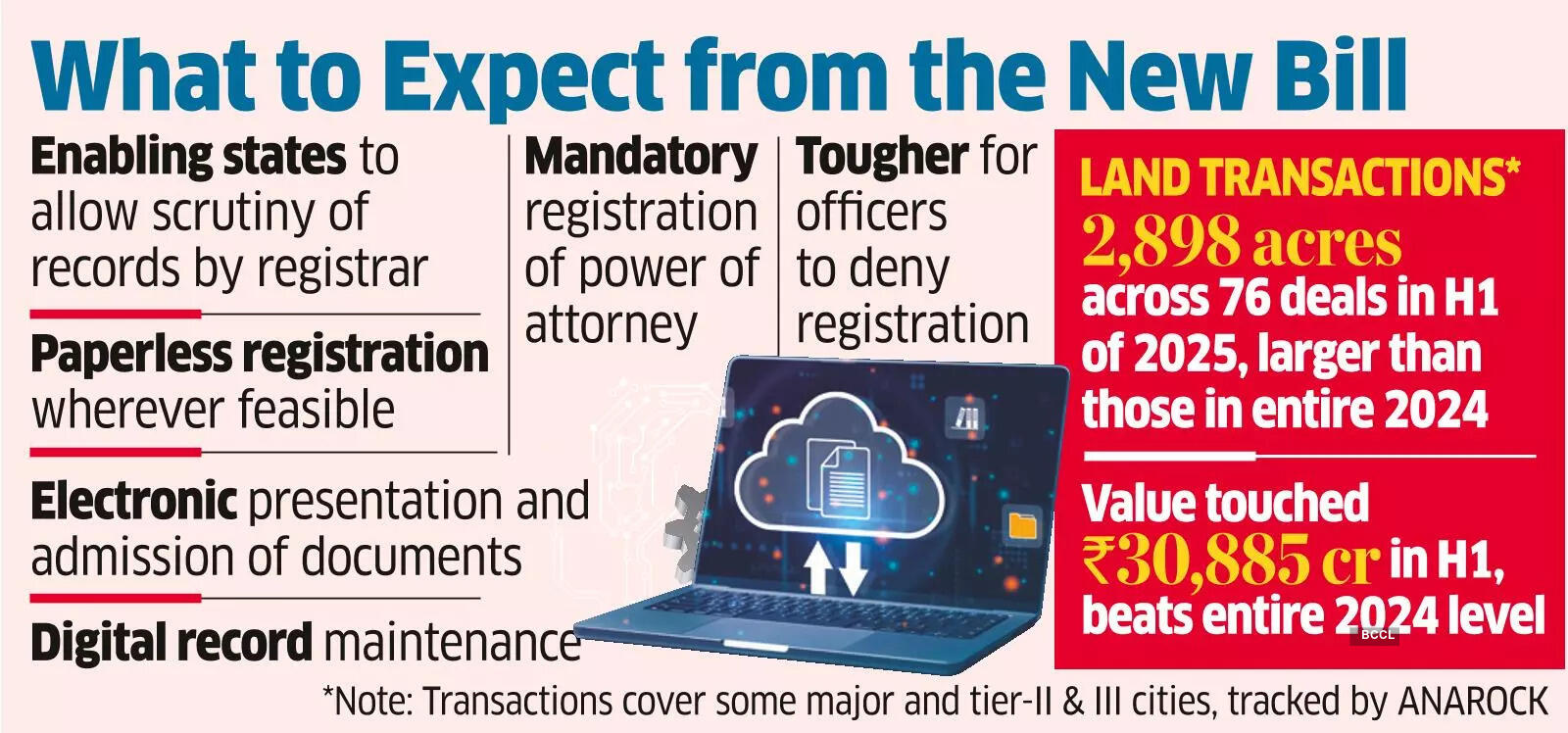
Key Provisions of the Bill
The land resources department, under the rural development ministry, introduced the draft Registration Bill, 2025, in May for stakeholder feedback. Having received comments, they are now set to prepare the Cabinet note, according to Joshi.
The draft bill includes provisions for the electronic presentation and acceptance of documents, issuance of electronic registration certificates, and digital record maintenance.
Additionally, the bill seeks to expand the range of documents needing mandatory registration in property transactions, such as sales agreements, powers of attorney, sale certificates from authorities, equitable mortgage arrangements, and certain court-ordered instruments.
To ensure registration occurs fairly, the draft also makes it more challenging for officials to deny registration without substantial grounds, detailing clear and level criteria for such actions. It introduces standards for cancellation of registration to align with natural justice principles as well.