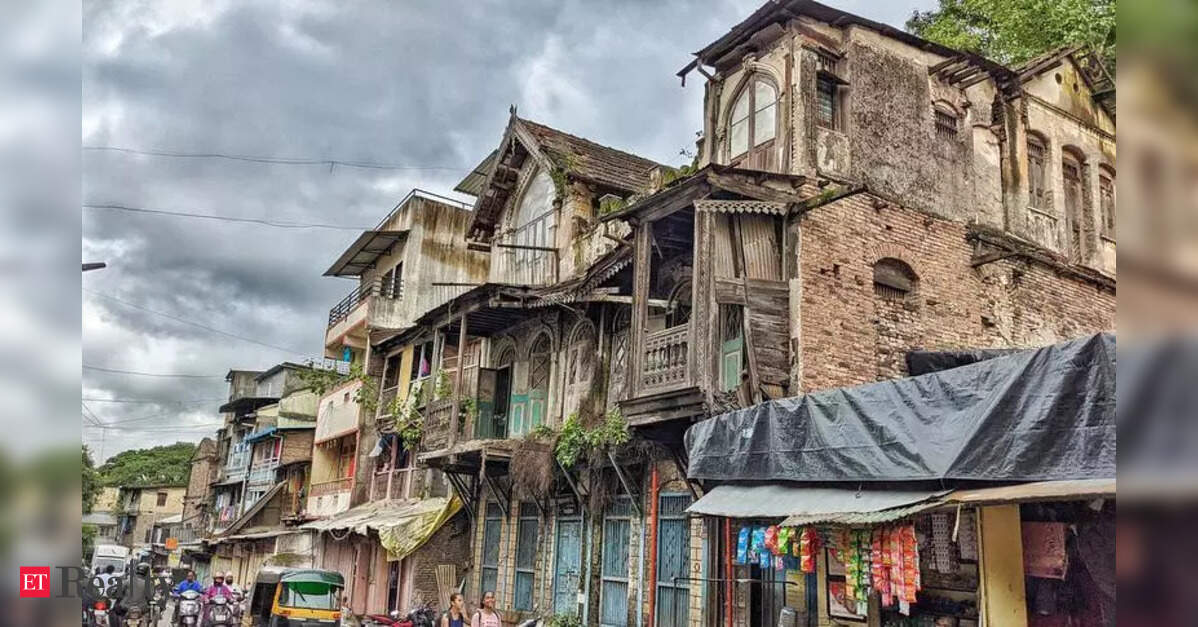

PUNE: Nearly eight years after its proposal, progress on the cluster development initiative aimed at redeveloping aging wadas and deteriorating buildings in the city has been minimal, according to data from the Pune Municipal Corporation (PMC).
The topic has resurfaced due to opposition from residents of Lokmanyanagar, a neighborhood with 52 housing societies and over 800 flats. Many buildings, built in the 1960s, are facing issues like cracked walls, irregular water supply, and inadequate drainage systems.
Kasba Peth MLA Hemant Rasane commented, “Many properties are suffering due to a lack of response to cluster development. We should explore options like compulsory acquisition for properties that are entangled in disputes or have been neglected for years. Ideally, the minimum plot size should be around 1,000 sqm.”
Resident Abhay Joshi noted that many tenants in dilapidated buildings are from economically weaker sections. “Some can’t afford to rent elsewhere. Policymakers need to act swiftly to expedite the reconstruction of these aging properties,” he said.
Amol Bahadkar, a senior official from PMC’s building permission department, stated they have conducted public awareness campaigns about the benefits of cluster development. “However, no formal proposals have yet been submitted to PMC. Instead, owners of smaller properties are applying for individual building permissions,” he added.
Civic officials recognized the challenges involved in consolidating multiple wadas for a single redevelopment plan. “Securing consent from all owners and tenants is difficult, and many properties are tied up in legal disputes. The main aim of the cluster development policy—pooling land by demolishing several wadas in close proximity—is proving challenging,” another official stated.
“PMC is promoting cluster redevelopment under the Unified Development Control and Promotion Regulations (UDCPR), but disagreements between tenants and owners continue to be significant hurdles. We are striving to raise awareness and build consensus around the initiative,” the official continued.
Upgrade of Crumbling Buildings
The cluster development policy, as outlined in the development plan (DP), aims to address the aging infrastructure in older neighborhoods. It offers several incentives for redevelopment, including an additional floor space index (FSI) of 4, relaxed margin requirements, special FSI provisions for tenant rehabilitation, reduced road width norms, and a unique cluster transfer of development rights (TDR).
Unfortunately, the lack of a formal and actionable cluster development policy has hindered the implementation of these benefits.
PMC officials reported that even meeting fundamental criteria—such as the minimum land requirement for cluster redevelopment—presents a significant challenge.