FARIDABAD: Despite Supreme Court directives in 2022 mandating the demolition of all illegal structures in the protected Aravalis, the hills continue to face encroachment. On Tuesday, TOI discovered construction activities occupying 35 acres in Anangpur, with plots being sold for Rs 12,000-14,000 per square yard on land protected under sections 4 and 5 of the PLPA. This area lies within a 200-meter no-construction buffer zone surrounding the Anangpur dam–Suraj Jheel complex, which is safeguarded by the Archaeological Survey of India (ASI). Certain sections of the land are designated as ‘gair mumkin pahar’ (uncultivable hill).
Local villagers have reached out to Chief Minister Nayab Singh Saini regarding new encroachments. Surveys and a committee appointed by the Supreme Court have identified nearly 6,000 violations in Anangpur, recognized as a hotspot for Aravali infringements.
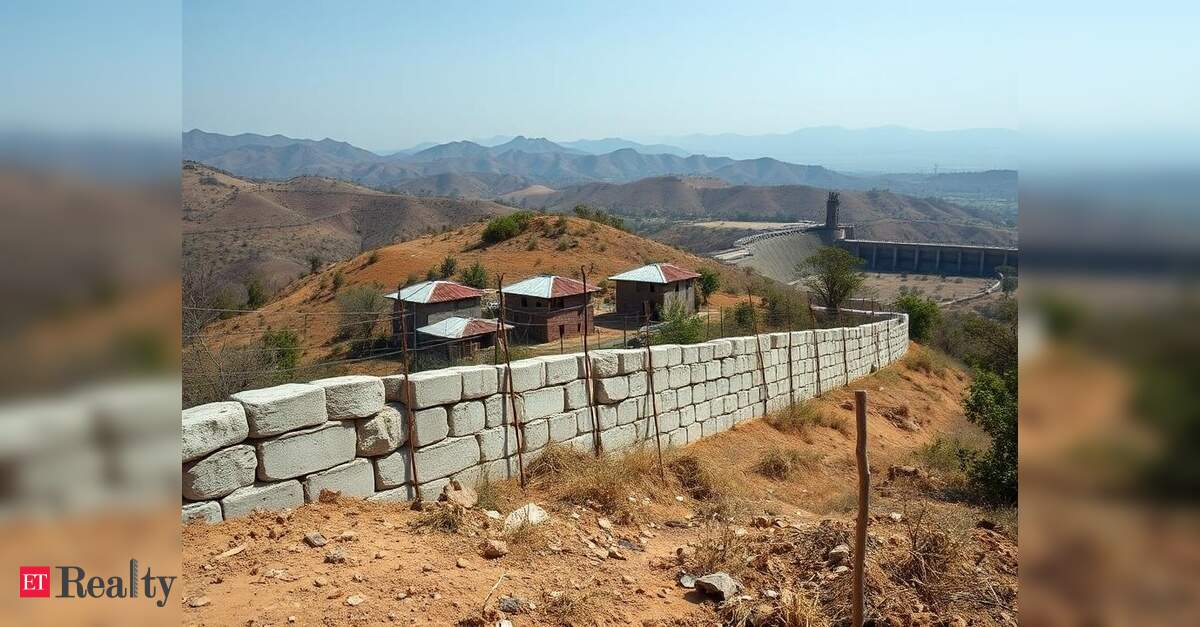
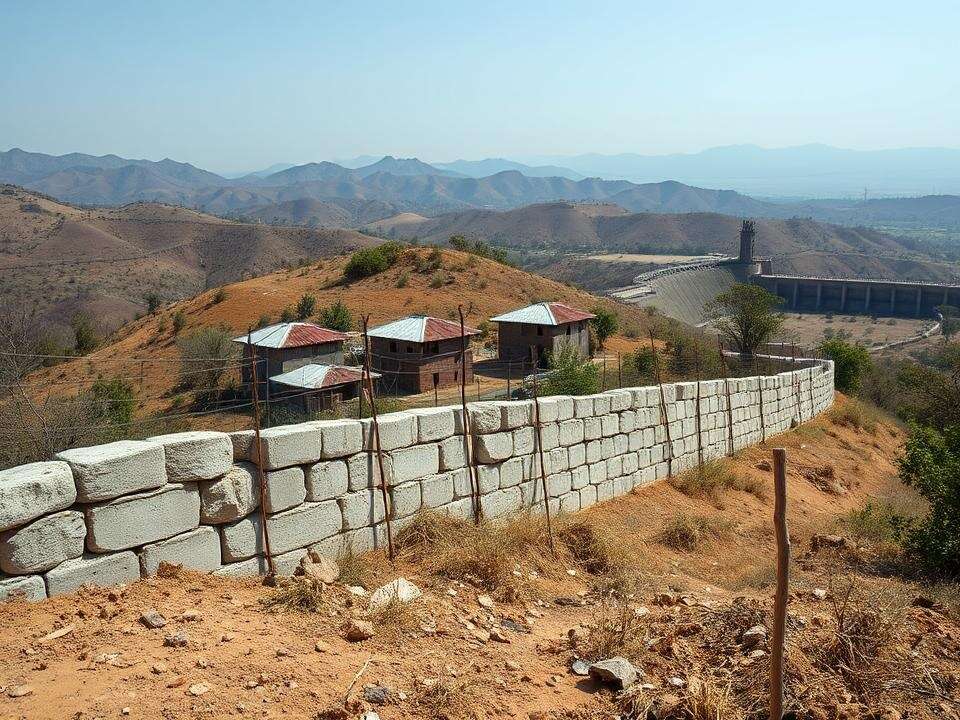
During a recent visit, TOI observed that land surrounding the dam is being subdivided into plots and homes. Despite existing regulations, boundary walls, stone platforms, and farmhouses have sprung up near the dam area, with many structures appearing newly erected, complete with fresh stonework and construction materials. “This was forest land, and it’s not for sale. It’s right at the edge of the protected site where any construction is prohibited,” stated UD Gujjar, an Anangpur resident.
Residents have also reported incidents of electricity theft in these encroached regions. “When the forest department initiated demolition efforts last year, illegal electricity poles were removed, but power connections were later restored illicitly to facilitate ongoing construction,” noted another resident, Rahul Bhadana.
Villagers claim that enforcement has been inconsistent over the past five years, allowing construction to resume immediately after demolition teams depart. They have written to the chief minister, the ASI director general, and the Faridabad deputy commissioner, urgently requesting intervention to cease construction activities and protect the dam’s area.
In January, villager Rahul Bhadana raised concerns in a letter to the ASI regarding encroachments at Anangpur dam. “Boundary walls, guard houses, and residences are being erected in violation of ASI regulations, which prohibit construction within 100 meters of a protected monument and impose restrictions up to 200 meters beyond that,” he alleged, urging the agency to safeguard the dam and ensure the protection of the listed monument.
TOI discovered several incomplete brick structures upon inspection. The landscape is shifting from forested areas to a semi-urban environment, with fencing and new developments encroaching on the greenery.
The legal framework is clear. According to the Ancient Monuments and Archaeological Sites and Remains Act, 1958 (AMASR Act), as revised in 2010, construction is strictly prohibited within 100 meters of a protected monument. The belt from 100 to 200 meters is regulated, requiring prior approval from the National Monuments Authority and ASI, with significant projects such as dams or farmhouses seldom approved. Beyond 200 meters, while clearance may not be obligatory, courts have consistently ruled that indirect harm, like vibrations or associated activities, can also constitute a violation.
Following the 2022 ruling, the Haryana government conducted a survey that uncovered 6,793 illegal structures—primarily banquet halls and residential areas—on protected PLPA land across four Faridabad villages. Anangpur accounted for the majority (5,948), with others in Ankhir, Lakkarpur, and Mewla Maharajpur. A September report from the Supreme Court-appointed Central Empowered Committee (CEC) noted at least 5,800 houses spread across 168 acres of forest land in Anangpur. The committee was tasked with reviewing compliance after the court remarked that “the implementation process has been exceedingly slow.”
Despite these findings, enforcement has remained limited. “Only a fraction of the encroachments have been removed. Many structures still exist on forest land across these four villages in Faridabad. The Supreme Court’s orders and the AMASR Act were intended to shield the Aravalis and monuments like the Anangpur dam from further harm. However, Anangpur illustrates how illegal construction proliferates even after explicit directives from the highest court and the law,” remarked ecologist Sunil Harsana.
The forest department stated it would investigate further. “We will determine how much area falls under PLPA and how much comprises ‘gair mumkin pahar’ or agricultural land,” said Faridabad’s divisional forest officer, Jhalkar Uyake.
Lt Col (retd) Sarvadaman Oberoi expressed that preserving the Aravalis in Haryana remains challenging due to many hill tracts not being classified as forest land. “Consequently, they fall outside the authority of the forest department. Less than half of the Aravalis in the state are protected through court-enforced rulings such as PLPA orders and the Aravali Notification of 1992, leaving approximately 55,000 hectares without green cover,” he added.
Upon inquiry from TOI, an ASI official stated, “We will investigate the matter.”