PATNA: On Wednesday, Urban Development and Housing Department (UDHD) Minister Jibesh Mishra announced plans to develop Greater Patna following the model of Delhi’s National Capital Region (NCR), utilizing a land pooling policy for organized urban expansion.
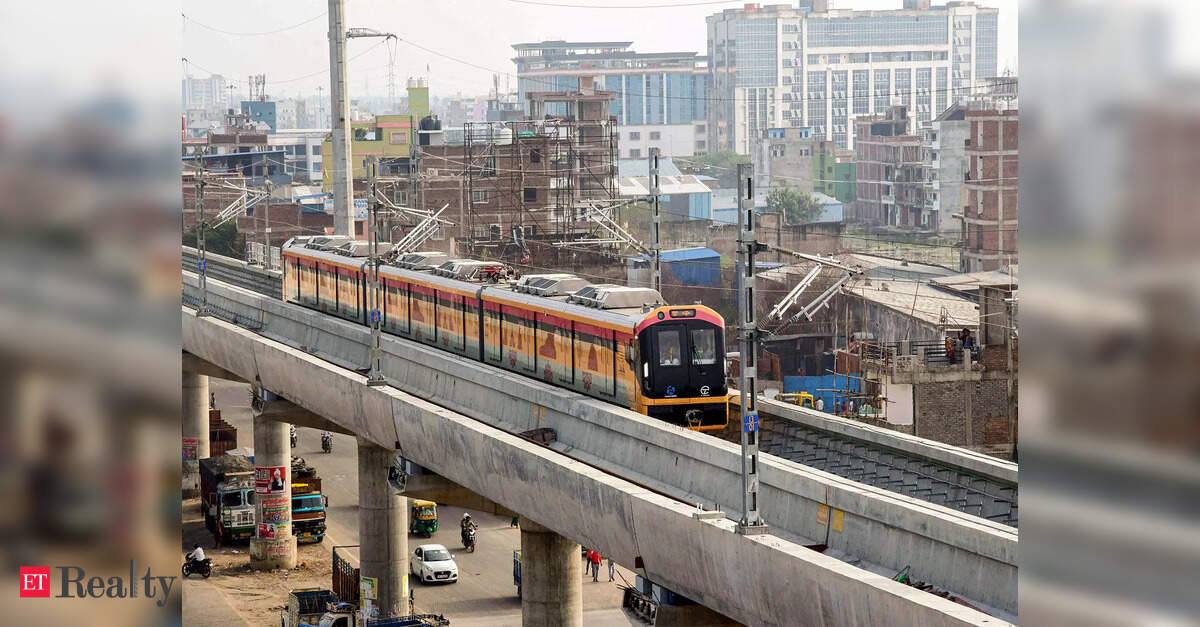
Mishra also confirmed that the Patna Metro Rail project is set for inauguration this month on the priority corridor. Prime Minister Narendra Modi is anticipated to visit Bihar on September 29 and may officially inaugurate the metro service during this visit. Initially, the metro will operate across three stations with the government planning to expand the network by adding more stations monthly.
During a press conference, he revealed plans to establish nine satellite towns around major cities in the state to alleviate urban congestion and promote balanced regional growth.
The ongoing ‘Swachhta Seva Abhiyan’ will continue until October 29, aiming to make Bihar’s urban areas garbage-free by the 2026–27 fiscal year.
To enhance cremation infrastructure, the government has partnered with a Coimbatore-based NGO to set up gas-based crematoriums throughout the state. “Seven out of the 41 electric crematorium projects are complete, with gas-based facilities to be established soon,” he announced.
Mishra highlighted progress on urban infrastructure under the Namami Gange scheme, revealing that 22 of the 27 cities along the Ganga in Bihar now have sewage treatment plants, and 23 out of 38 approved projects have been completed.
He shared performance metrics regarding cleanliness and sanitation in Bihar’s cities, noting that Patna ranked fourth among 88 cities along the Ganga. “Patna and Gaya received 3-star ratings in the GFS certification, while Bhagalpur and Supaul secured 1-star ratings. Patna also placed 21st in overall cleanliness nationally,” Mishra said.
The minister expressed gratitude to Patna Smart City Limited and Bihar State Building Construction Corporation Limited (BUIDCo) Managing Director Animesh Kumar Parashar for establishing the integrated control and command center (ICCC) in Patna, which has been instrumental in resolving crime cases in the city.
He noted that the urban population in Bihar has surged from 11% in 2005 to 20% by 2024-25. He mentioned that tap water supply was available to only 3.26 lakh urban households in 2011, which has now risen to 24.98 lakh households.
Mishra also stated that over 75 lakh women associated with 3.12 lakh self-help groups in rural Bihar have applied under the Mukhyamantri Mahila Rojgar Yojana, and 5.26 lakh applications have been received online for SHG membership in 261 urban local bodies across the state.