NOIDA: Authorities have advised nearly 130 families residing in Janta and EWS flats in Sector 31 to vacate their homes after a roof collapse highlighted the dire structural issues stemming from years of water seepage, neglect, and unauthorized renovations.
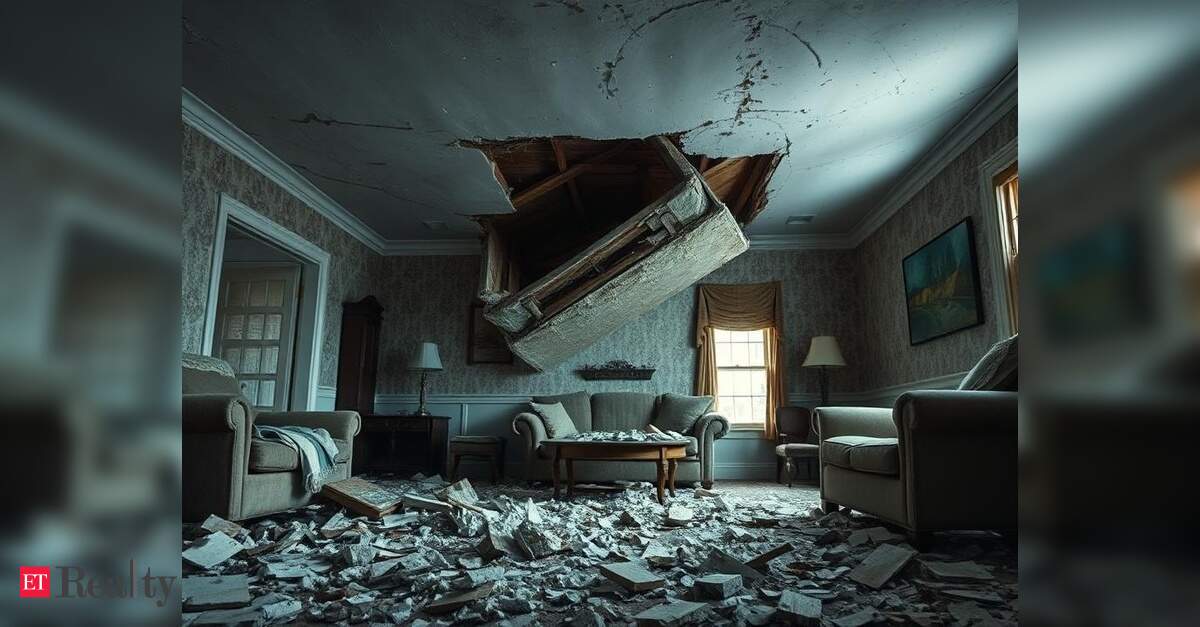
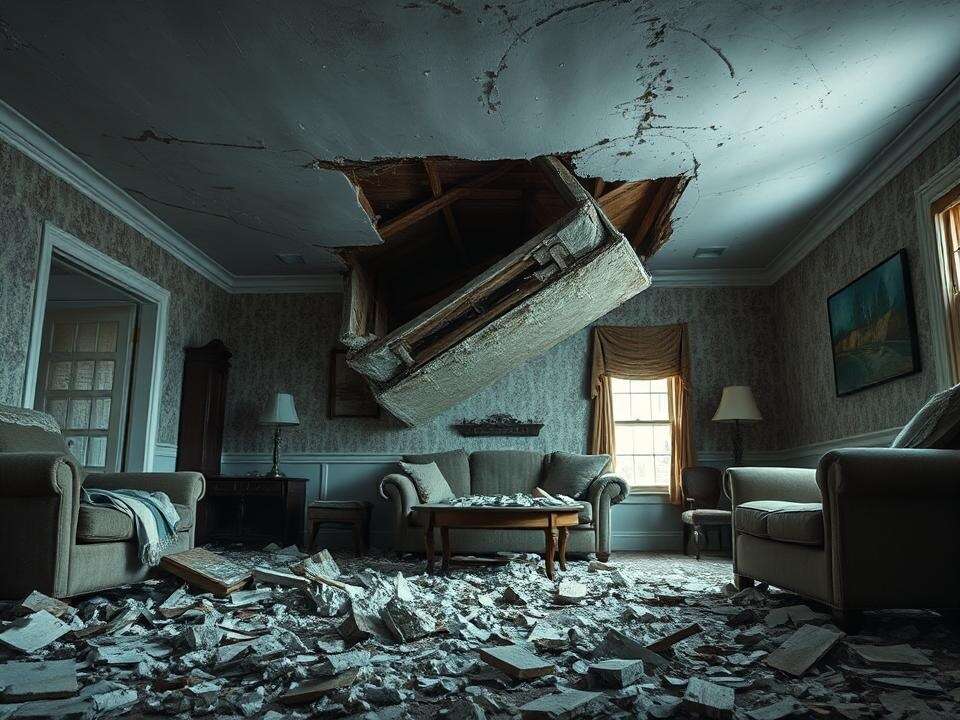
On Sunday evening, rain exacerbated by years of neglect led to the roof of a second-floor flat collapsing, largely due to the additional weight of three overhead water tanks.
Kuldeep and Savita Dixit, who live in the affected two-bedroom unit with their three young children, were home when the ceiling fell in. Savita recounted, “It sounded like the entire roof fell in at once. Our furniture and appliances were ruined. We had been requesting repairs for months due to water seepage, but no one addressed the issue.”
Following the incident, the family temporarily relocated to a hotel. Their neighbor, Pooja Mishra, also vacated her flat out of fear of further structural failure.
On Monday, a team of senior Authority officials, including General Manager (Civil) SP Singh and General Manager (Planning) Meena Bhargava, conducted an inspection and determined that chronic seepage had compromised the concrete’s integrity. The added strain from the water tanks accelerated the collapse. The investigation revealed that 128 other Janta and EWS flats in the vicinity suffer from similar structural issues.
In light of the findings, Authority CEO Lokesh M issued a recommendation for immediate evacuation for the safety of residents. He stated, “Redevelopment of these flats will proceed under the new policy, and tenders will be released once the proposal receives board approval.”
The newly approved redevelopment policy targets buildings older than 30 years or those identified as unsafe by certified engineering institutions like IITs and NITs. Homeowners can expect larger flats with a minimum 15% increase in carpet area, temporary rent support during construction, and modern facilities. Developers will benefit from higher floor area ratio (FAR) allowances, making new projects financially attractive.
While this policy could help alleviate issues for many of Noida’s aging private projects and Authority-built complexes from the 1980s and 1990s showing signs of distress, for the Dixit family, promises of redevelopment provide little solace. “Where do we go tonight, tomorrow, or next week?” Savita asked. “We are grateful to be alive, but now we are homeless.”
Sitaram, a retired government employee who purchased an LIG flat in 2002, voiced concerns: “For many of us, renting a new home suddenly is not feasible. Most are pensioners or middle-class families on tight budgets. Moving at short notice is just not an option.”
Constructed in the early 1980s as part of an affordable housing scheme, over 200 Janta flats now have a resale value of around Rs 25-30 lakhs. However, the buildings are plagued by structural issues. Residents assert that repeated monsoons have exacerbated seepage, while a lack of substantial maintenance has rendered the flats dangerous.
A recent walk through the neighborhood revealed extensive cracking in many blocks, and balconies had exposed, corroded steel bars due to years of rainwater seepage. Many residents have made unauthorized room extensions or built makeshift balconies without structural support, further jeopardizing the buildings. Without a Resident Welfare Association (RWA) to coordinate maintenance, repairs have been limited to superficial fixes carried out by individual households.