
MUMBAI: On Tuesday, the Maharashtra cabinet sanctioned a policy for concept-driven iconic city development, aimed at maximizing land utilization held by CIDCO and various authorities. It also approved the redevelopment of certain MHADA colonies.
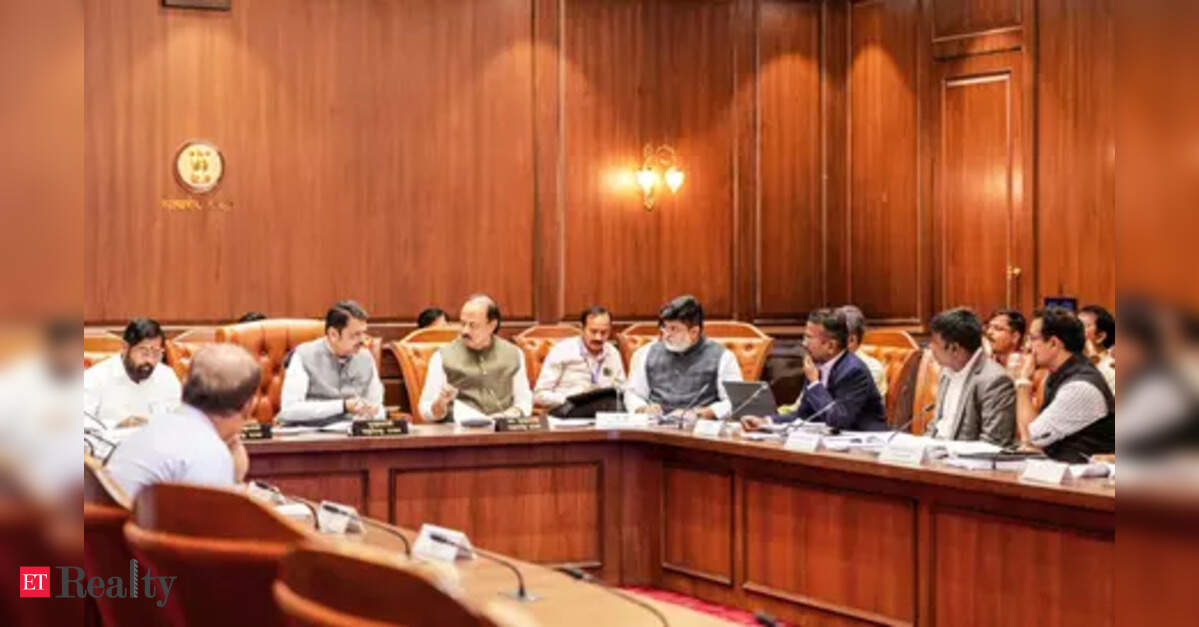
The meeting was headed by Chief Minister Devendra Fadnavis, according to an official release.
The City and Industrial Development Corporation (CIDCO) leases land parcels for diverse purposes via auctions, permitting project construction under the lease and Development Control and Promotion Regulation (DCPR) 2020 guidelines.
However, for land parcels controlled by multiple construction and development operators (CDOs), integrated township-style development is currently unfeasible, the CM’s office stated.
CIDCO drafted a policy for concept-based iconic city development, which was subsequently approved by the cabinet.
This policy emphasizes optimal land use across CIDCO and various authorities, allowing them to appoint CDOs through a tendering process.
These operators can develop integrated residential townships or international commercial districts, complete with corresponding development rights to sell both residential and commercial units.
Moreover, the cabinet endorsed a detailed policy for the integrated redevelopment of MHADA colonies spanning 20 acres or more in Mumbai and its suburbs.
MHADA constructed 56 colonies between 1950 and 1960 for Middle-Income and Low-Income families, which included nearly 5,000 cooperative housing societies. Many of these buildings are now in poor condition and necessitate redevelopment, officials reported.
Under the new policy, MHADA will revamp large layouts with modern housing units featuring lifts, adequate parking, parks, community halls, playgrounds, gyms, swimming pools, and CCTV systems.
Essential infrastructure such as water supply, sewage systems, electricity, and internal roads will also be enhanced, focusing on environmental sustainability.
Residents will receive larger homes compared to their current accommodations.
The policy allows for the highest permissible rehabilitation FSI without requiring occupant consent. However, developers appointed via the tendering process must obtain support resolutions from housing societies.
The Cabinet also consented to the establishment of a high-powered committee led by the Additional Chief Secretary (Housing) to oversee policy implementation.