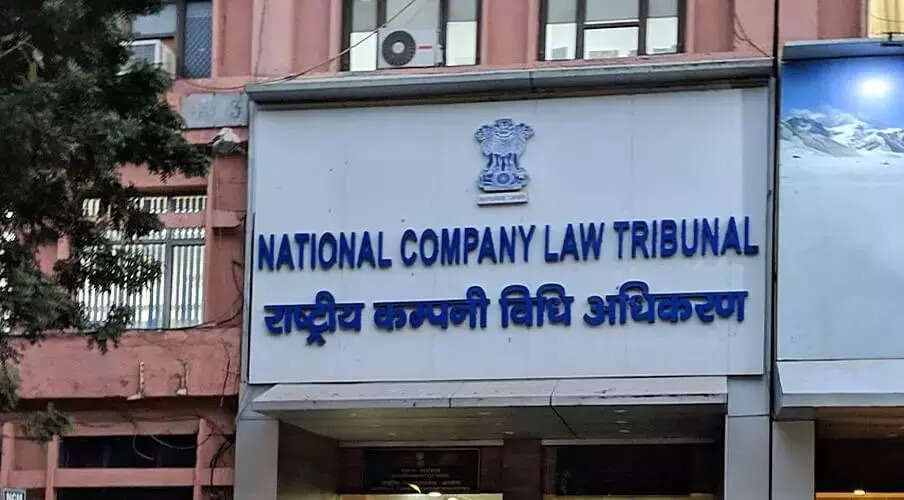
NEW DELHI: The Insolvency and Bankruptcy Code (IBC) framework in 2025 faced increasing stress on timelines and capacity, with resolution processes often extending beyond statutory deadlines. This scenario persists despite the National Company Law Tribunal’s (NCLT) efforts to manage its limited resources.
Senior advocates and legal experts have raised alarms over systemic delays, indicating that nearly 10,000 cases remain stuck at the admission stage, with over Rs 10 lakh crore in distressed assets at stake. Additionally, nearly 24 out of 30 NCLT courts are operating on half-day schedules.
The delays can be attributed to a combination of limited capacity, repeated adjournments, contested defaults, and extensive litigation under Section 60(5) of the IBC.
Senior Advocate Ramji Srinivasan expressed disappointment when discussing NCLT’s operations with PTI. He stated, “The reasons are not due to the lack of effort from the NCLT’s president but stem from the challenges facing the institution. Its widespread presence across India requires consistent governmental support. The lack of timely appointments of qualified individuals and inadequate infrastructure have rendered NCLT open to criticism.”
Initially conceived as a tribunal primarily focused on company matters, the NCLT has, over the past decade, been overwhelmed by a flood of cases arising from the Insolvency & Bankruptcy Code, without a corresponding increase in judges or infrastructure to manage this influx.
The Corporate Insolvency Resolution Process (CIRP) provisions took effect on December 1, 2016, and as of September 30, 2025, NCLT has admitted 8,659 cases, according to the Insolvency and Bankruptcy Board of India (IBBI) data. Out of these, 1,300 CIRPs were approved, 1,223 were withdrawn under Section 12A, and 1,342 have been settled.
Currently, the NCLT operates with over 15 benches handling 1,898 ongoing CIRP cases, along with others at various admission stages. Additionally, the average time to conclude an insolvency resolution has increased by 126 days over the last 18 months, now averaging 9 months as of September 2025. The timeframe for completion has surged from 566 days at the end of March 2024 to 688 days by September 2025, excluding additional time spent on litigation and activities during CIRP.
The officially mandated timelines of 270 days (extendable to a maximum of 330 days) remain theoretical, as noted by Senior Advocate P. Nagesh.
In early 2025, the government appointed 24 new members to NCLT. However, Nagesh pointed out that despite these appointments, NCLT and NCLAT lack the capacity necessary to handle the volume and complexity of cases. Structural issues, beyond sheer numbers, have kept statutory CIRP timelines elusive. Delays due to slow admissions, repeated adjournments, and contested defaults predominantly account for the stagnation.
2025 also witnessed an increased impact from parallel regulatory frameworks like the PMLA, complicating matters further by deterring bidders from acquiring companies affected by asset attachments, as stated by Nagesh.
Secretary General of the NCLT Bar Association, Saurabh Kalia, remarked on the infrastructural challenges facing NCLT. “The infrastructure constraints in cities like Delhi and Chandigarh exacerbate difficulties for not just NCLT but all stakeholders involved,” he noted.
Nevertheless, Kalia reported that as of September 30, 2025, 53,727 cases had been filed, with 46,725 resolved, leaving only 7,002 pending.
Yogendra Aldak, Executive Partner at Lakshmikumaran & Sridharan, suggested that 2025 should be considered a “year of course correction,” focusing on refining access to insolvency and enforcing timelines, along with fostering parallel restructuring avenues.
Even though the tribunal operates with a sanctioned strength of 63 members, Aldak pointed out that by early 2025, nearly 24 of the 30 NCLT courts were convening only half-day sessions, with members often juggling responsibilities across multiple courts through video conferencing.
Khaitan & Co Partner, Siddharth Srivastava, mentioned that while bench strength is a significant factor, it is only one piece of a larger puzzle involving legacy backlogs, the complexity of large CIRPs, frequent litigation, and practical hindrances such as incomplete records and delays from former management.
Madhav Kanoria, Partner at Cryil Amarchand Mangaldas, noted that 2025 also featured significant rulings, including a review of the Bhushan Power and Steel judgment. “This review emphasized the importance of commercial wisdom and the limited authority of tribunals and courts in resolution plan matters,” he remarked. The Supreme Court’s guidance for High Courts to minimize interference in IBC-related issues is crucial, as legal disputes tend to prolong CIRP outcomes.
“A persistent challenge has been the protracted process of resolution plan approval, which generates anxiety among bidders, particularly since they are bound once the CoC endorses their plans,” he added.
Although NCLT and NCLAT benches are theoretically equipped to address numerous matters, the issue lies in the routine and repetitive applications filed during CIRP, especially under Section 60(5) of the Code, which has increasingly become a tool for obstruction instead of resolution, stated Suraj Kumar Singh, Managing Partner at SKS & Partners.