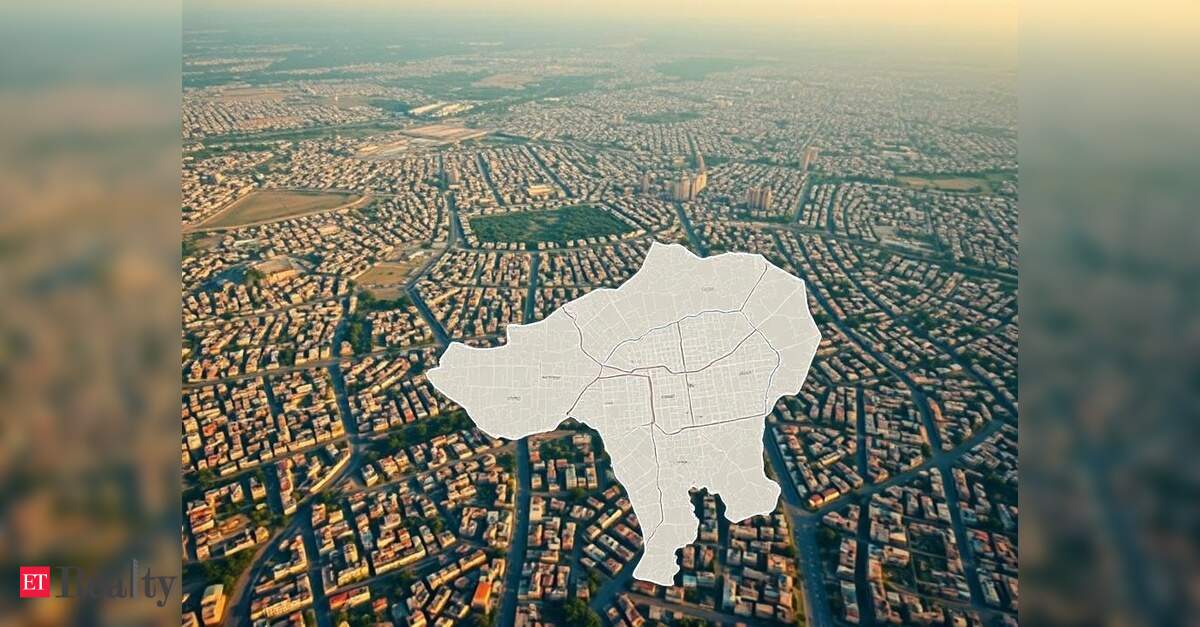

HYDERABAD: The proposed merger of 27 municipalities into the Greater Hyderabad Municipal Corporation (GHMC) signals a substantial overhaul of the city’s administrative framework. Current plans could see the existing 150 wards, covering 650 sq km, expanding to nearly 300 wards across over 2,000 sq km, according to sources from the civic body.
If implemented, the GHMC would become India’s largest municipal body by area (2,053 sq km) and the biggest elected municipal body in the country. The current largest is the Municipal Corporation of Delhi (MCD) with 250 wards, followed closely by the Brihanmumbai Municipal Corporation (BMC) with 227 wards.
“The final number of wards will depend on factors like population distribution, geographical considerations, and administrative efficiency,” stated an official. “If GHMC is divided into three or four corporations, the number of wards may vary between different civic bodies.”
The Centre for Good Governance (CGG) has initiated a study to establish new administrative boundaries, design a revised ward structure, and formulate a ward delimitation plan for the expanded GHMC.
According to Section 3(3) of the GHMC Act, 1955, the state government has the power, after consulting GHMC, to modify the corporation’s territorial limits to include nearby municipalities. The state has instructed GHMC to examine the merger proposal, conduct field studies, and provide feedback.
“It’s premature to draw conclusions as the study has just commenced. Once the CGG finalizes its analysis and report, the government will decide on the final ward count,” said GHMC commissioner RV Karnan.
It has been 18 years since GHMC last revised its wards, which were established in April 2007 by merging the 100-ward Municipal Corporation of Hyderabad with 12 municipalities and eight gram panchayats, resulting in 150 wards.
In 2015, the state government aimed to increase the number of wards to 200, a plan that ultimately fell through. Currently, GHMC is divided into six zones: Charminar, LB Nagar, Serilingampally, Kukatpally, Secunderabad, and Khairatabad. Originally, the 150 wards were intended for approximately 36,000 residents each, but by 2020, this number had surged to between 40,000 and 50,000 per ward.
With further expansion imminent, concerns are being raised regarding GHMC’s limited staffing. With only 4,000 permanent employees and an additional 27,000 on contracts and outsourcing, the body manages a population exceeding 1.2 crore.
Employees indicate that this workforce is inadequate for 250-300 wards with a projected population of over 1.5 crore. “Even after absorbing staff from the merged municipalities, GHMC will need to recruit an additional 20,000 to 25,000 personnel, particularly in critical departments such as sanitation, entomology, veterinary services, and transport,” said U. Gopal, president of the Greater Hyderabad Municipal Employees’ Union.