GURUGRAM: Residents in new sectors along the Dwarka Expressway have approached the Punjab and Haryana High Court, requesting intervention for the construction of 24-metre and 30-metre internal sector roads. According to residents, the absence of these roads obstructs access to homes, delays emergency services like ambulances and fire trucks, and poses dust and safety hazards in the area.
This action follows repeated appeals to civic and planning authorities that resulted in minimal progress. The resident group, Dwarka Expressway Gurugram Development Association (DXP GDA), filed a writ petition through advocate Seema Nain, who stated that “judicial intervention is now the only possible solution.”
Some neighborhoods are even forced to depend on water tankers, as appropriate supply lines cannot be established without the necessary internal roads. DXP-GDA joint convener Sunil Sareen highlighted, “Residents face congestion, unsafe travel, and inadequate access to their own homes. This writ petition is the first step to ensure the long-overdue internal roads are completed without further delays.”
Advocate Seema emphasized, “Despite being a crucial aspect of approved development plans, these roads remain unfinished, causing daily challenges for thousands of families. With this petition, we are seeking prompt action to provide residents with the infrastructure they were promised.” The incomplete 24-metre roads have been a persistent issue, particularly in the newer areas of the city.
Under the Gurgaon-Manesar Master Plan 2031, government agencies were assigned the responsibility of building 60-metre sector divider roads, while the task of constructing the 24-metre internal sector roads was allocated to private developers. Each builder is required to construct only the section within their licensed territory.
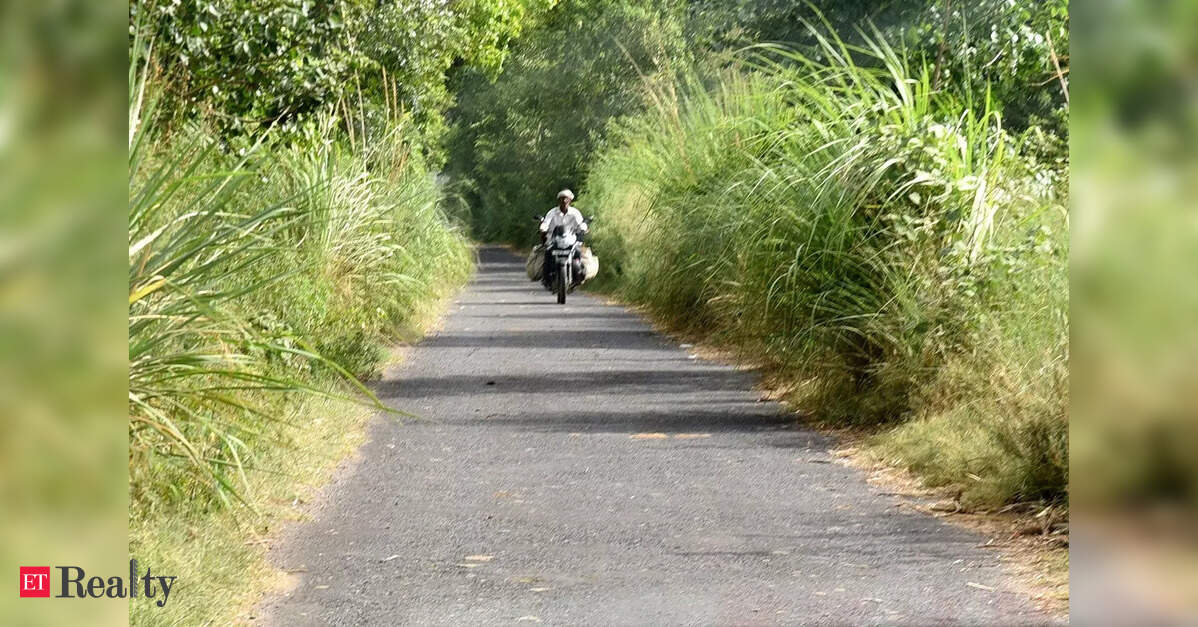
This has resulted in a disjointed system where different developers may work on various sections at different times, leaving gaps where licenses have not been issued or projects have stalled. Consequently, several neighborhoods are connected solely by revenue roads or unpaved stretches, affecting thousands of families who lack proper road connectivity.
Unlike older HSVP sectors where 18-metre internal roads were constructed by the authority, residents in the new sectors lack a single agency responsible for delivering complete 24-metre links.
The consequences have been significant: there are approach roads that abruptly end, stretches that are broken and uneven with potholes, and in many instances, incomplete roads obstructing the installation of utilities such as sewage, drainage, and water pipelines. A senior official from DTCP acknowledged the policy gaps, describing the situation as “ambiguous.”
“Any developing agency or private developer that has secured land for developing a colony or sector is obligated to construct the 24-metre road. However, there are no regulations for acquiring land specifically for these roads, and the new land acquisition law has complicated matters,” the official remarked.