MUMBAI: The initial phase of the city’s groundwater level survey has uncovered a troubling situation: saline water was detected in 17 of the 19 surveyed locations.
The Union Government’s Ground Water Survey Board assessed groundwater at 26 sites throughout the city, providing a preliminary report for 19 locations to the Brihanmumbai Municipal Corporation (BMC).
Tests were conducted in various areas including Churchgate, Mazagaon, Worli, Mahim, Byculla, Mahul, Trombay, Khar Danda, Vakola, Vile Parle (West), Amboli, Versova, Madh, Film City, Mulund, Goregaon, Malvani, Manori, and Gorai, in addition to two places each in Colaba, Dahisar, and Chembur.
The report indicates that groundwater quality is only satisfactory at Ismail Yusuf College in Jogeshwari and Film City in Goregaon, while saline water has infiltrated other regions.
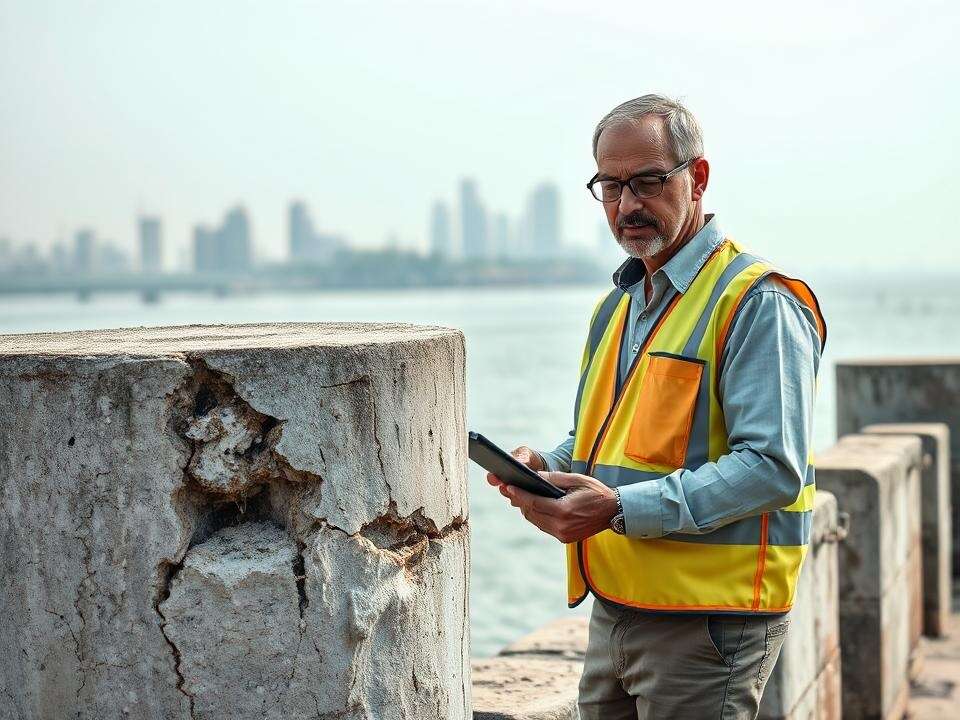
Officials noted that groundwater samples were extracted from depths of 70 to 200 meters below the surface. Rising salinity presents risks to the integrity of concrete structures.
An independent structural engineer mentioned, “Saline water is a persistent concern in the city’s groundwater due to its coastal nature. While measures are taken during construction to mitigate this, the heightened salinity can compromise older buildings.”
In response to these challenges, the BMC plans to enhance groundwater levels through rainwater harvesting. Most municipal gardens and properties are equipped with borewells and wells.
“We aim to replenish these groundwater sources via rainwater harvesting to decrease salinity levels. The process involves digging a 2–3 meter deep pit, utilizing pipelines and natural slopes to direct rainwater through a sand, pebble, and gravel filter for effective percolation,” an official stated.
Furthermore, the BMC intends to implement piezometers in select areas. These instruments will provide real-time data about groundwater quality. “Regular monitoring of water quality will enable better management of our groundwater resources,” the official added.
A piezometer typically consists of a tube or sensor that measures the static pressure of liquids or gases, specifically focusing on pore water pressure in the ground.
The report also highlighted that sewage and industrial runoff have contaminated groundwater. Heavy metals were detected near creek areas, and over-exploitation of groundwater may lead to seawater intrusion. Structural engineering expert Vikram Tambavekar explained, “This issue is prevalent within a 2-3 km coastal zone. Without proper treatment during foundational work, saline water can severely damage structures. Increased salinity also poses risks to older buildings,” he told Mumbai Mirror.