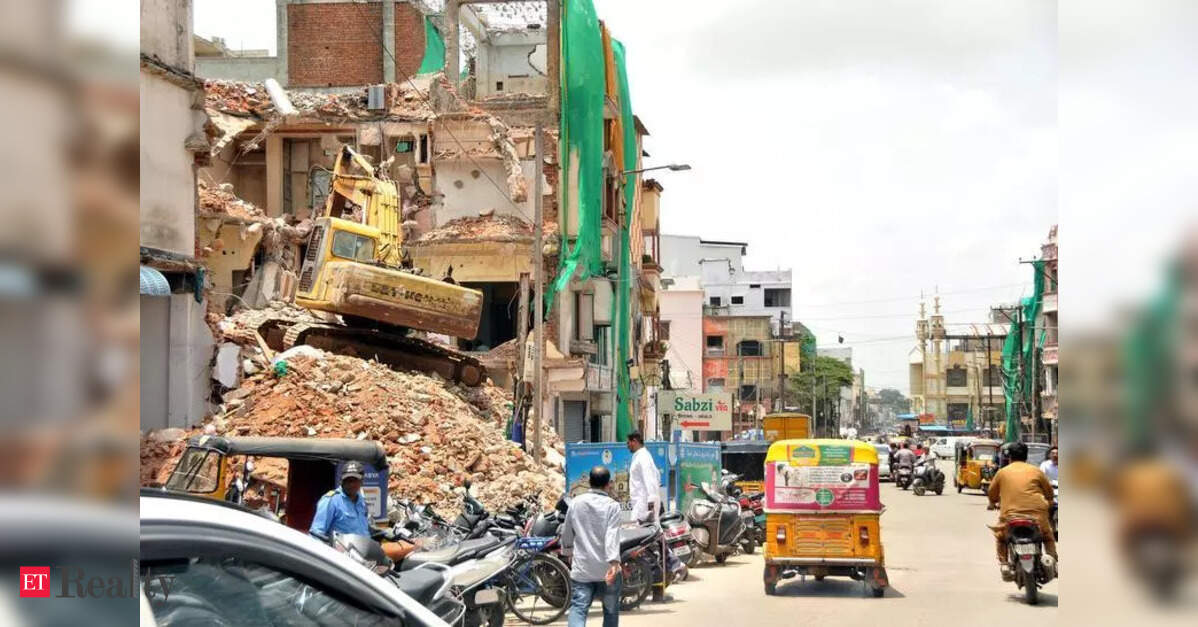

MARGAO: The state’s panchayat judicial system is currently overwhelmed with over 3,200 illegal construction cases. Experts suggest that this reflects a deliberate undermining of local governance in favor of the construction lobby.
Official statistics reveal a staggering 2,179 cases are pending before the additional director of panchayats in North Goa, while another 1,049 cases await attention in South Goa. This brings the total backlog to 3,228 cases. From January 2022 onwards, 436 cases have emerged across various levels of the directorate of panchayats—338 are pending before additional directors’ courts, 86 before deputy directors, and 12 before the director of panchayats himself.
Soter D’Souza, an expert on panchayati raj with extensive grassroots experience, argues that the current system has a flawed workflow that contributes to the backlog. The town and country planning (TCP) department conducts inspections and issues no-objection certificates without consulting panchayats. Only after TCP approval is granted do applicants approach the panchayat for a construction license.
“Prior to 2010, construction files went to panchayats first,” D’Souza told TOI. “Following the anti-regional plan movement in 2010, a separate act was introduced—the Goa Land Development and Building Construction Regulations, 2010—making the TCP the nodal agency. Now, all construction files go to TCP first, without panchayat involvement.”
When panchayats attempt to reject applications due to inadequate infrastructure—such as garbage management, water shortages, or electricity limitations—applicants can quickly appeal to government-appointed directors, contributing to the backlog. “They appeal to these government officers, and cases can remain pending indefinitely,” D’Souza explained. “Panchayat decisions in rejecting applications are often questioned because TCP is perceived as the competent authority.”
The situation worsened in 2024. To combat increasing resistance from panchayats, the government amended rules to diminish the authority of local self-government bodies. “The government amended the rules because panchayats were challenging decisions,” D’Souza stated. “If a panchayat fails to issue a license within 15 days, the panchayat secretary or the BDO can grant it.”
Several sarpanchs that TOI spoke with confirmed they only issue construction licenses after obtaining technical clearance from the TCP department and the necessary no-objection certificate from the health department—effectively shifting responsibility to state agencies. D’Souza pointed out a flawed incentive system that encourages delays: “There are enough loopholes for advocates to keep requesting repeated dates. Cases can drag on for years. If they can delay a case for ten years, they not only recover their investments but also earn substantial returns.”
Years ago, the Centre for Panchayat Raj – Peaceful Society, an NGO, suggested establishing a special panchayat tribunal headed by a retired high court judge to resolve construction disputes—a reform that could have mitigated the current backlog crisis. “We proposed that government officers should not serve as quasi-judicial authorities in these cases,” D’Souza, then heading the Center, said. “All illegal construction cases should go to a special panchayat tribunal for adjudication instead of bureaucrats.” This proposal was ultimately ignored.
D’Souza emphasized that the existing appeals process provides builders with political avenues, rendering panchayat decisions ineffective. “If panchayats refuse to issue a license, they can simply approach a minister who will expedite the matter,” he noted. “This undermines democratic principles.”