GURUGRAM: The eco-sensitive zone surrounding Sultanpur National Park is undergoing digital geofencing, creating five concentric rings around the area to monitor land-use changes and construction in real time.
“Each ring has its own set of prohibitions, regulations, and activities to be encouraged,” stated divisional wildlife officer (DWO) RK Jangra in an interview with TOI on Monday.
Restrictions include no mobile towers within 3km, no new wood-based industries nearby, and no construction within 300 meters of the park. The 5km eco-sensitive zone encompasses 22 villages, with mapping of the outermost ring already underway. The timeline for implementing the alert system will be established within 15 days.
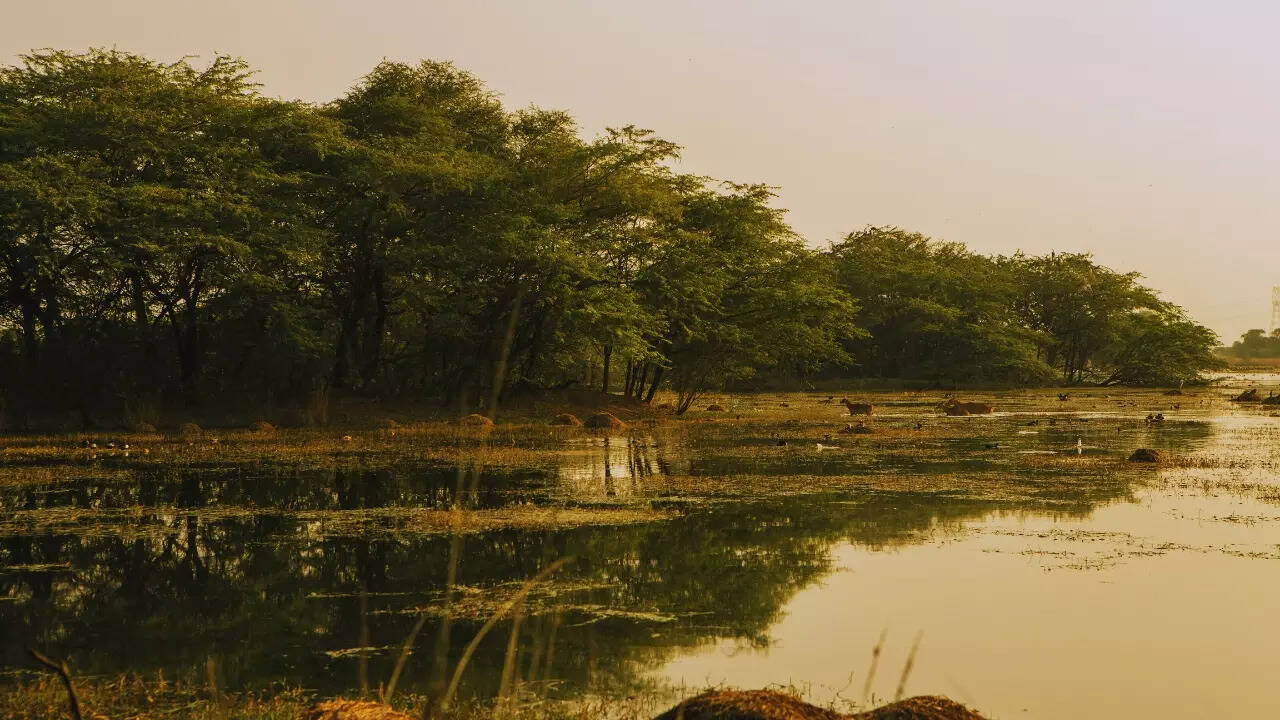
The Haryana Space Applications Centre (HARSAC) will manage the geospatial work, with an alert dashboard designed to notify enforcement teams immediately upon detecting a violation. Sultanpur hosts thousands of migratory waterbirds each winter and relies on an uninterrupted wetland and grassland matrix beyond its core area. Officials noted that the geofencing will clarify buffer boundaries, addressing a persistent issue that permitted unapproved real estate developments around Sultanpur over time.
DWO Jangra further explained, “With satellite imagery linked to ground-verified coordinates, every breach will be recorded as a timestamped location on the monitoring dashboard, creating a digital evidence trail for enforcement and legal actions. Construction within 300 meters of the park will only be permitted for tube wells. New high-tension transmission lines are restricted up to 500 meters. Structures taller than two stories, or thirty feet, are prohibited between 300 and 500 meters. Additionally, new wood-based industries are banned within a 1km radius, and no commercial construction is allowed within 3km. Polluting industries identified by the CPCB and brick kilns are also barred within 3km. Mobile towers are not allowed within 3km, and new hot mix and RMC plants are prohibited within 1km. The use of single-use plastics is banned throughout the ESZ.
Burning of paddy stubble or solid waste will not be tolerated, and the discharge of untreated effluents or waste will incite immediate action.
Structures with glazed glass façades are banned within 3km of the boundary, whereas groundwater extraction is allowed.
Some activities will be subject to regulated monitoring, including assessments of water and noise levels, tourism-related activities, conditional repairs and constructions, and tree felling. Flood control measures within the ESZ are also prioritized.
The digital boundary is viewed as essential for safeguarding the surrounding habitat as urban development continues toward the park.
The park, internationally recognized for its ecological significance, serves as a crucial habitat for various migratory and resident bird species.
Environmentalists and wildlife experts are advocating for immediate and stringent actions to stop illegal activities and preserve the integrity of Sultanpur National Park.