NEW DELHI: The affordable housing sector in Indian real estate is facing mounting challenges due to rising construction costs, impacting supply and affordability, as per a recent report by Anarock Group.
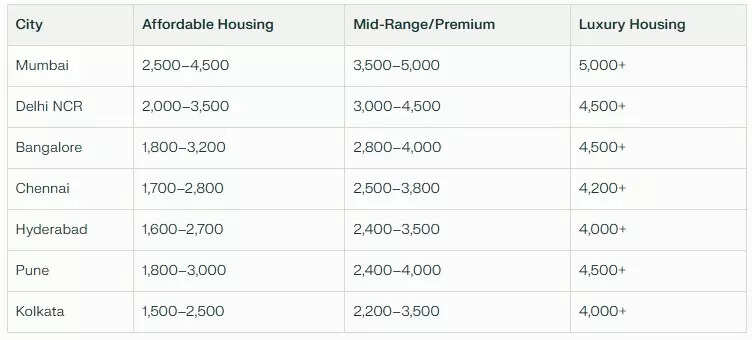
Data reveals that the average construction cost in major Indian cities has surged nearly 40% over the last five years, climbing from ₹2,200 per sq ft in 2021 to about ₹2,800 per sq ft by October 2024. Mumbai, Delhi NCR, and Bengaluru stand out as the priciest markets, with luxury housing construction costs now surpassing ₹5,000 per sq ft.
“Construction expenses in metropolitan areas have skyrocketed due to inflation, supply chain disruptions, and broader economic events. Affordable housing has dropped to just 12% of new launches in H1 2025, down from 40% in 2019,” explained Prashant Thakur, Executive Director & Head of Research & Advisory at Anarock.
Persistent Material and Labor Pressures
Over the past year, cement prices decreased by 15% while steel only saw a marginal dip of 1%. However, both have increased by 30-57% since 2019. Copper prices surged by 19% last year and a staggering 91% over the last five years. Labor costs remain a significant concern, rising 25% annually and a massive 150% since 2019.
In Mumbai, construction costs for affordable homes range from ₹2,500 to ₹4,500 per sq ft, with luxury construction starting at ₹5,000 per sq ft. Other major metros, such as Delhi NCR and Bengaluru, reflect similar trends, while tier-2 and tier-3 cities enjoy relatively lower land and labor expenses.
Affordability at a Critical Juncture
Homebuyers are largely bearing the brunt of increased costs, with price hikes of 5-6% translating to burdensome increases. For lower-ticket affordable housing, a rise of ₹500-800 per sq ft can add approximately ₹5 lakh to unit prices, pushing homeownership out of reach for cost-sensitive buyers.
Affordable housing projects, which have been hit the hardest by these cost escalations, now only represent 12% of new supply in H1 2025, a decline from 40% six years prior. Additionally, the sales share has plummeted to 18% from 38% in the same timeframe. As a result, many smaller developers are either cutting amenities or delaying project launches, while larger developers in the luxury segment are better positioned to manage increased input costs.
Tariff Risks Loom
Potential tariffs on essential construction imports, such as steel, aluminum, cement, and equipment, present additional risks. A 25% tariff could raise costs for import-heavy projects by up to 2.5%, while a 50% tariff could escalate costs by 5%, presenting further price volatility and challenges, particularly for affordable and mid-tier housing.
These macroeconomic uncertainties may compel developers to postpone launches, pivot towards local sourcing, or further burden buyers with additional costs. The ongoing escalation, particularly with international trade tensions, could worsen the current downturn in affordable housing sales and lead to increased loan defaults.
GST Reform Provides Limited Relief
In light of these difficulties, proposed GST reforms—particularly a reduction in GST on cement from 28% to 18%—offer some hope for cost relief. For affordable housing, these reforms may decrease unit prices by 2-4%. Mid-segment housing could experience a price reduction of 2-3% with GST dropping to 3%. However, benefits for luxury projects are likely to be minimal, as many finishes still incur a 40% GST rate.
“Continued government support, regulatory measures, and an emphasis on local sourcing are crucial for stabilizing construction costs and enhancing affordable housing supply,” Thakur concluded.