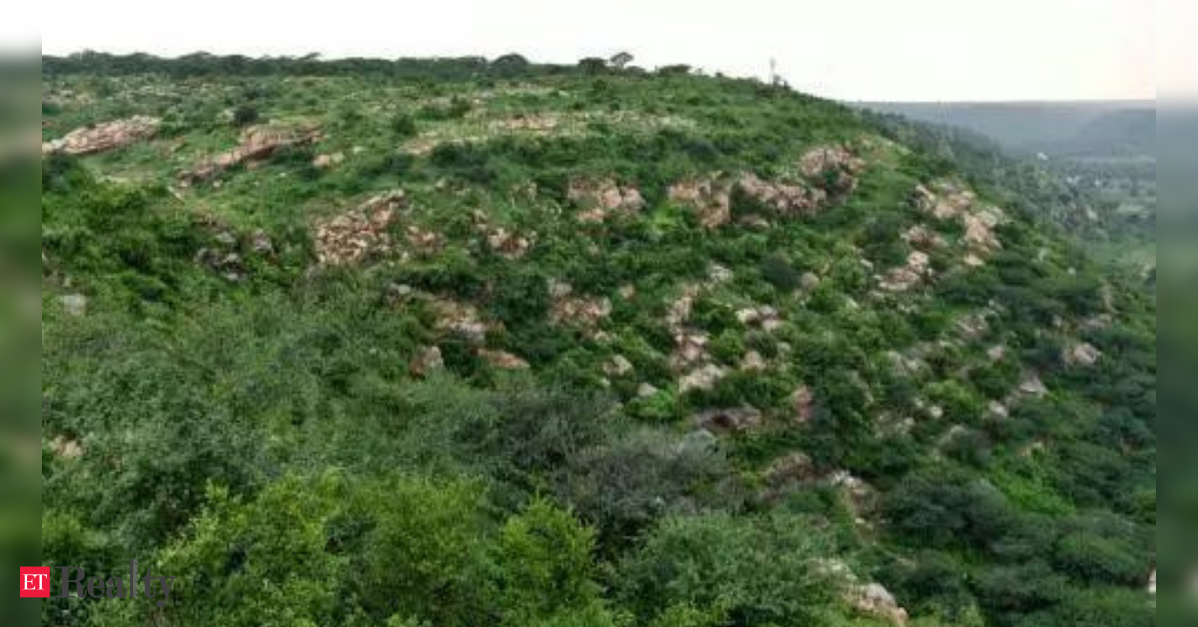
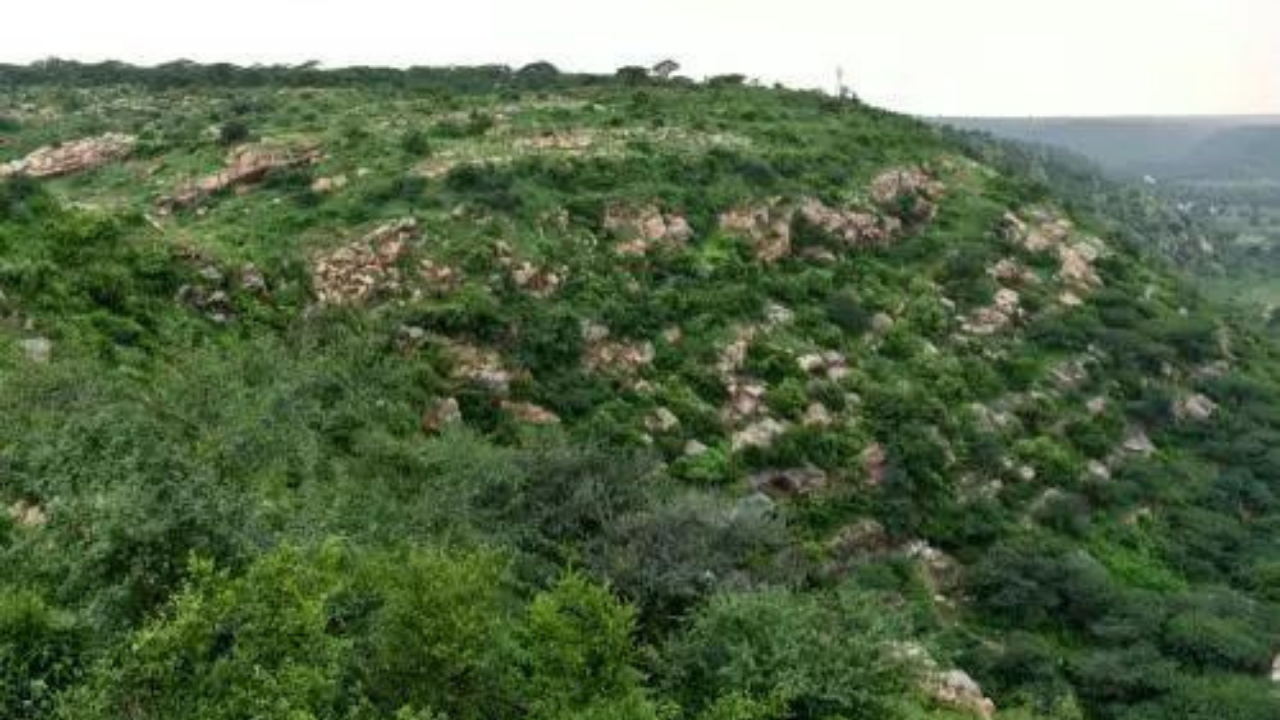
NEW DELHI | GURUGRAM: The Supreme Court’s endorsement of the Union Environment Ministry’s definition of the Aravalis as hills rising at least 100 metres in elevation has raised alarm among environmentalists. They fear it may influence broader applications beyond mining.
The ongoing drafting of the NCR master plan – Regional Plan 2041 – is crucial, as the classification of the Aravalis will play a pivotal role in safeguarding natural conservation zones (NCZ).
Recently, the Haryana government proposed a definition for the Aravalis that incorporates minimum age and height criteria set by the mining department. This definition only acknowledges hills with rocks at least a billion years old and an elevation surpassing 100 metres. If such criteria are enforced, many hills will fall outside this classification.
Experts caution that NCR member states may leverage the Supreme Court’s acceptance of the 100m threshold—initially intended solely for mining—as a basis for decisions in urban planning and real estate zoning. “This could spell disaster,” warns retired forest conservator R P Balwan, who elaborates that forces opposed to Aravali conservation in Gurgaon and Faridabad may exploit this definition to promote real estate developments, neglecting the urgent need for wildlife protection and conservation efforts.
He notes that approximately 95% of the Aravalis in Gurgaon and 90% in Faridabad would not meet the new definition, threatening vital scrub hills, grasslands, and ridge areas that currently receive ecological protection.
As reported by TOI, the proposed reduction of NCZ protections in Regional Plan 2041 has generated significant debate ever since the draft was shared with stakeholders over four years ago. A substantial portion of feedback—over 4,000 responses—recommended restoring restrictions on non-forest activities in NCZ. Even governmental meetings involving the home minister and the PMO supported maintaining existing NCZ protections.
MD Sinha, a former conservator of forests in Haryana, contends that using height filters to define the Aravalis is scientifically and logically flawed. He points out that the Supreme Court has recognized the range as a continuous geological feature running from Gujarat to Delhi, emphasizing that it should not be segmented based on arbitrary criteria. He cites Rajasthan’s failure, resulting from the same height parameters, and the devastating impact of illegal quarrying that led to the disappearance of 31 of 128 Aravali hills.
Sinha warns that defining the ecosystem with a 100m threshold would virtually obliterate the Aravalis within the NCR. “There are no areas surpassing 100m in Delhi; adopting this definition would effectively erase the Aravalis. Would we apply similar arbitrary measures to other geographic features such as the Shivaliks or the Ganges? If the Ganges narrows at any point, does it cease to be the Ganges?”
Professor CR Babu from Delhi University’s Centre for Environmental Management of Degraded Ecosystems concurs, stating that height limitations are ecologically unreasonable for the Aravalis. “Isolated hillocks can’t fulfill the functions of a connected range. This ancient mountain range operates as an integrated ecosystem, and many areas have already suffered degradation due to mining. The damage is evident across Delhi and Gurgaon, with large sections left barren. The Aravalis serve as a crucial barrier against the Thar Desert, and mining in sensitive zones must be banned to prevent further devastation.”
The Supreme Court’s ruling from November 20 established uniform standards for states with Aravali regions—Gujarat, Rajasthan, Haryana, and Delhi—without altering existing protections under the Punjab Land Preservation Act, forest laws, or notifications related to Delhi Ridge.
Professor Laxmi Kant Sharma, an environmental scientist and Aravali conservation expert at the Central University of Rajasthan, states, “The Aravalis are among the world’s oldest mountain ranges, and they have largely degraded over millions of years. Numerous ecologically crucial ridges, wildlife corridors, and groundwater recharge areas fall beneath the 100m benchmark. Excluding them from legal protection would facilitate quarrying, real estate expansion, and forest degradation, accelerating desertification in North India. Any protective measures should focus on geomorphological characteristics and ecological roles, not arbitrary height thresholds. Diminishing their protection would compromise the natural barrier shielding the Delhi-NCR region from desert spread, air pollution, and groundwater depletion.”