Here’s the rewritten content:
NEW DELHI: As greenfield land in cities like Mumbai runs low, experts at the RealtyDailyNews Realty Real Estate Conclave 2026 indicated that brownfield and cluster-led redevelopment are now key avenues for urban growth.
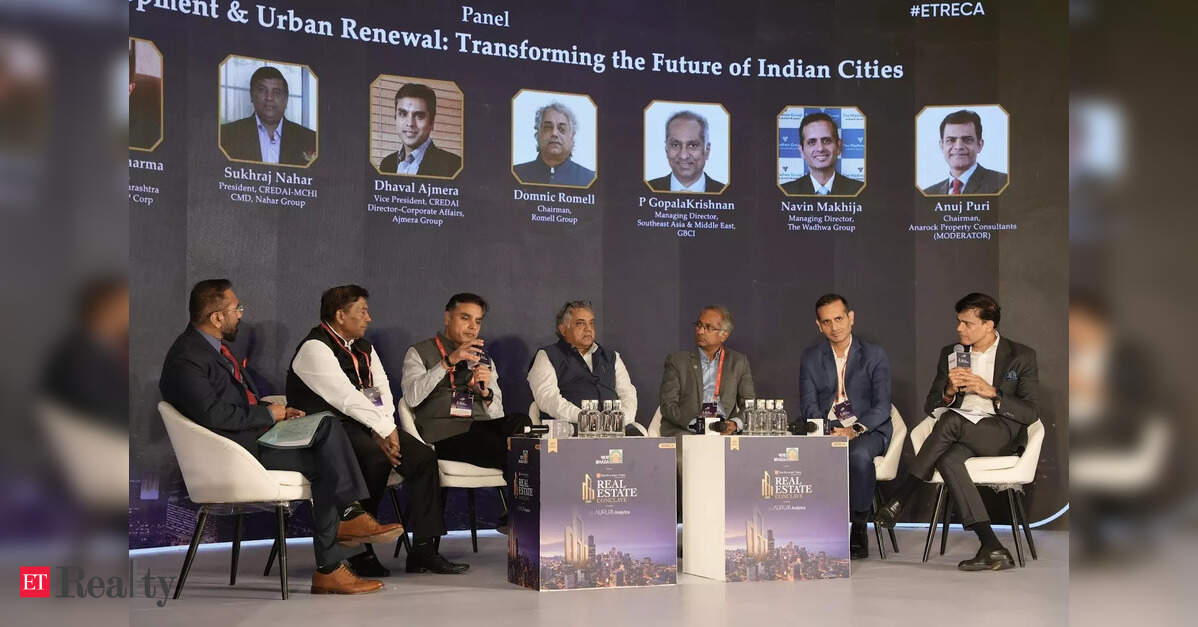
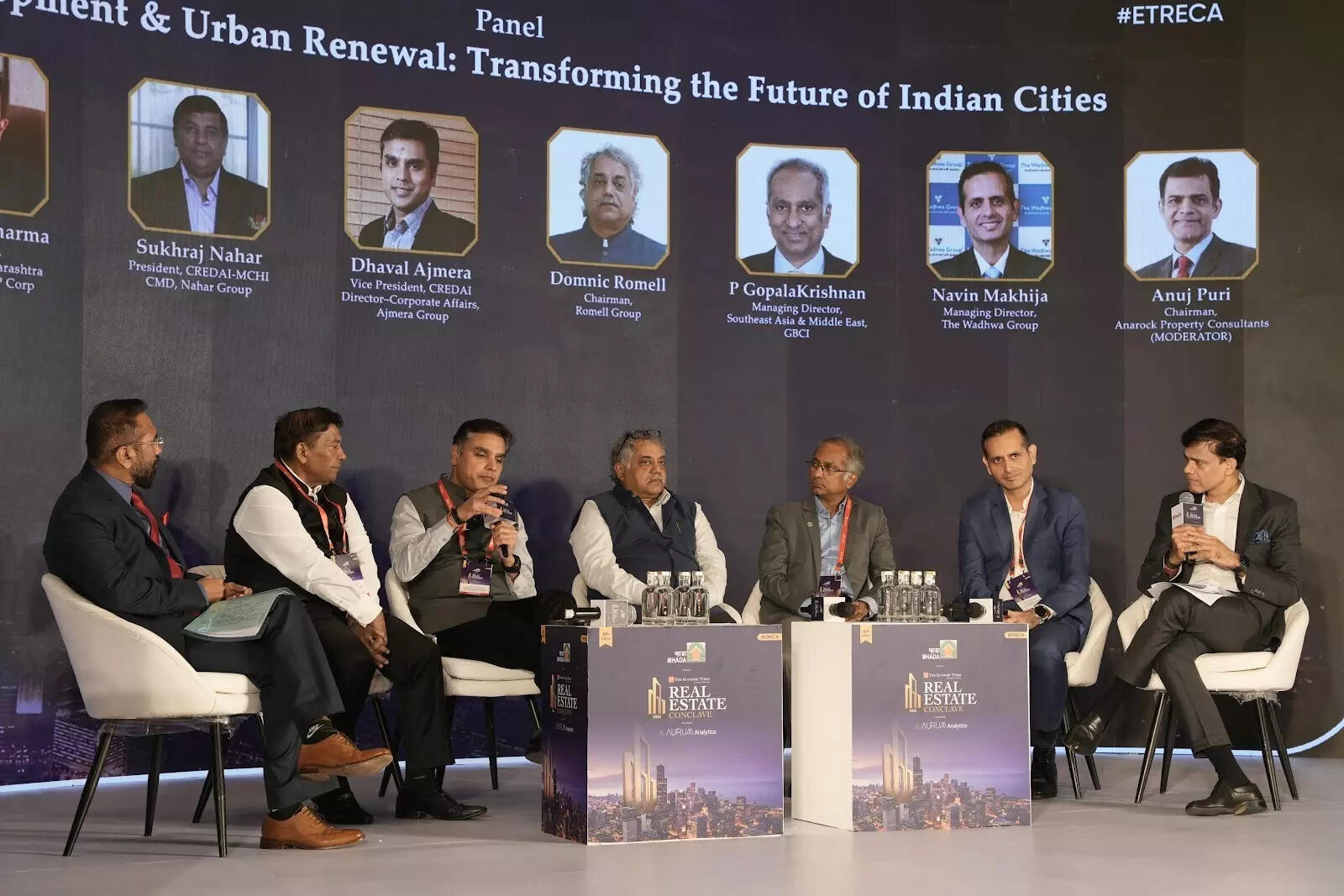
The panel discussion, titled ‘Redevelopment & Urban Renewal: Transforming the Future of Indian Cities,’ was moderated by Anuj Puri, Chairman of Anarock Property Consultants. Key speakers included Anil Wankhede (Deputy CEO, MHADA), Prashant Sharma (President, NAREDCO Maharashtra), Sukhraj Nahar (President, CREDAI-MCHI), Dhaval Ajmera (Vice President, CREDAI), Domnic Romell (Chairman, Romell Group), P. GopalaKrishnan (Managing Director, Southeast Asia & Middle East, GBCI), and Navin Makhija (Managing Director, The Wadhwa Group).
Wankhede opened the discussion by stating that redevelopment must strike a balance between economic viability and social equity. He mentioned that projects initiated by MHADA create housing stocks priced at construction costs rather than market rates, with nearly 20,000 units anticipated through these efforts, aimed at providing subsidized housing alongside private developments.
Regarding funding trends, Prashant Sharma noted that institutional investors are focusing on large cluster-level projects, especially those related to MHADA and SRA redevelopment. Society-led redevelopments are perceived as lower risk due to clearer land ownership and planning visibility, although investors remain wary of smaller, stand-alone society projects due to execution challenges and fragmentation.
Sukhraj Nahar emphasized that beyond financial models, trust and governance are vital for successful redevelopment. Internal disputes within housing societies and gaps in stakeholder credibility can hinder progress. “Redevelopment is a partnership,” he stated, highlighting that while financial aspects can drive decisions, long-term success hinges on harmony between developers and societies.
Both Dhaval Ajmera and Domnic Romell reiterated the importance of transparent communication, reliable track records, and a sound reputation to manage risks in urban redevelopment.
From a sustainability viewpoint, P. GopalaKrishnan commented that green compliance must evolve from mere procedural checklists to tangible outcomes. In high-density brownfield areas, he insisted on the importance of incorporating energy efficiency, climate resilience, and community-focused planning into master plans for long-term urban sustainability.
Navin Makhija pointed out that redevelopment strategies should not rely solely on financial metrics. Essential factors like location fundamentals, product-market fit, and genuine end-user demand should drive significant acquisitions. The panel collectively acknowledged that predictable regulations, faster approval processes, and structured financing solutions, including blended finance and rental housing options, are crucial to minimizing project risks.
As Indian cities grapple with land shortages and aging properties, the conclave participants agreed that cluster-led redevelopment, underpinned by strong governance and sustainability practices, will shape the future of urban transformation.