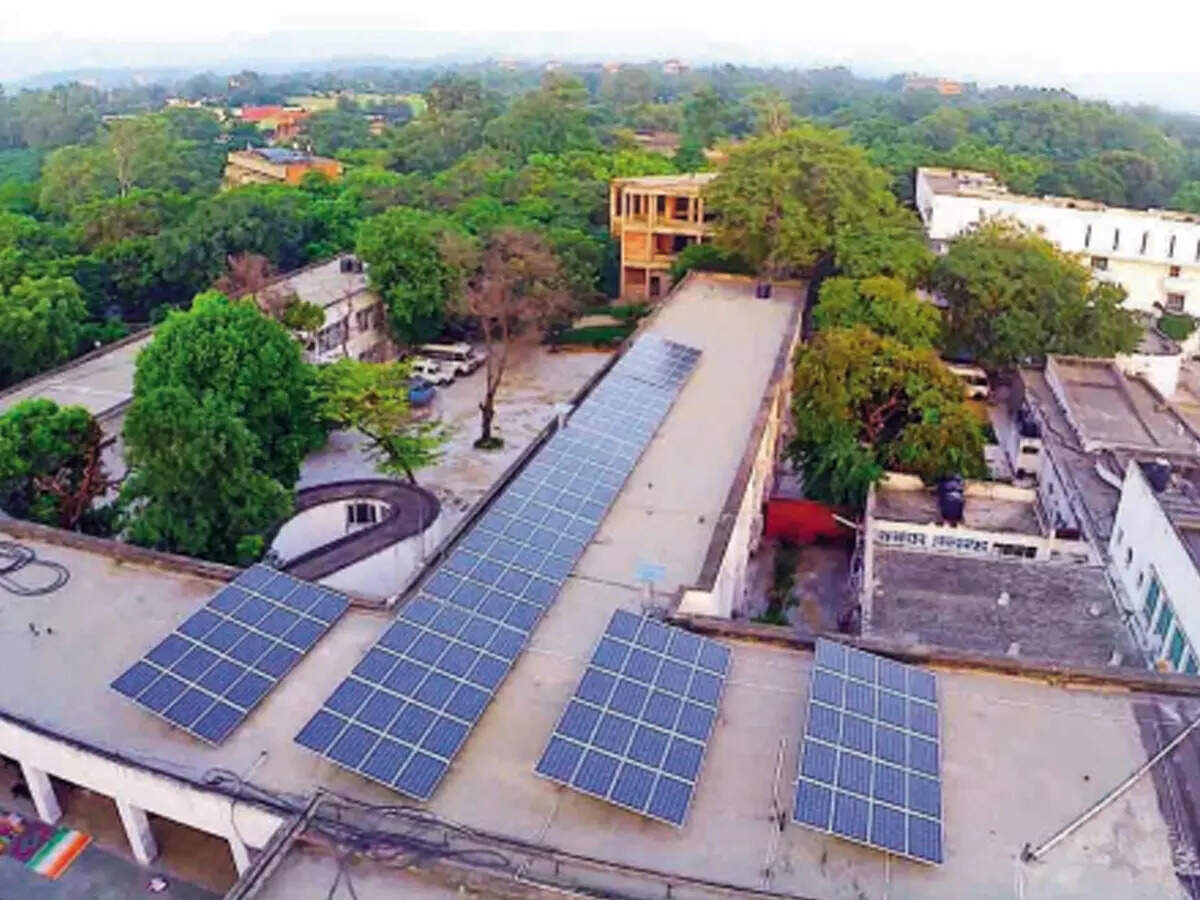
RAIPUR: Chhattisgarh has introduced an innovative initiative, the first of its kind in India, by installing rooftop solar panels on the Prime Minister Janman Awas homes of Pahadi Korwa families, recognized as a Particularly Vulnerable Tribal Group. This aims to provide some of the state’s poorest tribal households with durable housing and minimal electricity expenses.
In the pilot phase, rooftop solar systems have been set up on eight residences of Pahadi Korwa families in the remote Gudurumuda village, located in the Podi-Uproda block of Korba district. Officials from Chhattisgarh State Power Distribution Company Limited (CSPDCL) noted that this initiative uniquely integrates PM Janman Awas with PM Suryaghar to ensure that PVTG families receive both housing and guaranteed solar energy.
CSPDCL Managing Director Bhim Singh told TOI that this project is designed to connect genuinely needy and remote households to the benefits of PM Suryaghar while leveraging PM Awas, PM Janman, and DMF resources for the first time in the country.
“By merging the Prime Minister’s housing initiatives, Janman Mission, and DMF funds, we’ve linked extremely marginalized tribal families to grid-connected rooftop solar. This pilot may pave the way for a new model not just in Chhattisgarh, but across India,” Singh remarked.
Typically, PM Awas schemes focus solely on housing construction, lacking any guaranteed free power connection. Similarly, while PM Suryaghar promotes rooftop solar, it does not automatically link to PVTG housing beneficiaries.
Each of the eight houses now features a one kW rooftop solar plant under PM Suryaghar. The total cost for this system is approximately ₹60,000, with around ₹45,000 covered by central and state subsidies, and the remaining ₹15,000 sourced from the DMF, funded by mining revenues.
Through resource pooling, the state is establishing what it calls a “permanent pathway” to free, clean electricity for some of the most disadvantaged families, rather than simply providing shelter and leaving them burdened with recurring bills.
‘Solar will power our lives’
In Gudurumuda, the results are immediate and impactful. Most Pahadi Korwa families rely on agricultural labor and daily wages, facing inconsistent incomes.
“Solar will power our lives now,” said Manglu Ram’s grandson, whose family has received both a home and a rooftop solar plant. “We rely on farming and labor. Previously, paying electricity bills was a struggle. Now, our needs will be met with solar power, saving us from extra monthly expenses.”
The family expressed gratitude, not knowing how they could have afforded such a system independently.
Based on the pilot’s success, additional convergence projects are planned for more PVTG communities in Korba and, ultimately, in other districts with substantial tribal populations.
In areas where grid electricity is unstable and bills are unmanageable, decentralized rooftop solar—supported by targeted subsidies and DMF assistance—could revolutionize household economics. By eliminating monthly power costs and ensuring stable electricity access, this model may liberate funds for essentials like food, education, and health, while also reducing diesel dependency and promoting clean energy, according to CSPDCL officials.
Currently, in Gudurumuda, eight Pahadi Korwa families are experiencing this transformation. Their new concrete homes feature not just roofs but also panels that convert sunlight into security—and potentially create a framework for how welfare initiatives can be integrated to deliver enhanced benefits.