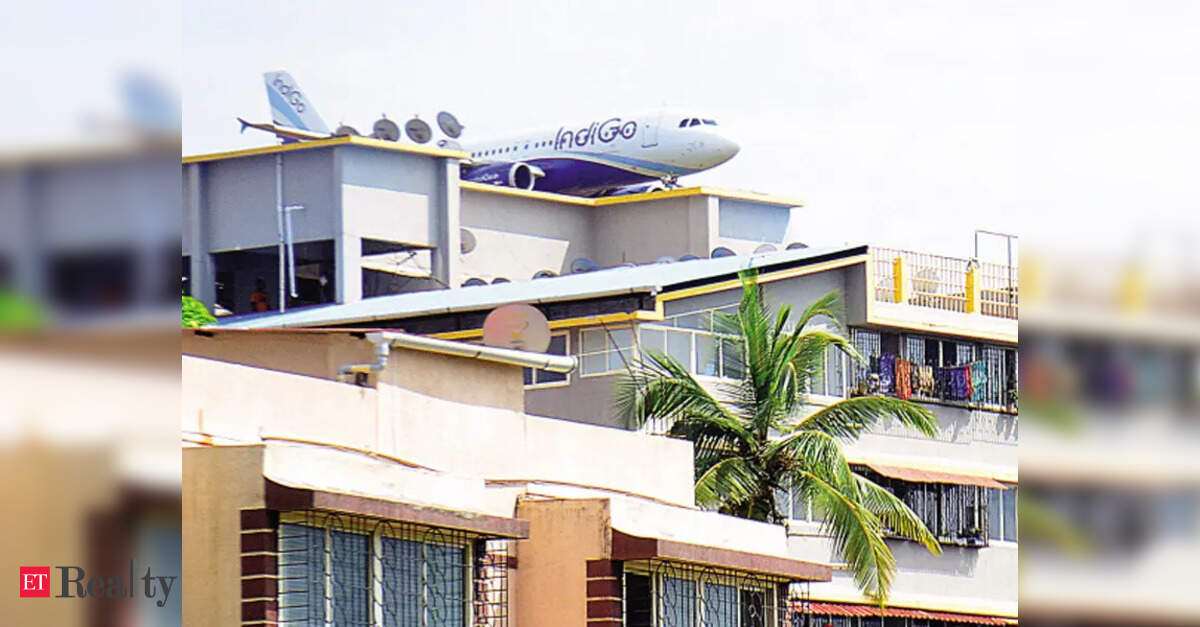
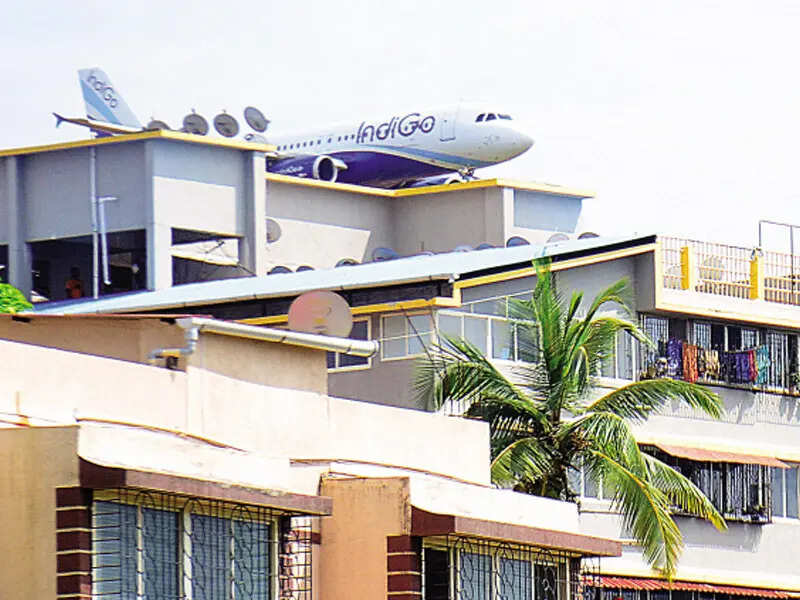
MUMBAI: A recent Airports Authority of India (AAI) circular addressing the effects of high frequency (HF) transmitters on vertical development may provide a solution for stalled redevelopment projects in the Juhu area.
Dated March 18, 2026, the circular announced the formation of a regional committee to evaluate impacted zones, assess aviation safety implications, and establish guidelines for allowable building heights on a case-by-case basis. “There is a demand for reviewing regulations regarding HF transmitters, as the absence of clear standards from ICAO (International Civil Aviation Organisation) is hindering the vertical growth of metropolitan areas,” it stated.
Residents of Juhu report that around 50-60 redevelopment projects involving structures over 35-40 years old are on hold. Height restrictions imposed within a 1 km radius of the HF transmitter radar at Juhu have dramatically limited allowable building heights, rendering redevelopment financially unfeasible for developers.
Architect Manoj Daisaria commented, “The committee will adopt a more detailed, plot-specific approach moving forward instead of applying broad restrictions. There is potential for height relaxations in eastern Juhu, where HF transmitters are situated, while stricter regulations may continue on the ocean-facing side, situated within the landing approach zone. The committee will evaluate each plot individually and recommend allowable heights that aim to balance aviation safety with urban development.”
The majority of projects in this area focus on redeveloping Mhada colonies and slum rehabilitation, where an additional incentive floor space index (FSI) is needed to make projects viable. FSI dictates the permissible construction on a specific plot.
Previously, a uniform height of 57 meters above mean sea level (AMSL) was allowed; however, operational constraints have since reduced permissible heights to 43 m AMSL in certain areas and even to 34 m AMSL in zones closer to critical regions. These restrictions have notably impacted the potential for redevelopment and other development opportunities in the affected areas.
Under the new circular, construction will be prohibited within 100 meters of transmitter antennas, while structures between 100 m and 2,000 m will be permitted with certain conditions.
A source from the property market stated, “Instead of blanket restrictions, the new circular enables controlled development by clearly defining restricted zones and allowing for operational impact analysis conducted by a specialized team of communication and navigation experts, airport officials, and engineers of HF communication systems. They will evaluate whether proposed buildings could disrupt critical long-distance aircraft communications and suggest necessary mitigation measures.”
The circular also outlines the process for conducting and approving findings, including a structured hierarchy for endorsing additional building heights. “The systematic and timely implementation of this circular will facilitate controlled urban development without compromising aviation safety, which is a particularly complex challenge in Mumbai due to the proximity of fully operational airports at Santacruz and Juhu,” the source explained.