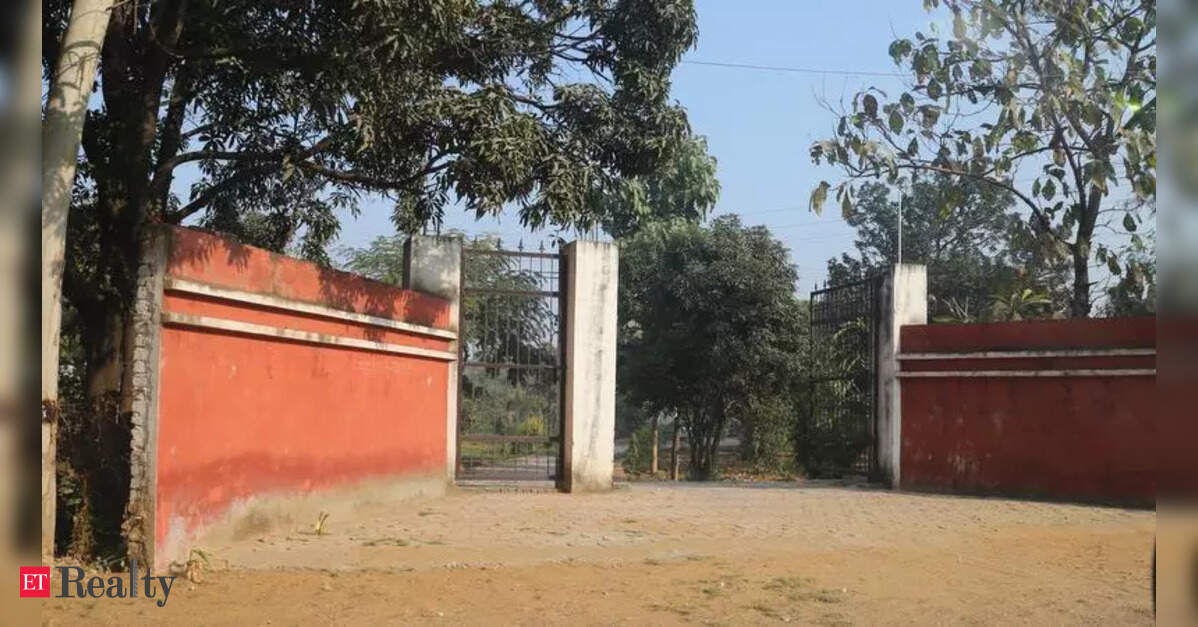
GURUGRAM: A recent survey by the Haryana Department of Forest and Wildlife uncovered 74 unauthorized constructions within the eco-sensitive zone of Sultanpur National Park, highlighting a concerning trend of increased development around this protected wetland.
Additionally, numerous farmhouses and buildings have been established within a kilometer of the park, which is a significant birdwatching destination in the Delhi-NCR region and was designated as a Ramsar site in 2021.
Another assessment by the department revealed 158 illegal structures along regulated corridors in the vicinity. In total, 232 constructions were identified as violations of the Punjab Scheduled Roads and Controlled Areas Restriction of Unregulated Development Act, 1963.
Meanwhile, the GMDA, following directives from the National Green Tribunal (NGT), conducted a survey of green belts along the Farukhnagar-Gurgaon Road through Dhanawas, NH-362W (Pataudi-Gurgaon Road), and Farukhnagar-Gurgaon Road via Sultanpur, as part of the Gurgaon-Manesar Urban Complex 2031 development plan. This investigation also discovered 158 illegal structures along these corridors.
Officials stated that these structures violated Section 6 and subsection (i) of Section 7 of the Act and were situated in areas designated as controlled zones under Section 4. Sultanpur mandates a 5km no-construction buffer zone intended to safeguard the wetland.
The presence of these illegal constructions poses risks of pollution and escalating human-animal conflicts, according to officials. R.S. Batth, the District Town Planner (Enforcement) at GMDA, issued show-cause notices under Section 12(2) of the Act to all offenders, instructing them to halt unauthorized construction immediately. Non-compliance may result in demolition and restoration of the land to its original state.
Batth emphasized that these measures aim to protect eco-sensitive regions and green belts, which serve as essential buffers for wildlife habitats and organized urban development. “These efforts are part of a continuous initiative to safeguard eco-sensitive zones and green belts crucial for ecological balance and urban planning. We urge residents and developers to adhere to legal requirements and secure all necessary permissions before commencing any construction,” he stated.
Environmentalists argue that stronger measures are essential for the protection of the Ramsar site. “Construction activities in the vicinity of protected areas are illegal and harmful to the environment. They jeopardize the integrity of this internationally recognized national park,” said environmental activist Vivek Kamboj.
Sultanpur National Park is also part of the Central Asian Flyway, a vital migratory route used by birds traveling to and from their breeding grounds in Central Asia.