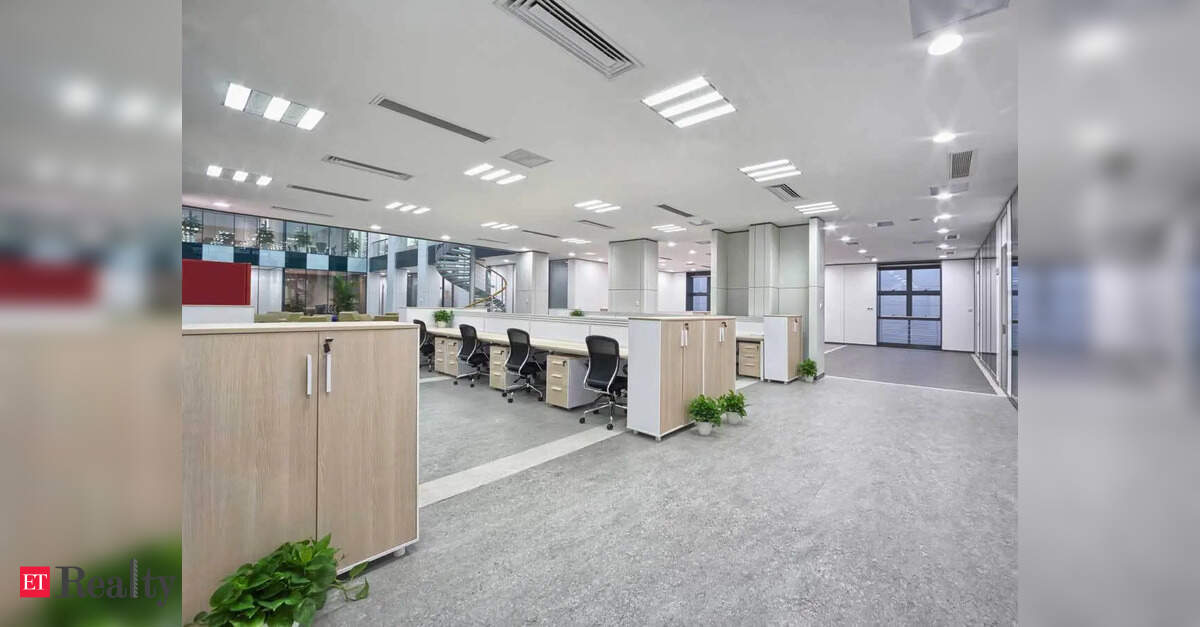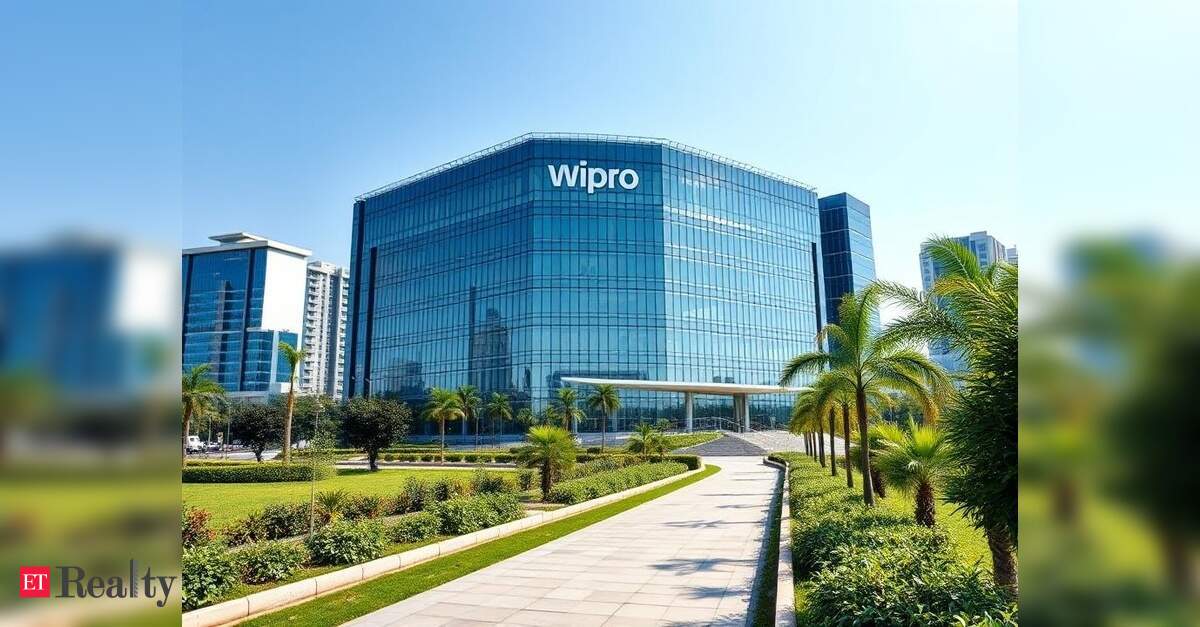
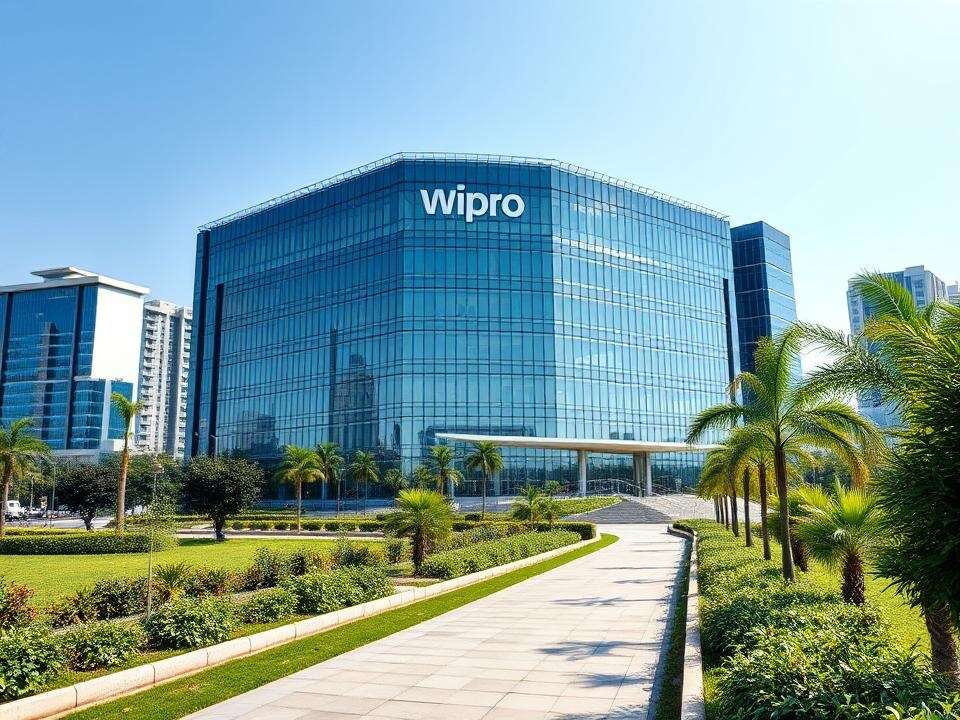
IT giant Wipro Ltd has acquired office space across eight floors totaling 387,000 square feet at K Raheja Corp’s IT special economic zone (SEZ) Mindspace Business Park in Navi Mumbai’s Airoli area through a long-term lease exceeding 10 years.
The deal, finalized through two agreements, is set at a monthly rent of Rs 2.48 crore, with a provision for a 5% annual increase. Over the lease period, Wipro is projected to pay approximately Rs 328 crore, inclusive of escalations.
This IT SEZ is owned and managed by K Raheja Corp’s listed Mindspace Business Parks Real Estate Investment Trust (REIT).
The contract includes a three-year lock-in for Wipro, while Mindspace REIT’s lock-in covers the full lease term. Wipro has also submitted a security deposit of Rs 14.86 crore, according to documents from realty data analytics platform Propstack.
Wipro currently occupies 345,000 square feet in a different building within Mindspace Business Park. The addition of this new space underscores Wipro’s long-term commitment to the office market in Mumbai and SEZ.
This transaction is particularly noteworthy as it occurs amid a landscape where IT companies are reassessing their workplace strategies. Despite trends towards hybrid work, major corporations still exhibit strong demand for premium office spaces in well-managed locations with advanced infrastructure.
This deal reflects a broader industry movement where, even as office formats evolve, India’s leading tech firms continue to invest in strategic real estate to support their growth plans.
RealtyDailyNews’s separate email inquiries to Wipro and Mindspace Business Parks REIT went unanswered prior to publication.
Lease transactions for large office spaces are experiencing a marked increase in major Indian property markets. This trend is fueled by steady economic growth, which has bolstered business confidence and supported long-term expansion strategies.
As companies ramp up operations and consolidate their presence, demand for quality office spaces in prime locations is surging. This trend is especially pronounced in key urban centers, where institutional-grade developments are appealing to large occupiers seeking efficiency and future-ready infrastructure.