NOIDA: The Noida Authority is set to initiate land acquisition for the Dadri-Noida-Ghaziabad Investment Region project—popularly known as New Noida—this August. Lekhpals will carry out ground surveys across 37 villages earmarked for the initial phase, which includes 13 villages in Gautam Buddh Nagar and 24 in Bulandshahr, such as Jokhabad, Sanwali, Fauladpur, Tajpur, Kaithara, Kishanpur, Muradabad, and Nawada.
Officials assigned for fieldwork will be responsible for identifying land revenue records, co-ownership details, and inheritance claims. Following this, a physical survey will confirm boundaries, existing land use, crops, structures, roads, and other assets.
The Authority’s officer on special duty (OSD), Kranti Shekhar, announced that the land acquisition process will commence in seven to ten days. “The government has appointed four revenue officers, with a fifth to follow, to streamline the process,” he stated.
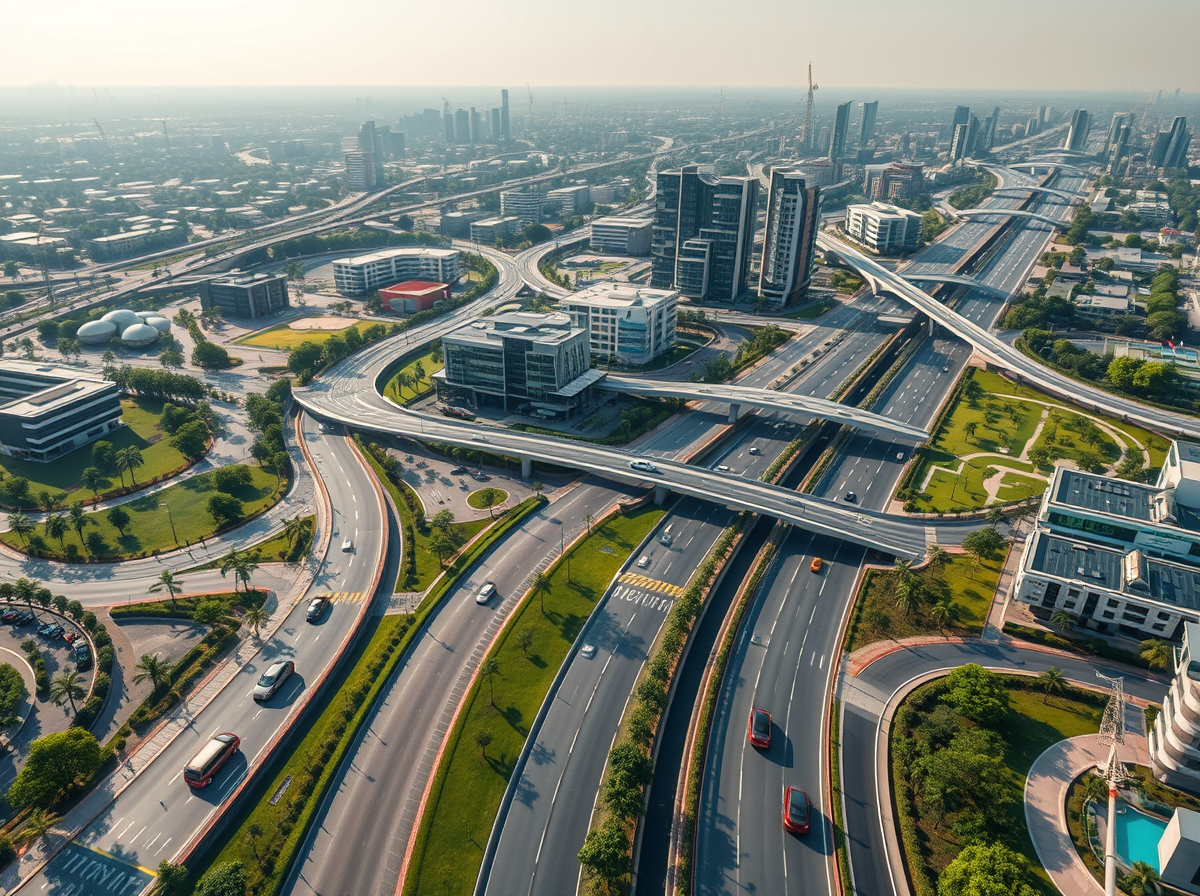
New Noida—planned as a smart city and industrial hub spanning 209 square kilometers—embraces 84 villages across Gautam Budh Nagar and Bulandshahr. Its notification on October 18, 2024, aims to alleviate pressure from rapid urbanization in Noida and serve as a significant economic corridor linked to the Delhi-Mumbai Industrial Corridor, part of the Western Dedicated Freight Corridor. This connectivity is projected to enhance logistics and transportation between the NCR and Haryana’s industrial regions.
In April, the Noida Authority established land acquisition rates for New Noida at ₹4,300 per square meter, aligning with the revised rates set by Yamuna Authority for the Noida International Airport project.
As part of the development plan, infrastructure improvements—including roads, drainage systems, sewage networks, power supply, and water pipelines—will be initiated following land acquisition. Subsequently, industrial plots will be designated and allocated to companies, manufacturers, and logistics firms, with nearly 40% of the total area earmarked for industrial utilization.
The Authority plans to execute the development in four phases, with the first covering 3,165 hectares and slated for completion by 2027. Subsequent phases will involve a significant expansion, with an additional 3,798 hectares developed between 2027 and 2032, followed by 5,908 hectares by 2037, and concluding with 8,230 hectares by 2041.