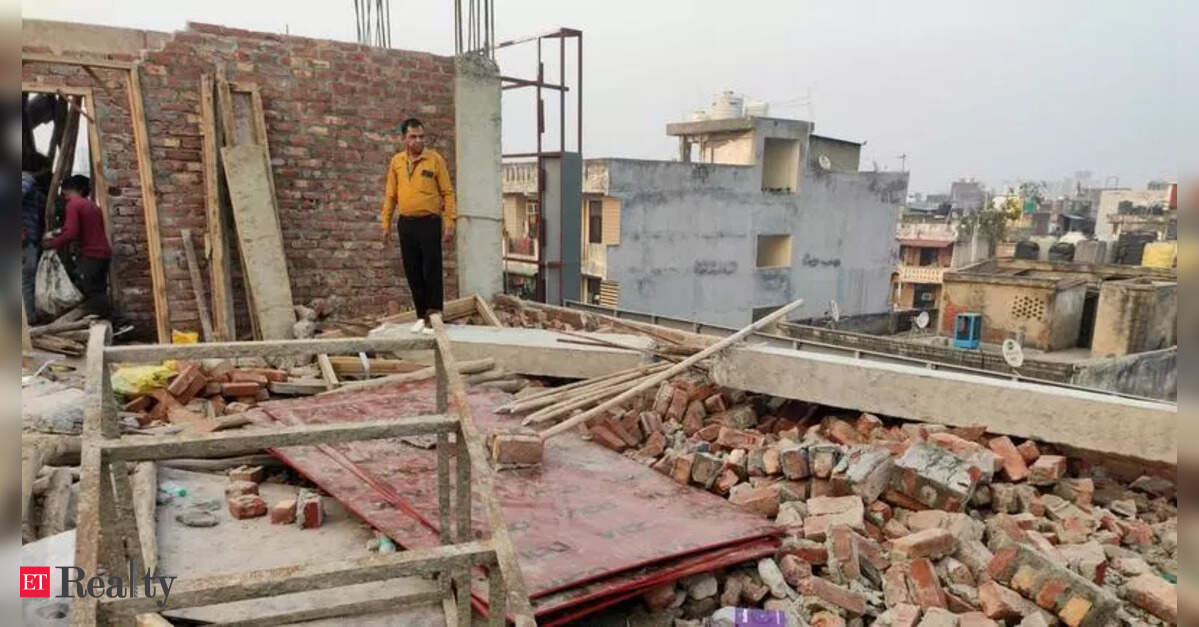

GURUGRAM: The Punjab and Haryana High Court has paved the way for authorities to take action on numerous cases of alleged building violations within the city.
The court has clarified that an earlier restraint order applies only to property owners involved in current litigation, rather than a blanket pause on all cases. This dispute concerns unauthorized constructions, additional floors, excessive coverage, and commercial operations in residential areas spanning DLF-1 to 5.
In an order issued on May 29, Chief Justice Sheel Nagu led the bench in specifying that the previous restraint order from November 26, 2025, only affects additional respondents tied to ongoing writ petitions. The case is scheduled for a follow-up hearing on July 6.
The court’s clarification is crucial, allowing the Town and Country Planning Department to proceed with actions on cases not shielded by the court order.
Amit Madholia, District Town Planner (Enforcement), stated, “Unauthorized constructions and commercial activities in residential zones fall under violations of the Haryana Development and Regulations of Urban Areas Act. We have received the court’s orders, and we’re currently reviewing the latest directive. Any further actions will comply with the law and court mandates.”
This issue has been a point of concern for several years, driven by public interest litigation aimed at enforcing planning regulations in the township.
The recent decision follows the High Court’s acceptance of multiple applications from property owners who indicated they may be affected by the ruling. As part of this allowance, the court instructed any additional respondents who haven’t submitted their replies to do so by the next hearing date or risk losing their right to respond.
Previously, following directives from the Supreme Court, the High Court mandated that affected owners be given a chance to object to the alleged violations identified through enforcement surveys. The court has ordered the District Town Planner (Enforcement) in Gurgaon to consider these objections and issue reasoned orders before proceeding with any corrective actions.
The Supreme Court reinstated the public interest litigations in October 2025 and mandated that individuals who could be affected should have the opportunity to voice their concerns before any conclusions are reached regarding alleged violations. The apex court also allowed impacted persons to petition the High Court, instructing that all relevant stakeholders be heard before any resolutions are made.
With the High Court limiting the benefits of the November 2025 order to just the impleaded respondents, attention is likely to shift to enforcement measures and adherence to planning regulations in cases outside the ongoing protection.