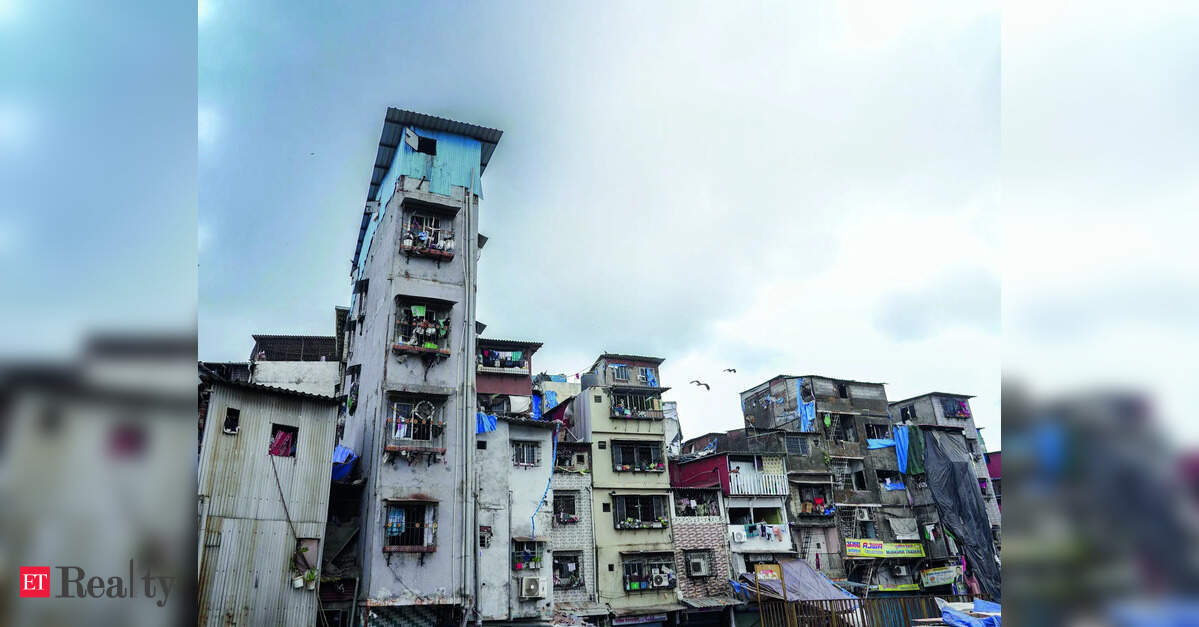
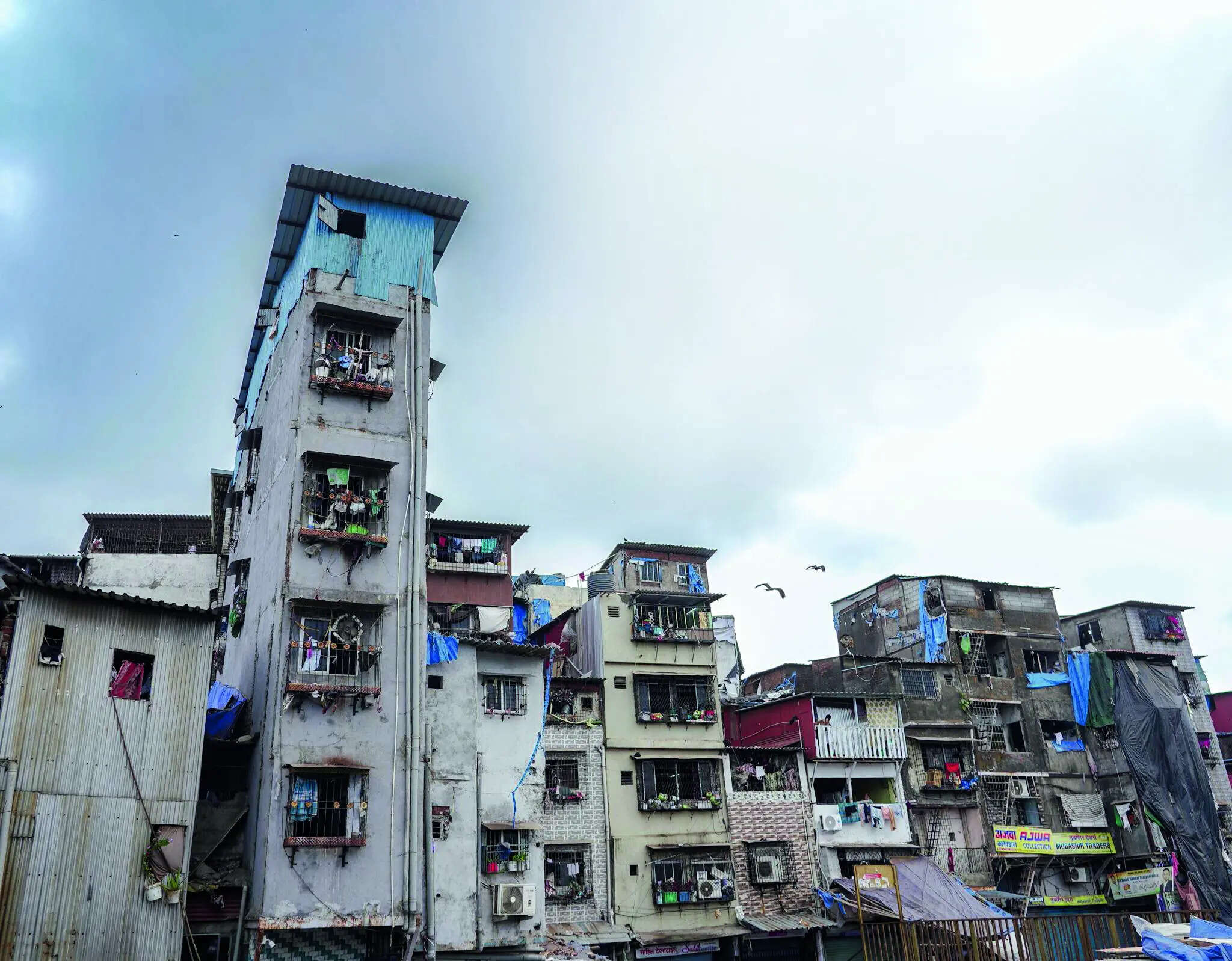
MUMBAI: With the city unable to expand horizontally, Mumbai’s vast slums are evolving vertically. In areas like Govandi, Kurla, and Bandra East, traditional ground-plus-one shanties are giving way to ‘slum skyscrapers’ that reach five to seven stories, openly defying the 14-foot height limit.
Civic activist Zoru Bathena, who resides in Juhu, points to areas close to Juhu Tara Road where shanties have transformed into four-story structures. Despite multiple complaints to local authorities, enforcement of regulations remains inconsistent. “The BMC intervened briefly, but construction resumed shortly after,” Bathena noted, emphasizing that while these slums have existed for years, their recent multi-story developments are particularly alarming.
Former government town planners caution that these illegal constructions pose a significant risk to infrastructure. The issues extend beyond bricks and mortar; they place a considerable strain on the city’s utility systems. “This cannot be viewed as merely a matter of unauthorized building; it impacts our drinking water and sewage systems immensely,” explained a former town planner.
“The BMC usually estimates water supply needs at five people per family. However, with these new five-story buildings, actual population density vastly surpasses municipal forecasts. Whether these floors are used for overcrowded residences or covert businesses, water consumption and sewage discharge are far beyond what the aging pipelines were designed to manage,” he added.
“I recently met with officials regarding slum rehabilitation and encroachment issues. We are mapping slums in the city and have requested action against these taller structures,” stated Ashish Shelar, Guardian Minister of the Mumbai Suburbs.
After each election, the cutoff date for slum rehabilitation extends by up to five years. “Eventually, the government limits rehabilitation to ground-plus-one structures, ignoring the actual height of these buildings. We are already facing water shortages—how will these multi-storey slums receive enough supply? These developments are a heavy burden on water, sanitation, and sewage systems,” said civic activist Nikhil Desai.
“The Slum Rehabilitation Authority (SRA) was set up to help slum dwellers but has unfortunately fallen short of its goals. There are many cases where beneficiaries, assigned rehabilitation flats, sell them within the mandated 10-year no-sale period and return to slum living,” noted activist Godrey Pimenta.
“Furthermore, slum buildings have increasingly risen vertically, in some instances up to four stories, with minimal regulatory oversight. This unchecked growth puts immense pressure on vital civic amenities like water supply, sanitation, and waste management,” Pimenta added.