
NEW DELHI: The environment department has drafted the Delhi State Action Plan on Climate Change (SPACC) 2.0, which is currently under review by the Union ministry of environment, forests, and climate change. The previous version was implemented in 2019 and relied on data available until 2011.
Officials indicated that the new plan integrates updated climate science, recent datasets, and vulnerability assessments at the district level. It outlines targeted sector-specific actions for both mitigation and adaptation through 2030, particularly in light of the increasing frequency of extreme weather events in the city.
“The first SAPCC established a foundational climate strategy for Delhi, aligning with the National Action Plan on Climate Change (NAPCC). It focused on sector assessments and broad strategies for greenhouse gas emissions,” an official noted. “In contrast, SAPCC 2.0 is significantly more comprehensive, action-oriented, and aligned with both national and global climate commitments, including India’s updated Nationally Determined Contributions and the Sustainable Development Goals.”
The revised plan enhances institutional governance by strengthening monitoring systems, implementing climate finance mechanisms such as green budgeting, and exploring innovative funding strategies. It aims to align with the Global Biodiversity Framework outlined in the Convention on Biological Diversity, with a focus on ecosystem restoration, urban afforestation, wetland conservation, and implementing nature-based solutions into climate action plans.
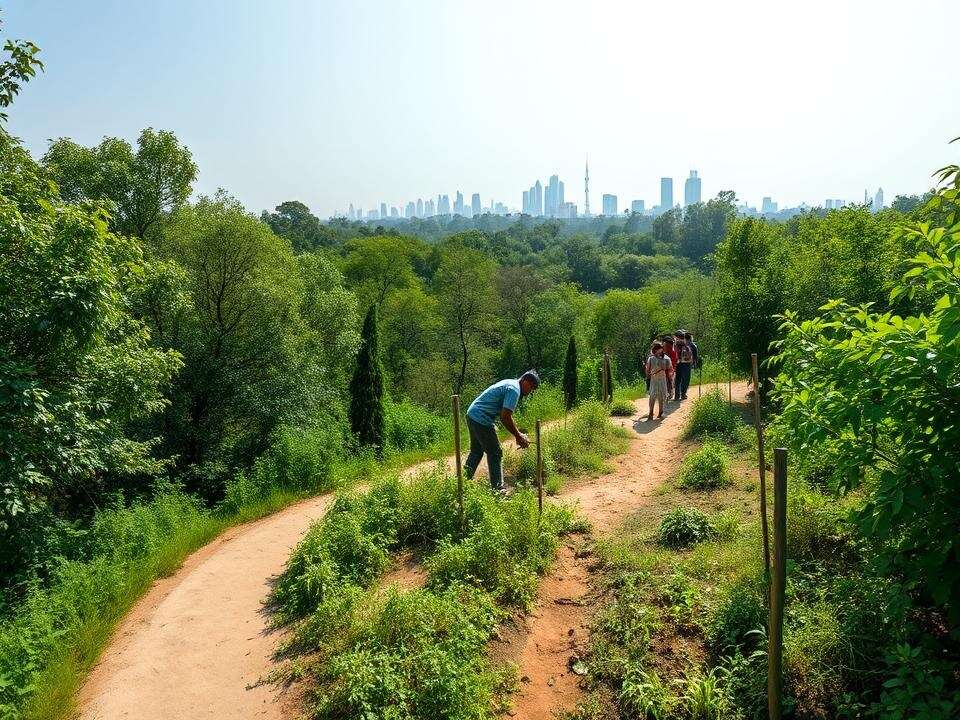
“Key priorities include urban afforestation projects, such as city forests and initiatives like the ‘Ek Ped Maa Ke Naam’ campaign, along with sustainable land use planning. These efforts aim to promote broader biodiversity goals and integrate nature-based solutions into urban planning, water management, and climate adaptation strategies,” officials stated.
The first National Action Plan on Climate Change was launched by the Centre in 2008, prompting states to develop their own plans based on the national strategies. The ministry has since directed states to revise their action plans accordingly. Delhi’s initial SPACC was introduced in 2019, and a revision was announced in 2023 to incorporate more recent data and adapt to evolving climate patterns.
A study titled ‘Lethal heatwaves are challenging India’s sustainable development’ released in 2023 revealed that every part of Delhi is experiencing ‘danger’ levels on the heat index. This contrasts with the local government’s assessments, which indicated that southern and northeastern Delhi were the most vulnerable regions. The research posited that heatwaves would severely hinder the achievement of sustainable development goals in urban areas.