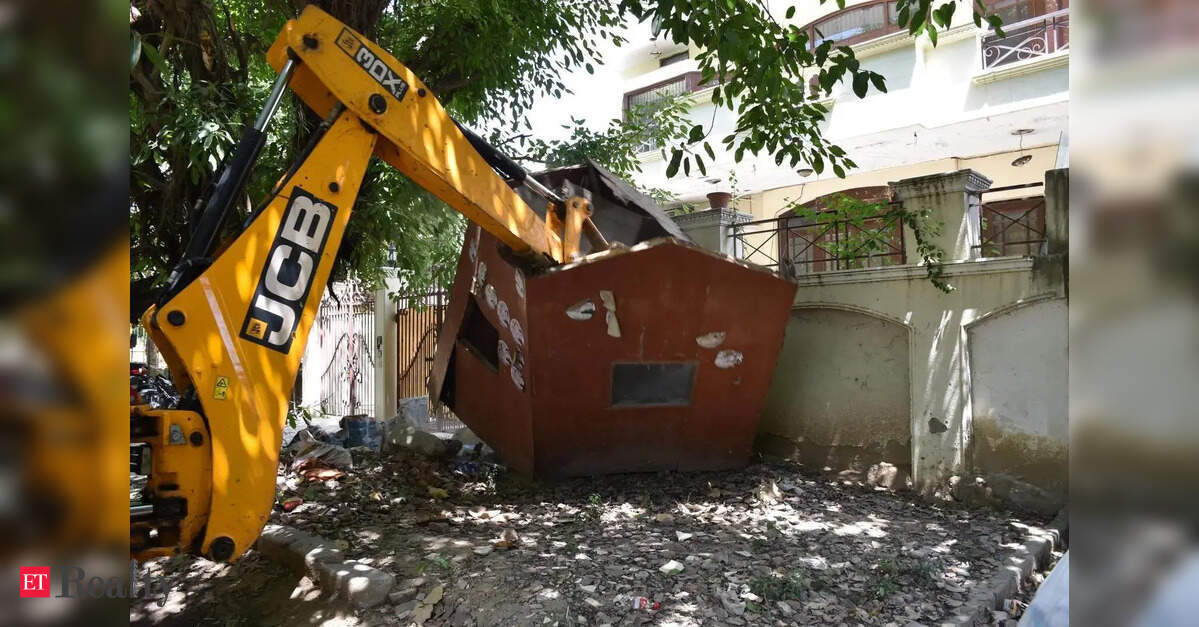
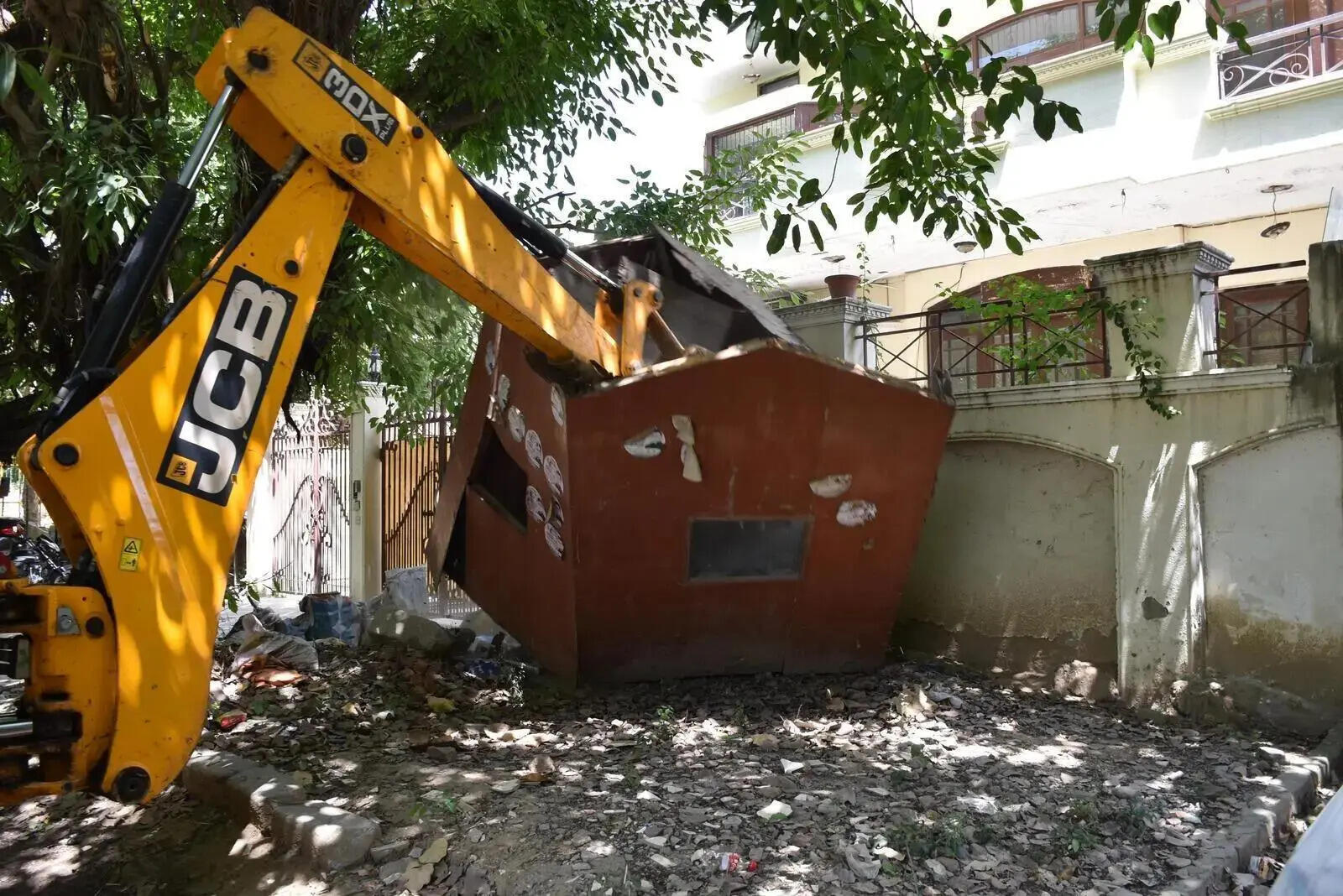
GURUGRAM: Just days after bulldozers cleared out encroachments during April 18-22 — which included boundary walls, guard rooms, kiosks, and hoardings in alignment with the Punjab and Haryana High Court’s interim order on the stilt+4 policy — the Town and Country Planning (DTCP) department has initiated the next phase: clearing debris, restoring roads, and upgrading long-overdue infrastructure.
Formal notices have been dispatched to developers and the Municipal Corporation of Gurugram (MCG) by district town planner (enforcement) Amit Madholia. These set out a comprehensive post-demolition plan. Developers and the civic body are responsible for restoring internal roads according to the approved layout plans, with compliance reports due within 15 days.
The letters also demand the prompt removal of debris left over from the demolitions — a major concern among residents.
A separate communication to the MCG specifies jurisdiction in colonies where maintenance has already been handed over to the civic body, such as South City 1, Malibu Town, Ardee City, Rosewood City, Uppal Southend, Mayfield Garden, Vipul World, Sushant Lok phases, and Greenwood City. In other areas, developers maintain their responsibilities. Officials indicated that this dual accountability aims to ensure quicker and more transparent cleanup responses.
Madholia noted that enforcement teams worked to clear carriageways on the same day by relocating debris during the operation. The complete removal of heavier materials like concrete and iron structures will now fall to designated agencies.
However, residents reported inconsistent progress. “In our lane in DLF Phase 2, debris was quickly pushed aside, but it remains there,” shared Rajiv Mehra. In South City 1, resident Neha Bansal mentioned that many had to hire laborers themselves to access their homes. Palam Vihar resident Sandeep Yadav observed that while some areas were cleared swiftly, others continue to lag significantly.
The DTCP has reiterated that the recovered land will be part of the public right-of-way. “There will be zero tolerance for re-encroachment,” Madholia asserted, adding that junior engineers will conduct regular inspections of cleared areas. Residents like Ankit Khurana of DLF Phase 1 welcomed this, noting the need for ongoing oversight as encroachments have accumulated over the years.
Beyond cleanup efforts, the directives also pave the way for necessary infrastructure upgrades in colonies struggling with increased density following the stilt+4 policy. A senior MCG official confirmed that upgrades would adhere to planning guidelines and are expected to address road strengthening, drainage enhancements, and parking management.
In Sushant Lok 1, a resident remarked on the visible improvements post-demolition: “The road feels wider. If the resurfacing and parking management are executed properly, it will create a significant impact.” Conversely, others warned that without structured parking and sufficient pedestrian space, the same issues could resurface.
“This is not merely about eliminating encroachments. It’s about restoring and maintaining established infrastructure. All parties—developers, MCG, and residents—have crucial roles to play,” Madholia emphasized.